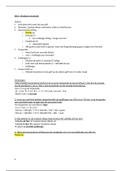
Earthquake Hazards
Types of Seismic Wave
Group 1 – Body waves (Primary and Secondary Waves)
Group 2 – Surface Waves (Love Waves)
Elastic Rebound Theory
1) 2 parts of a body of solid, brittle, competent rock are
under stress due to opposing forces acting on the
rock
2) The opposing forces are often due to tectonic plates moving in opposite directions
3) The body of rock is slowly deformed and put under strain
4) The energy applied to the rock is stored as elastic strain energy
5) The deformation continues until the stress overcomes the strength of the rock and it fractures
6) The two parts of the rock suddenly move relative to each other and there is displacement along the
fault or fracture
7) The elastic strain energy stored in the rock is reduced; energy is transmitted through the earth by
seismic waves causing displacements which are felt as earthquakes
Mercalli Scale vs Moment Magnitude Scale
Mercalli Scale Moment Magnitude Scale (Mw)
Records the intensity and the A measure of an earthquakes magnitude (size or strength)
Records effects of an earthquake based on its seismic moment (a measure of the work done by
the earthquake)
Uses 12 values in Roman Measured on a scale from 1 to 10, in terms of magnitude, 1
Points on numerals from I (hardly felt) being the lowest and 10 the highest. An increase of one
Scale to XII (total destruction) number means the quakes magnitude is 10x greater than the
number prior
Factors Affecting the Mercalli Scale
Factor General Pattern and Explanation
The larger the earthquake (the greater the magnitude), the greater the intensity of
Earthquake Size
shaking near the epicentre
The deeper the focus the lower the surface waves, so reduced intensity above ground
Depth of Focus
and at greater distances
Distance from At greater distances from the epicentre the intensity decreases until there is no effect
Epicentre felt by the earthquake. Energy starts to dissipate
Better quality ground/thicker (e.g. concrete) would lower the surface waves, so the
Ground intensity of the earthquake would be reduced.
Conditions Rigidity of ground impacts intensity. Looser sediment undergoes amplification, so has
higher intensity. Waves slow and grow in looser sediment.
Buildings of poor quality will be more greatly impacted by earthquakes, closer to the
Building Quality
epicentre
Isoseismal Lines – lines connecting points on the earth’s surface at which earthquake intensity is the
same/areas of equal intensity of damage
, Effects of an Earthquake
• Buildings sway and potentially collapse, depending on design and engineering.
Ground • Buildings kill people, not earthquakes.
Shaking • Construction type of the building – what it is made from – can influence damage
Small Scale
Vibrations cause the sediment to shake. Water separates from the sediment and rises to
Liquefaction the surface. Soil loses strength, so things can shake.
Small Scale
On steep slopes made unstable by rainfall, the vibration may trigger landslides and
mudflows, partially assisted by liquefaction. Landsides cause loss of life through burial but
Landslides
also hamper rescue attempts.
Small Scale
Enclosed bodies of water such as lakes, reservoirs and swimming pools are known to
Seiche oscillate and overflow, e.g. Alaska 1964 – 1.8m waves
Small Scale
Generated at convergent plate margins where subduction of oceanic lithosphere takes
place. Mechanism involves elastic rebound of the overriding lithosphere is subducted
Tsunami
beneath it.
Large Scale
Hazard – something that can cause bodily harm
Risk – chance of something happening and causing harm
Factors Affecting the Risk of Damage to Property and Loss of Life
• Population density • Economic activity (AC vs LIDC)
• Building design • Ground conditions
• Building density • Coastal location
• Construction of building • Magnitude
• Distance from epicentre
Earthquake Precursors
Earthquake Precursor – a wide variety of physical phenomena that reportedly precede at least some
earthquakes
Groundwater Level
1) High ground water levels
2) Fracture opens and groundwater flows into fractures
3) Groundwater level drops then water infills spaces before the earthquake
4) Water levels return to normal
Radon Emissions
1) Low levels of radon – background
2) Cracks appear
3) Radon levels increase rapidly, carried by water through gaps – radon is very soluble in water
4) Post-earthquake fractures close again, and radon levels return to normal
P-Wave Velocity
1) Fast P-waves as travelling through rigid rock
2) Cracks appear with water in – P-waves slow down when going through water as it is less rigid
3) Cracks close and waves speed up again
Types of Seismic Wave
Group 1 – Body waves (Primary and Secondary Waves)
Group 2 – Surface Waves (Love Waves)
Elastic Rebound Theory
1) 2 parts of a body of solid, brittle, competent rock are
under stress due to opposing forces acting on the
rock
2) The opposing forces are often due to tectonic plates moving in opposite directions
3) The body of rock is slowly deformed and put under strain
4) The energy applied to the rock is stored as elastic strain energy
5) The deformation continues until the stress overcomes the strength of the rock and it fractures
6) The two parts of the rock suddenly move relative to each other and there is displacement along the
fault or fracture
7) The elastic strain energy stored in the rock is reduced; energy is transmitted through the earth by
seismic waves causing displacements which are felt as earthquakes
Mercalli Scale vs Moment Magnitude Scale
Mercalli Scale Moment Magnitude Scale (Mw)
Records the intensity and the A measure of an earthquakes magnitude (size or strength)
Records effects of an earthquake based on its seismic moment (a measure of the work done by
the earthquake)
Uses 12 values in Roman Measured on a scale from 1 to 10, in terms of magnitude, 1
Points on numerals from I (hardly felt) being the lowest and 10 the highest. An increase of one
Scale to XII (total destruction) number means the quakes magnitude is 10x greater than the
number prior
Factors Affecting the Mercalli Scale
Factor General Pattern and Explanation
The larger the earthquake (the greater the magnitude), the greater the intensity of
Earthquake Size
shaking near the epicentre
The deeper the focus the lower the surface waves, so reduced intensity above ground
Depth of Focus
and at greater distances
Distance from At greater distances from the epicentre the intensity decreases until there is no effect
Epicentre felt by the earthquake. Energy starts to dissipate
Better quality ground/thicker (e.g. concrete) would lower the surface waves, so the
Ground intensity of the earthquake would be reduced.
Conditions Rigidity of ground impacts intensity. Looser sediment undergoes amplification, so has
higher intensity. Waves slow and grow in looser sediment.
Buildings of poor quality will be more greatly impacted by earthquakes, closer to the
Building Quality
epicentre
Isoseismal Lines – lines connecting points on the earth’s surface at which earthquake intensity is the
same/areas of equal intensity of damage
, Effects of an Earthquake
• Buildings sway and potentially collapse, depending on design and engineering.
Ground • Buildings kill people, not earthquakes.
Shaking • Construction type of the building – what it is made from – can influence damage
Small Scale
Vibrations cause the sediment to shake. Water separates from the sediment and rises to
Liquefaction the surface. Soil loses strength, so things can shake.
Small Scale
On steep slopes made unstable by rainfall, the vibration may trigger landslides and
mudflows, partially assisted by liquefaction. Landsides cause loss of life through burial but
Landslides
also hamper rescue attempts.
Small Scale
Enclosed bodies of water such as lakes, reservoirs and swimming pools are known to
Seiche oscillate and overflow, e.g. Alaska 1964 – 1.8m waves
Small Scale
Generated at convergent plate margins where subduction of oceanic lithosphere takes
place. Mechanism involves elastic rebound of the overriding lithosphere is subducted
Tsunami
beneath it.
Large Scale
Hazard – something that can cause bodily harm
Risk – chance of something happening and causing harm
Factors Affecting the Risk of Damage to Property and Loss of Life
• Population density • Economic activity (AC vs LIDC)
• Building design • Ground conditions
• Building density • Coastal location
• Construction of building • Magnitude
• Distance from epicentre
Earthquake Precursors
Earthquake Precursor – a wide variety of physical phenomena that reportedly precede at least some
earthquakes
Groundwater Level
1) High ground water levels
2) Fracture opens and groundwater flows into fractures
3) Groundwater level drops then water infills spaces before the earthquake
4) Water levels return to normal
Radon Emissions
1) Low levels of radon – background
2) Cracks appear
3) Radon levels increase rapidly, carried by water through gaps – radon is very soluble in water
4) Post-earthquake fractures close again, and radon levels return to normal
P-Wave Velocity
1) Fast P-waves as travelling through rigid rock
2) Cracks appear with water in – P-waves slow down when going through water as it is less rigid
3) Cracks close and waves speed up again