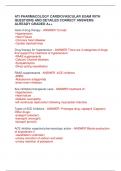
ATI PHARMACOLOGY CARDIOVASCULAR EXAM WITH
QUESTIONS AND DETAILED CORRECT ANSWERS/
ALREADY GRADED A++
Goal of drug therapy - ANSWER To treat:
-Hypertension
-Heart Failure
-Coronary heart disease
-Cardiac dysrhythmias
Drug therapy for hypertension - ANSWER There are 4 categories of drugs
that support the treatment of hypertension:
-RAAS suppressants
-Calcium Channel blockers
-Sympatholytics
-Direct-acting vasodilators
RAAS suppressants - ANSWER -ACE inhibitors
-ARBS
-Aldosterone antagonists
-direct renin inhibitors
Ace inhibitors therapeutic uses - ANSWER treatment of:
-Hypertension
-Heart failure
-Diabetic neuropathy
-left ventricular dysfunction following myocardial infarction
Types of ACE inhibitors - ANSWER -Prototype drug: captopril (Capoten)
Other drugs:
-enalapril (vasotec)
-fosinopril (monopril)
-lisinopril (prinivil)
ACE inhibitor expected pharmacologic action - ANSWER Blocks production
of angiotensin II
-vasodilation (arteriolar)
-urinary excretion of sodium and water
-urinary retention of potassium.
,ACE inhibitors side effects and adverse reactions - ANSWER -severe
hypotension following first dose.
-dry, nonproductive cough due to increase in bradykinin.
-angioedema (swelling of mouth, throat due to inhibition of kinase II)
-rash and report of metallic taste in mouth
-hyperkalemia
-neutropenia
SAFETY ALERT- ACE inhibitors and cough - ANSWER Many patients who
take ACE inhibitors develop a dry, nonproductive cough.
At the first sign of the cough, notify the provider so he or she can decide
whether to continue the drug with an antitussive.
ACE inhibitors nursing considerations - ANSWER -Start ACE inhibitors with
lose dose; gradually increase.
-Diuretics may be temporarily stopped before first dose.
-Monitor blood pressure closely following first dose.
-Monitor for and report dry cough, rash, and metallic taste in mouth.
-Monitor for angioedema; treat with IV epinephrine.
-Monitor potassium levels and WBC.
ACE inhibitor administration - ANSWER -available for oral use only.
-must be taken 2-3 times daily for hypertension; three times daily for heart
failure.
-give captopril 1 hr before meals for adequate absorption.
ACE inhibitors patient instructions - ANSWER -Be aware that hypotension
may occur. check blood pressure before administering.
-report dry cough, rash, and metallic taste in mouth to provider.
-report minor swelling of mouth, throat; call 911 immediately if severe.
-refrain from using potassiumm supplements and potassium-containing
salt.
-report palpitations, muscle twitching, weakness, or parethesias.
-report sore throat or other signs of infection.
-do not take an ACE inhibitor if you are pregnant or breast feeding.
ACE inhibitor contraindications - ANSWER -pregnancy risk category D
(fetal damage), lactation.
-angioedema or allergy to ACE inhibitors
,-hypotension
-liver disease with elevated liver enzymes
ACE inhibitors precautions - ANSWER -decreased renal function
-bone marrow depression or use of immunosuppressing drugs.
-autoimmune disorders
-cardiovascular disease
-cerebral vascular disease
-heart failure
-hyperkalemia and hyponatremia
-older adults
ACE Inhibitors interactions - ANSWER -potassium-sparing diuretics,
potassium supplements, or use of salt substitues increase risk for
hyperkalemia.
-antihypertensive drugs, diuretics, and nitrates (such as nitroglycerine)
increase risk for hypotension.
-food decreases absorption of captopril.
-ACE inhibitors may cause lithium toxicity.
ARBS therapeutic uses - ANSWER -treats hypertension (all ARBS)
-prevents stroke (losartan only)
-manages diabetic nephropathy (losartan and irbesartan [avapro] only)
-prevents migraine headaches (candesartan [atacand] only)
ARBS prototype of other drugs - ANSWER prototype drug: Losartan
(Cozaar)
-valsartan (diovan)
-irbesartan (avapro)
-candesartan (atacand)
ARBS expected pharmacologic action - ANSWER -blocks angiotensin II
receptors
-vasodilation (arteriolar)
-urinary excretion of sodium and water
-urinary retention of potassium
ARBS side and adverse effects - ANSWER -angioedema (occurs less than
with ACE inhibitors, but still a potential risk)
-headache, insomnia.
, -severe hypotension may occur with overdose or in volume depletion.
ARBS interventions - ANSWER -treats severe angioedema with IV
epinephrine.
-discontinue use of any ARB is angioedema occurs.
-monitor for and report CNS effects.
-monitor blood pressure before administering losartan dose.
-manage severe hypotension by expanding volume using IV fluid therapy
SAFETY ALERT- button
ARBs interventions safety alert - ANSWER both ARBs and ACE inhibitors
can cause angioedema.
Angioedema is a swelling that occurs under the skin, instead of on the skin
such as what you see with hives.
it occurs in relation to the release of histamine when a person has an
allergic reaction.
ARBs administration - ANSWER -ARBs are available for oral administration
only.
-Losartan is also available in combination with the thiazide diuretic,
hydrochlorothiazide (Hyzaar).
-take with or without food.
-beginning dose is decreased for patients taking diuretics or with liver
failure.
ARBs patient instructions - ANSWER -report minor swelling of mouth,
throat; call 911 immediately if severe.
-report frequent headaches or insomnia.
-report episodes of fainting, dizziness.
-do not take losartan if pregnant or breast feeding.
-tell provider if pregnancy is a possibility.
ARBs contraindications - ANSWER -pregnancy risk category D for second
and third trimesters (fetal damage).
-allergy to losartan.
-children younger than 6 years old.
-child less older than 6 years who has a very low creatinine clearance.
ARBs precautions - ANSWER -concurrent diuretic use
-hyperkalemia
QUESTIONS AND DETAILED CORRECT ANSWERS/
ALREADY GRADED A++
Goal of drug therapy - ANSWER To treat:
-Hypertension
-Heart Failure
-Coronary heart disease
-Cardiac dysrhythmias
Drug therapy for hypertension - ANSWER There are 4 categories of drugs
that support the treatment of hypertension:
-RAAS suppressants
-Calcium Channel blockers
-Sympatholytics
-Direct-acting vasodilators
RAAS suppressants - ANSWER -ACE inhibitors
-ARBS
-Aldosterone antagonists
-direct renin inhibitors
Ace inhibitors therapeutic uses - ANSWER treatment of:
-Hypertension
-Heart failure
-Diabetic neuropathy
-left ventricular dysfunction following myocardial infarction
Types of ACE inhibitors - ANSWER -Prototype drug: captopril (Capoten)
Other drugs:
-enalapril (vasotec)
-fosinopril (monopril)
-lisinopril (prinivil)
ACE inhibitor expected pharmacologic action - ANSWER Blocks production
of angiotensin II
-vasodilation (arteriolar)
-urinary excretion of sodium and water
-urinary retention of potassium.
,ACE inhibitors side effects and adverse reactions - ANSWER -severe
hypotension following first dose.
-dry, nonproductive cough due to increase in bradykinin.
-angioedema (swelling of mouth, throat due to inhibition of kinase II)
-rash and report of metallic taste in mouth
-hyperkalemia
-neutropenia
SAFETY ALERT- ACE inhibitors and cough - ANSWER Many patients who
take ACE inhibitors develop a dry, nonproductive cough.
At the first sign of the cough, notify the provider so he or she can decide
whether to continue the drug with an antitussive.
ACE inhibitors nursing considerations - ANSWER -Start ACE inhibitors with
lose dose; gradually increase.
-Diuretics may be temporarily stopped before first dose.
-Monitor blood pressure closely following first dose.
-Monitor for and report dry cough, rash, and metallic taste in mouth.
-Monitor for angioedema; treat with IV epinephrine.
-Monitor potassium levels and WBC.
ACE inhibitor administration - ANSWER -available for oral use only.
-must be taken 2-3 times daily for hypertension; three times daily for heart
failure.
-give captopril 1 hr before meals for adequate absorption.
ACE inhibitors patient instructions - ANSWER -Be aware that hypotension
may occur. check blood pressure before administering.
-report dry cough, rash, and metallic taste in mouth to provider.
-report minor swelling of mouth, throat; call 911 immediately if severe.
-refrain from using potassiumm supplements and potassium-containing
salt.
-report palpitations, muscle twitching, weakness, or parethesias.
-report sore throat or other signs of infection.
-do not take an ACE inhibitor if you are pregnant or breast feeding.
ACE inhibitor contraindications - ANSWER -pregnancy risk category D
(fetal damage), lactation.
-angioedema or allergy to ACE inhibitors
,-hypotension
-liver disease with elevated liver enzymes
ACE inhibitors precautions - ANSWER -decreased renal function
-bone marrow depression or use of immunosuppressing drugs.
-autoimmune disorders
-cardiovascular disease
-cerebral vascular disease
-heart failure
-hyperkalemia and hyponatremia
-older adults
ACE Inhibitors interactions - ANSWER -potassium-sparing diuretics,
potassium supplements, or use of salt substitues increase risk for
hyperkalemia.
-antihypertensive drugs, diuretics, and nitrates (such as nitroglycerine)
increase risk for hypotension.
-food decreases absorption of captopril.
-ACE inhibitors may cause lithium toxicity.
ARBS therapeutic uses - ANSWER -treats hypertension (all ARBS)
-prevents stroke (losartan only)
-manages diabetic nephropathy (losartan and irbesartan [avapro] only)
-prevents migraine headaches (candesartan [atacand] only)
ARBS prototype of other drugs - ANSWER prototype drug: Losartan
(Cozaar)
-valsartan (diovan)
-irbesartan (avapro)
-candesartan (atacand)
ARBS expected pharmacologic action - ANSWER -blocks angiotensin II
receptors
-vasodilation (arteriolar)
-urinary excretion of sodium and water
-urinary retention of potassium
ARBS side and adverse effects - ANSWER -angioedema (occurs less than
with ACE inhibitors, but still a potential risk)
-headache, insomnia.
, -severe hypotension may occur with overdose or in volume depletion.
ARBS interventions - ANSWER -treats severe angioedema with IV
epinephrine.
-discontinue use of any ARB is angioedema occurs.
-monitor for and report CNS effects.
-monitor blood pressure before administering losartan dose.
-manage severe hypotension by expanding volume using IV fluid therapy
SAFETY ALERT- button
ARBs interventions safety alert - ANSWER both ARBs and ACE inhibitors
can cause angioedema.
Angioedema is a swelling that occurs under the skin, instead of on the skin
such as what you see with hives.
it occurs in relation to the release of histamine when a person has an
allergic reaction.
ARBs administration - ANSWER -ARBs are available for oral administration
only.
-Losartan is also available in combination with the thiazide diuretic,
hydrochlorothiazide (Hyzaar).
-take with or without food.
-beginning dose is decreased for patients taking diuretics or with liver
failure.
ARBs patient instructions - ANSWER -report minor swelling of mouth,
throat; call 911 immediately if severe.
-report frequent headaches or insomnia.
-report episodes of fainting, dizziness.
-do not take losartan if pregnant or breast feeding.
-tell provider if pregnancy is a possibility.
ARBs contraindications - ANSWER -pregnancy risk category D for second
and third trimesters (fetal damage).
-allergy to losartan.
-children younger than 6 years old.
-child less older than 6 years who has a very low creatinine clearance.
ARBs precautions - ANSWER -concurrent diuretic use
-hyperkalemia