

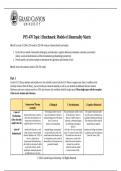
PSY-470 Topic 1 Benchmark: Models of Abnormality Matrix
Part 1: In a total of 1,000-1,250 words (or 250-350 words per column) identify and explain:
1. Each of the six models of abnormality (biological, psychodynamic, cognitive-behavioral, humanistic-existential, sociocultural
(family- social and multicultural), and the developmental psychopathology perspective).
2. Provide specific and current examples to demonstrate the application and treatment of each.
Part 2: Answer the summary question (150-250 words).
Part 1
Use the GCU Library databases and include two to four scholarly sources from the GCU library to support your claims. In addition to the
scholarly resources from the library, you can include past classroom materials as well as your textbook as additional reference material.
References and in-text citations must be in APA style; however, the worksheet should be single spaced. Please single space with the exception
of the in-text citations and references.
Interpersonal Therapy 1. Biological 2. Psychodynamic 3. Cognitive Behavioral
(example)
Cause of The biological model views the The psychodynamic model is based The cognitive behavioral model
Dysfunction Interpersonal therapy is based on cause of dysfunction to be due to off the idea that a “person’s views the cause of dysfunction as
the premise that dysfunctions in malfunctioning parts of the human behavior, whether normal or maladaptive thinking and learning.
(How does this interpersonal relationships are brain. It focuses on abnormal, is determined largely This model also believes that the
model view the significant factors in the onset of “genetics, neurotransmitters, by underlying psychological impact behavior-cognition
forces of
cause of mental health disorders, as well neurophysiology, neuroanatomy” which he or she is not consciously interplays on feelings and emotions
dysfunction?) likely outcomes of mental health and more (McLeod, 2018). This aware of” (Comer & Comer, 2018). is a potential cause for dysfunction
disorders (Rahioui et al., 2015). In model believes that disorders such This model views the cause of (Comer & Comer, 2018).
this view, dysfunction in as schizophrenia can be a result of dysfunction as a result of the
interpersonal relationships has a abnormalities in the brain that were conflict between the internal or
direct effect on the patient’s ability genetically inherited. dynamic forces and their
to cope with stressors, and the interaction with one another
problematic relationship becomes (Comer & Comer, 2018).
an additional source of stress,
© 2022. Grand Canyon University. All Rights Reserved.
, Interpersonal Therapy 1. Biological 2. Psychodynamic 3. Cognitive Behavioral
(example)
exacerbating the mental health
problem.
One of the primary therapeutic One key therapy technique used in
One key therapy technique used One of the primary therapy
techniques in IPT is the formation this model is conditioning. There
in the biological model is drug techniques in the psychodynamic
of the therapeutic alliance; which are three types of conditioning that
therapy. There are four major model is free association. Free
Key Therapy is seen as a key element of change. may be used: operant, classical, and
drug groups that are used in this association is where the patient is
Once the therapeutic alliance has modeling. In classical conditioning,
Technique been established, the therapist
type of therapy: antianxiety drugs, “responsible for starting and
a person will learn to “respond to
(Describe antidepressant drugs, antibipolar leading each discussion” (Comer &
views themselves as an ally one stimulus in the same way they
drugs, and antipsychotic drugs. Comer, 2018). As the patient
one or two (Rahioui et al., 2015) who works in respond to another” (Comer &
Another key therapy used in this begins the conversation, the
key therapy collaboration with the patient to
model is brain stimulation. The therapist asks the patient to say
Comer, 2018). This is a result of
techniques develop (or improve) social the two stimuli occurring close
most common approach in today’s anything that comes to mind even
support systems; reduce stress together in time. Operant condition
used in this (particularly interpersonal stress);
world is electroconvulsive therapy if it feels unimportant (thoughts,
happens when “individuals learn to
model.) (ECT). This treatment involves feelings, or images). This is done in
process difficult emotions; and behave in certain ways as a result
placing small electrodes on a hopes that the patient can identify
improve the patient’s interpersonal of experiencing consequences of
person’s head and shocking them and uncover unconscious events
skills (Lipsitz & Markowitz, 2013). one kind or another whenever they
to induce controlled seizures. and associate them with their do so” (Comer & Comer, 2018).
current feelings.
The primary goal of IPT therapy is
The goal of drug therapy is to only
reduce dysfunctional symptoms by
reduce the symptoms the patient is The overarching goal of this
resolving interpersonal conflicts in
experiencing and does not deal therapy in the psychodynamic The goal of therapy in the
a patient’s life; this is facilitated
Goal of by forming an empathic
with the cause of the problems model is for the patient to identify cognitive behavioral model is to
Therapy (What (McLeod, 2018). This therapy the internal forces in their “help replace problematic
therapeutic alliance between
rapidly reduces a person’s subconscious and the influence it behaviors with more appropriate
is the patient and therapist (Lipsitz &
symptoms and give them the ability has on their past and present behaviors” (Chapter 3
overarching Markowitz, 2013). By modeling a
to “live relatively normal lives” behaviors, thoughts, and feelings. PowerPoint). The therapists try to
goal of therapy healthy interpersonal relationship
(McLeod, 2018). Most patients In other words, seeks to uncover help their clients/patients recognize
in the therapy room, the therapist
in this model?) helps the client examine their
choose this type of therapy over past trauma(s) or inner conflicts and improve their ways of thinking
others as it tends to be the most with the therapists as a guide to or behaving in certain situations.
relationships and create action
affordable and they can avoid the process.
plans to make those
going to talk therapy.
relationships healthier and more
functional.
How would this This model views most problems This model views depression as The psychodynamic model would The cognitive behavioral model
(including depression) as being being caused by any of the explain depression as being would explain depression as a
model caused by one of four primary following: genetics, biochemistry caused by biological matters as result of “maladaptive, faulty, or
EXPLAIN issues: grief, role transition, role (Amine hypothesis), neuro well as being linked to loss or irrational cognitions taking the
depression? dispute, or interpersonal deficits. anatomy, as well as rejection from a parent. According form of distorted thoughts and
neuroendocrine to Freud,
© 2022. Grand Canyon University. All Rights Reserved.
Part 1: In a total of 1,000-1,250 words (or 250-350 words per column) identify and explain:
1. Each of the six models of abnormality (biological, psychodynamic, cognitive-behavioral, humanistic-existential, sociocultural
(family- social and multicultural), and the developmental psychopathology perspective).
2. Provide specific and current examples to demonstrate the application and treatment of each.
Part 2: Answer the summary question (150-250 words).
Part 1
Use the GCU Library databases and include two to four scholarly sources from the GCU library to support your claims. In addition to the
scholarly resources from the library, you can include past classroom materials as well as your textbook as additional reference material.
References and in-text citations must be in APA style; however, the worksheet should be single spaced. Please single space with the exception
of the in-text citations and references.
Interpersonal Therapy 1. Biological 2. Psychodynamic 3. Cognitive Behavioral
(example)
Cause of The biological model views the The psychodynamic model is based The cognitive behavioral model
Dysfunction Interpersonal therapy is based on cause of dysfunction to be due to off the idea that a “person’s views the cause of dysfunction as
the premise that dysfunctions in malfunctioning parts of the human behavior, whether normal or maladaptive thinking and learning.
(How does this interpersonal relationships are brain. It focuses on abnormal, is determined largely This model also believes that the
model view the significant factors in the onset of “genetics, neurotransmitters, by underlying psychological impact behavior-cognition
forces of
cause of mental health disorders, as well neurophysiology, neuroanatomy” which he or she is not consciously interplays on feelings and emotions
dysfunction?) likely outcomes of mental health and more (McLeod, 2018). This aware of” (Comer & Comer, 2018). is a potential cause for dysfunction
disorders (Rahioui et al., 2015). In model believes that disorders such This model views the cause of (Comer & Comer, 2018).
this view, dysfunction in as schizophrenia can be a result of dysfunction as a result of the
interpersonal relationships has a abnormalities in the brain that were conflict between the internal or
direct effect on the patient’s ability genetically inherited. dynamic forces and their
to cope with stressors, and the interaction with one another
problematic relationship becomes (Comer & Comer, 2018).
an additional source of stress,
© 2022. Grand Canyon University. All Rights Reserved.
, Interpersonal Therapy 1. Biological 2. Psychodynamic 3. Cognitive Behavioral
(example)
exacerbating the mental health
problem.
One of the primary therapeutic One key therapy technique used in
One key therapy technique used One of the primary therapy
techniques in IPT is the formation this model is conditioning. There
in the biological model is drug techniques in the psychodynamic
of the therapeutic alliance; which are three types of conditioning that
therapy. There are four major model is free association. Free
Key Therapy is seen as a key element of change. may be used: operant, classical, and
drug groups that are used in this association is where the patient is
Once the therapeutic alliance has modeling. In classical conditioning,
Technique been established, the therapist
type of therapy: antianxiety drugs, “responsible for starting and
a person will learn to “respond to
(Describe antidepressant drugs, antibipolar leading each discussion” (Comer &
views themselves as an ally one stimulus in the same way they
drugs, and antipsychotic drugs. Comer, 2018). As the patient
one or two (Rahioui et al., 2015) who works in respond to another” (Comer &
Another key therapy used in this begins the conversation, the
key therapy collaboration with the patient to
model is brain stimulation. The therapist asks the patient to say
Comer, 2018). This is a result of
techniques develop (or improve) social the two stimuli occurring close
most common approach in today’s anything that comes to mind even
support systems; reduce stress together in time. Operant condition
used in this (particularly interpersonal stress);
world is electroconvulsive therapy if it feels unimportant (thoughts,
happens when “individuals learn to
model.) (ECT). This treatment involves feelings, or images). This is done in
process difficult emotions; and behave in certain ways as a result
placing small electrodes on a hopes that the patient can identify
improve the patient’s interpersonal of experiencing consequences of
person’s head and shocking them and uncover unconscious events
skills (Lipsitz & Markowitz, 2013). one kind or another whenever they
to induce controlled seizures. and associate them with their do so” (Comer & Comer, 2018).
current feelings.
The primary goal of IPT therapy is
The goal of drug therapy is to only
reduce dysfunctional symptoms by
reduce the symptoms the patient is The overarching goal of this
resolving interpersonal conflicts in
experiencing and does not deal therapy in the psychodynamic The goal of therapy in the
a patient’s life; this is facilitated
Goal of by forming an empathic
with the cause of the problems model is for the patient to identify cognitive behavioral model is to
Therapy (What (McLeod, 2018). This therapy the internal forces in their “help replace problematic
therapeutic alliance between
rapidly reduces a person’s subconscious and the influence it behaviors with more appropriate
is the patient and therapist (Lipsitz &
symptoms and give them the ability has on their past and present behaviors” (Chapter 3
overarching Markowitz, 2013). By modeling a
to “live relatively normal lives” behaviors, thoughts, and feelings. PowerPoint). The therapists try to
goal of therapy healthy interpersonal relationship
(McLeod, 2018). Most patients In other words, seeks to uncover help their clients/patients recognize
in the therapy room, the therapist
in this model?) helps the client examine their
choose this type of therapy over past trauma(s) or inner conflicts and improve their ways of thinking
others as it tends to be the most with the therapists as a guide to or behaving in certain situations.
relationships and create action
affordable and they can avoid the process.
plans to make those
going to talk therapy.
relationships healthier and more
functional.
How would this This model views most problems This model views depression as The psychodynamic model would The cognitive behavioral model
(including depression) as being being caused by any of the explain depression as being would explain depression as a
model caused by one of four primary following: genetics, biochemistry caused by biological matters as result of “maladaptive, faulty, or
EXPLAIN issues: grief, role transition, role (Amine hypothesis), neuro well as being linked to loss or irrational cognitions taking the
depression? dispute, or interpersonal deficits. anatomy, as well as rejection from a parent. According form of distorted thoughts and
neuroendocrine to Freud,
© 2022. Grand Canyon University. All Rights Reserved.


