TESTBANK igi
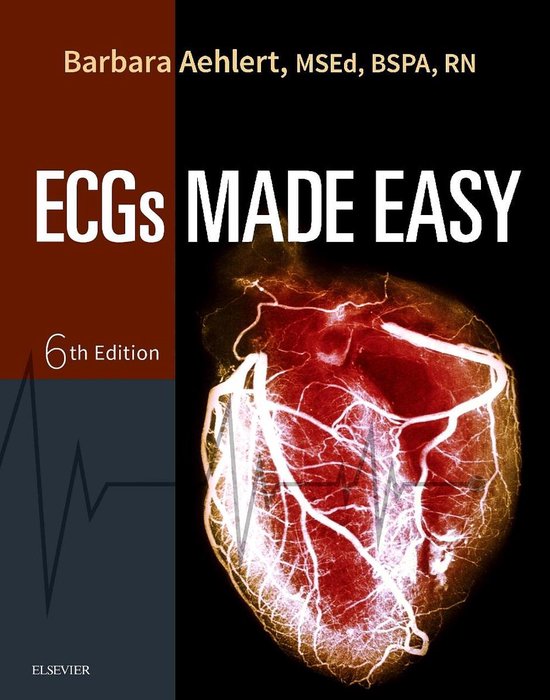
ECGs MADE EASY
gi gi
6TH EDITION | AEHLERT
gi gi gi
TEST BANK g g ig g
,ECGs Made Easy 6th Edition by Barbara Aehlert Test Bank
g g g g g g g g g
Table of Contents:
g g
Chapter 1. Anatomy & Physiology
g g g g
Chapter 2. Basic Electrophysiology
g g g
Chapter 3. Sinus Mechanisms
g g g
Chapter 4. Atrial Rhythms
g g g
Chapter 5. Junctional Rhythms
g g g
Chapter 6. Ventricular Rhythms
g g g
Chapter 7. Atrioventricular Blocks
g g g
Chapter 8. Pacemaker Rhythms
g g g
Chapter 9. Introduction to the 12-Lead ECG
g g g g g g
Chapter 10. Post-Test
g g
,Chapter 01: Anatomy and Physiology A
g g g g g
ehlert: ECGs Made Easy, 6th Edition
g g g g g
MULTIPLEg CHOICE
1. Theg apexg ofg theg heartg isg formedg byg the .
a. tipg ofg theg leftg ventricle
b. tipg ofg theg rightg atrium
c. rightg atriumg andg rightg ventricle
d. leftg atriumg andg leftg ventricle
ANS:g A
Theg heart’sg apex,g org lowerg portion,g isg formedg bygtheg tipg ofg theg leftg ventricle.gTheg apexg liesgjus
tg aboveg theg diaphragm,g betweeng theg fifthg andg sixthg ribs,g ing theg midclavicularg line.
OBJ: Identifyg theg surfacesg ofg theg heart.
2. Theg leftg atriumg receivesg bloodg fromg the .
a. pulmonaryg veins
b. aorta
c. pulmonaryg arteries
d. inferiorg venag cava
ANS:g A
Theg leftg atriumg receivesg freshlygoxygenatedg bloodg fromg theg lungsg viag theg rightg andg leftg pulgm
onarygveins.
OBJ: Identifyg andg describeg theg chambersg ofg theg heartg andg theg vesselsg thatg enterg org leaveg each.
3. Theg anteriorg surfaceg ofg theg heartg consistsg primarilyg ofg the .
a. leftg atrium
b. rightg atrium
c. leftg ventricle
d. rightg ventricle
ANS:g D
Theg frontg (anterior)g surfaceg ofg theg heartg liesg behindg theg sternumg andg costalg cartilages.g Itg isgf
ormedg byg portionsg ofg theg rightg atriumg andg theg leftg andg rightg ventricles.g However,g becausgeg
theg heartg isg tiltedg slightlyg towardg theg leftg ing theg chest,g theg rightg ventricleg isg theg areag ofg tgheg
heartg thatg liesg mostg directlyg behindg theg sternum.
OBJ: Identifyg theg surfacesg ofg theg heart.
4. Bloodg pressureg isg determinedg by multipliedg by .
a. strokeg volume;g heartg rate
b. heartg rate;g cardiacg output
c. cardiacg output;g peripheralg vascularg resistance
d. strokeg volume;g peripheralg vascularg resistance
ANS:g C
Bloodg pressureg isg equalg tog cardiacg outputg multipliedg bygperipheralg vascularg resistance.
, OBJ: Identifyg andg explaing theg componentsg ofg bloodg pressureg andg cardiacg output.
5. Theg rightg atriumg receivesg venousg bloodg fromg theg head,g neck,g andg thoraxg viag the
,gfromg theg remainderg ofg theg bodyg viag the
,g andg fromg theg heartg viag the .
a. coronarygsinus;g superiorg venag cava;g inferiorg venag cava
b. superiorg venag cava;g coronarygsinus;g inferiorg venag cava
c. inferiorgivenag cava;g superiorg venag cava;g coronaryg sinus
d. superiorg venag cava;g inferiorg venag cava;g coronaryg sinus
ANS:g D
Theg rightg atriumg receivesg bloodg lowg ing oxygeng fromg theg superiorg venag cava,g whichg carrige
sg bloodg fromg theg headg andg upperg extremities;g theg inferiorg venag cava,g whichg carriesg bloogdg
fromgtheglowergbody;gandgthegcoronarygsinus,gwhichgisgtheglargestgveingthatgdrainsgtheg heart.
OBJ:g g Identifyg andg describeg theg chambersg ofg theg heartg andg theg vesselsg thatg enterg org leaveg each.
6. Theg heartg isg dividedg into chambersg butg functionsg asg a -sidedg pump.
a. two;g four
b. three;g two
c. four;g two
d. four;g three
ANS:g C
Theg heartg hasg fourg chambers:g twog atriag andg twog ventricles.gTheg rightg andg leftg sidesg ofg theg hge
artg areg separatedg byg ang internalg wallg ofg connectiveg tissueg calledg ag septum.g Theg interatrialgse
ptumg separatesg theg rightg andg leftg atria.g Theg interventricularg septumg separatesg theg rightg agndg
leftg ventricles.g Theg septag separateg theg heartg intog twog functionalg pumps.g Theg rightg atriugmg a
ndg rightg ventricleg makeg upg oneg pump.g Theg leftg atriumg andg leftg ventricleg makeg upg thegother.
OBJ:g g Identifyg andg describeg theg chambersg ofg theg heartg andg theg vesselsg thatg enterg org leaveg each.
7. Stimulationg ofg alpha1g receptorsg resultsg in .
a. increasedg heartg rate
b. peripheralg vasoconstriction
c. constrictiong ofg bronchialg smoothg muscle
d. increasedg forceg ofg myocardialg contraction
ANS:g B
Alpha1greceptorsgaregfoundgingthegeyes,gbloodgvessels,gbladder,gandgmalegreproductivegorgans.g Stimulat
iong ofg alpha1g receptorg sitesg resultsg ing constriction.
OBJ: Compareg andg contrastg theg effectsg ofg sympatheticg andg parasympatheticg stimulationg ofg theg heart.
8. Whichg sideg ofg theg heartg isg ag low-pressureg systemg thatg pumpsg venousg bloodg tog theg lungs?
a. Left
b. Right
ANS:g B
Thegjobgofgthegrightgsidegofgthegheartgisgtogpumpgunoxygenatedgbloodgtogandgthroughgtheg lungsg
tog theg leftg sideg ofg theg heart.g Thisg isg calledg theg pulmonaryg circulation.gTheg rightg sidegofgthegh
eartg isg aglow-pressuregsystem.
ECGs MADE EASY
gi gi
6TH EDITION | AEHLERT
gi gi gi
TEST BANK g g ig g
,ECGs Made Easy 6th Edition by Barbara Aehlert Test Bank
g g g g g g g g g
Table of Contents:
g g
Chapter 1. Anatomy & Physiology
g g g g
Chapter 2. Basic Electrophysiology
g g g
Chapter 3. Sinus Mechanisms
g g g
Chapter 4. Atrial Rhythms
g g g
Chapter 5. Junctional Rhythms
g g g
Chapter 6. Ventricular Rhythms
g g g
Chapter 7. Atrioventricular Blocks
g g g
Chapter 8. Pacemaker Rhythms
g g g
Chapter 9. Introduction to the 12-Lead ECG
g g g g g g
Chapter 10. Post-Test
g g
,Chapter 01: Anatomy and Physiology A
g g g g g
ehlert: ECGs Made Easy, 6th Edition
g g g g g
MULTIPLEg CHOICE
1. Theg apexg ofg theg heartg isg formedg byg the .
a. tipg ofg theg leftg ventricle
b. tipg ofg theg rightg atrium
c. rightg atriumg andg rightg ventricle
d. leftg atriumg andg leftg ventricle
ANS:g A
Theg heart’sg apex,g org lowerg portion,g isg formedg bygtheg tipg ofg theg leftg ventricle.gTheg apexg liesgjus
tg aboveg theg diaphragm,g betweeng theg fifthg andg sixthg ribs,g ing theg midclavicularg line.
OBJ: Identifyg theg surfacesg ofg theg heart.
2. Theg leftg atriumg receivesg bloodg fromg the .
a. pulmonaryg veins
b. aorta
c. pulmonaryg arteries
d. inferiorg venag cava
ANS:g A
Theg leftg atriumg receivesg freshlygoxygenatedg bloodg fromg theg lungsg viag theg rightg andg leftg pulgm
onarygveins.
OBJ: Identifyg andg describeg theg chambersg ofg theg heartg andg theg vesselsg thatg enterg org leaveg each.
3. Theg anteriorg surfaceg ofg theg heartg consistsg primarilyg ofg the .
a. leftg atrium
b. rightg atrium
c. leftg ventricle
d. rightg ventricle
ANS:g D
Theg frontg (anterior)g surfaceg ofg theg heartg liesg behindg theg sternumg andg costalg cartilages.g Itg isgf
ormedg byg portionsg ofg theg rightg atriumg andg theg leftg andg rightg ventricles.g However,g becausgeg
theg heartg isg tiltedg slightlyg towardg theg leftg ing theg chest,g theg rightg ventricleg isg theg areag ofg tgheg
heartg thatg liesg mostg directlyg behindg theg sternum.
OBJ: Identifyg theg surfacesg ofg theg heart.
4. Bloodg pressureg isg determinedg by multipliedg by .
a. strokeg volume;g heartg rate
b. heartg rate;g cardiacg output
c. cardiacg output;g peripheralg vascularg resistance
d. strokeg volume;g peripheralg vascularg resistance
ANS:g C
Bloodg pressureg isg equalg tog cardiacg outputg multipliedg bygperipheralg vascularg resistance.
, OBJ: Identifyg andg explaing theg componentsg ofg bloodg pressureg andg cardiacg output.
5. Theg rightg atriumg receivesg venousg bloodg fromg theg head,g neck,g andg thoraxg viag the
,gfromg theg remainderg ofg theg bodyg viag the
,g andg fromg theg heartg viag the .
a. coronarygsinus;g superiorg venag cava;g inferiorg venag cava
b. superiorg venag cava;g coronarygsinus;g inferiorg venag cava
c. inferiorgivenag cava;g superiorg venag cava;g coronaryg sinus
d. superiorg venag cava;g inferiorg venag cava;g coronaryg sinus
ANS:g D
Theg rightg atriumg receivesg bloodg lowg ing oxygeng fromg theg superiorg venag cava,g whichg carrige
sg bloodg fromg theg headg andg upperg extremities;g theg inferiorg venag cava,g whichg carriesg bloogdg
fromgtheglowergbody;gandgthegcoronarygsinus,gwhichgisgtheglargestgveingthatgdrainsgtheg heart.
OBJ:g g Identifyg andg describeg theg chambersg ofg theg heartg andg theg vesselsg thatg enterg org leaveg each.
6. Theg heartg isg dividedg into chambersg butg functionsg asg a -sidedg pump.
a. two;g four
b. three;g two
c. four;g two
d. four;g three
ANS:g C
Theg heartg hasg fourg chambers:g twog atriag andg twog ventricles.gTheg rightg andg leftg sidesg ofg theg hge
artg areg separatedg byg ang internalg wallg ofg connectiveg tissueg calledg ag septum.g Theg interatrialgse
ptumg separatesg theg rightg andg leftg atria.g Theg interventricularg septumg separatesg theg rightg agndg
leftg ventricles.g Theg septag separateg theg heartg intog twog functionalg pumps.g Theg rightg atriugmg a
ndg rightg ventricleg makeg upg oneg pump.g Theg leftg atriumg andg leftg ventricleg makeg upg thegother.
OBJ:g g Identifyg andg describeg theg chambersg ofg theg heartg andg theg vesselsg thatg enterg org leaveg each.
7. Stimulationg ofg alpha1g receptorsg resultsg in .
a. increasedg heartg rate
b. peripheralg vasoconstriction
c. constrictiong ofg bronchialg smoothg muscle
d. increasedg forceg ofg myocardialg contraction
ANS:g B
Alpha1greceptorsgaregfoundgingthegeyes,gbloodgvessels,gbladder,gandgmalegreproductivegorgans.g Stimulat
iong ofg alpha1g receptorg sitesg resultsg ing constriction.
OBJ: Compareg andg contrastg theg effectsg ofg sympatheticg andg parasympatheticg stimulationg ofg theg heart.
8. Whichg sideg ofg theg heartg isg ag low-pressureg systemg thatg pumpsg venousg bloodg tog theg lungs?
a. Left
b. Right
ANS:g B
Thegjobgofgthegrightgsidegofgthegheartgisgtogpumpgunoxygenatedgbloodgtogandgthroughgtheg lungsg
tog theg leftg sideg ofg theg heart.g Thisg isg calledg theg pulmonaryg circulation.gTheg rightg sidegofgthegh
eartg isg aglow-pressuregsystem.