

Week 3:
1.As discussed in the lesson and assigned reading for this
week, EHRs provide both benefits and drawbacks. Create a
“Pros” versus “Cons” table and include at least 3 items for
each list. Next to each item, provide a brief rationale as to why
you selected to include it on the respective list.
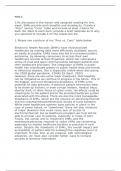
1. Please see a picture of my “Pros vs. Cons” table below.
Electronic Health Records (EHRs) have revolutionized
healthcare by making data more efficiently available, secure,
an easily accessible. EHRs have also led to increased patient
autonomy, by allowing consumers to access their own
healthcare records at their fingertips, which has cultivated a
sense of trust and open communication between patients and
their healthcare providers. The integration of EHRs in public
health has contributed greatly to public health data and trends
in infectious disease, this is especially visible when discussing
the 2020 global pandemic, COVID-19 (Sarri, 2022).
However, there are also some major drawbacks, that hopefully
can be mitigated as we continue to progress in the future. One of
the biggest, and most threatening drawbacks, of EHRs is the
potential for data breaches. If sensitive patient information were
to be stolen by hackers, or even corrupt insiders, medical fraud,
identity theft, or other forms of cyber-crime, the effects could be
catastrophic to the patient and to the provider/healthcare system
associated with the attack. There are also the more manageable
drawbacks of EHRs, which are the reliance on electricity/internet
and the cost/maintenance/technical issues of such systems.
While most healthcare systems have policies in place in the
case of power failure, or “downtimes” there are also instances
of major disasters that could cause lack of access to
electricity/internet, but as healthcare providers we must still be
able to provide care to patients, especially in times of peril.
Finally, the overall cost to implement EHRs and the
maintenance/training required to utilize EHRs are concerning,
especially for smaller healthcare facilities or practices in rural
areas. Despite the drawbacks of EHRs, the overall impact and
accessibility of patient data far outweigh the negatives, but it is
important to note that as we progress with technological
advances, we must also consider better ways to increase
security of sensitive information.
, PROs to EHRs Rationale CONs to Rationale
EHRs
Better • Real Private • High potential
Organization and time Information/Dat for data
patient breaches/cyber-
accessibility a Security
information attacks, which
(Vital signs, could
medications, compromise
lab results) private health
• Reduce information.
errors in • Potential for
interpretation Identity
of handwritten theft/maliciou
orders/notes s
attacks on
vulnerable
populations
Patient • Allows Technical • EHRs are
Autonomy/Patient patients to issues/Interne dependent
view their lab on
Centered Care t & Electricity
results, diagnosis, dependence electricity and
and medications. internet, if a
• Cultivates a natural disaster
sense of trust were to occur
of the this could, and
healthcare has, impact(ed)
team, by allowing patient care.
the patient to • Downtime/
participate in their software
own care glitches can
occur during
updates and
impact quality
and safety of
patient care
mproved • Allows Cost/ • EHR
Management of providers Maintenance systems
to require
Data/Research/Tre
analyze data and organizations to
n ds
trends in the purchase their
patient’s health software and
overtime. often require a
• Allows nurse long-term
researchers/p contract
1.As discussed in the lesson and assigned reading for this
week, EHRs provide both benefits and drawbacks. Create a
“Pros” versus “Cons” table and include at least 3 items for
each list. Next to each item, provide a brief rationale as to why
you selected to include it on the respective list.
1. Please see a picture of my “Pros vs. Cons” table below.
Electronic Health Records (EHRs) have revolutionized
healthcare by making data more efficiently available, secure,
an easily accessible. EHRs have also led to increased patient
autonomy, by allowing consumers to access their own
healthcare records at their fingertips, which has cultivated a
sense of trust and open communication between patients and
their healthcare providers. The integration of EHRs in public
health has contributed greatly to public health data and trends
in infectious disease, this is especially visible when discussing
the 2020 global pandemic, COVID-19 (Sarri, 2022).
However, there are also some major drawbacks, that hopefully
can be mitigated as we continue to progress in the future. One of
the biggest, and most threatening drawbacks, of EHRs is the
potential for data breaches. If sensitive patient information were
to be stolen by hackers, or even corrupt insiders, medical fraud,
identity theft, or other forms of cyber-crime, the effects could be
catastrophic to the patient and to the provider/healthcare system
associated with the attack. There are also the more manageable
drawbacks of EHRs, which are the reliance on electricity/internet
and the cost/maintenance/technical issues of such systems.
While most healthcare systems have policies in place in the
case of power failure, or “downtimes” there are also instances
of major disasters that could cause lack of access to
electricity/internet, but as healthcare providers we must still be
able to provide care to patients, especially in times of peril.
Finally, the overall cost to implement EHRs and the
maintenance/training required to utilize EHRs are concerning,
especially for smaller healthcare facilities or practices in rural
areas. Despite the drawbacks of EHRs, the overall impact and
accessibility of patient data far outweigh the negatives, but it is
important to note that as we progress with technological
advances, we must also consider better ways to increase
security of sensitive information.
, PROs to EHRs Rationale CONs to Rationale
EHRs
Better • Real Private • High potential
Organization and time Information/Dat for data
patient breaches/cyber-
accessibility a Security
information attacks, which
(Vital signs, could
medications, compromise
lab results) private health
• Reduce information.
errors in • Potential for
interpretation Identity
of handwritten theft/maliciou
orders/notes s
attacks on
vulnerable
populations
Patient • Allows Technical • EHRs are
Autonomy/Patient patients to issues/Interne dependent
view their lab on
Centered Care t & Electricity
results, diagnosis, dependence electricity and
and medications. internet, if a
• Cultivates a natural disaster
sense of trust were to occur
of the this could, and
healthcare has, impact(ed)
team, by allowing patient care.
the patient to • Downtime/
participate in their software
own care glitches can
occur during
updates and
impact quality
and safety of
patient care
mproved • Allows Cost/ • EHR
Management of providers Maintenance systems
to require
Data/Research/Tre
analyze data and organizations to
n ds
trends in the purchase their
patient’s health software and
overtime. often require a
• Allows nurse long-term
researchers/p contract


