

TRANSLATION
definition
ribosomes read the mRNA copy and assemble the polypeptide
● Occurs in the cytoplasm
● Has three stages:
- Initiation
- Elongation
- Termination
This is one of the most energy-consuming processes of the cell
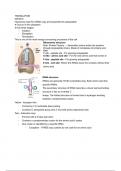
Ribosomes structure
Role: Protein Factory — Assembles amino acids into proteins
through polypeptide chains. Made of complexes of proteins and
RNA
P site - peptide site - For growing polypeptide
A Site - amino acid site - For the next amino acid that comes in
P site - peptide site - For growing polypeptide
E site - exit site: Where the tRNAs leave the complex without their
amino acid
tRNA structure
tRNAs are generally 76-90 nucleotides long. Each amino acid has
specific tRNAs.
The secondary structure of tRNA looks like a clover leaf and tertiary
structure is like an inverted ‘L’
shape. The folded structure is formed due to hydrogen bonding
between complementary bases.
Yellow - Acceptor Arm
- Formed by 7-9 nucleotide base pairing
- Contains 5’ phosphate group and 3’ end with amino attachment site
Teal - Anticodon loop
- Formed with a 5 base pair stem
- Contains a complementary codon for the amino acid it caries
- One codon is identified by a specific tRNA
- Exception - THREE stop codons do not code for an amino acid
definition
ribosomes read the mRNA copy and assemble the polypeptide
● Occurs in the cytoplasm
● Has three stages:
- Initiation
- Elongation
- Termination
This is one of the most energy-consuming processes of the cell
Ribosomes structure
Role: Protein Factory — Assembles amino acids into proteins
through polypeptide chains. Made of complexes of proteins and
RNA
P site - peptide site - For growing polypeptide
A Site - amino acid site - For the next amino acid that comes in
P site - peptide site - For growing polypeptide
E site - exit site: Where the tRNAs leave the complex without their
amino acid
tRNA structure
tRNAs are generally 76-90 nucleotides long. Each amino acid has
specific tRNAs.
The secondary structure of tRNA looks like a clover leaf and tertiary
structure is like an inverted ‘L’
shape. The folded structure is formed due to hydrogen bonding
between complementary bases.
Yellow - Acceptor Arm
- Formed by 7-9 nucleotide base pairing
- Contains 5’ phosphate group and 3’ end with amino attachment site
Teal - Anticodon loop
- Formed with a 5 base pair stem
- Contains a complementary codon for the amino acid it caries
- One codon is identified by a specific tRNA
- Exception - THREE stop codons do not code for an amino acid


