

Week Three Quiz Summary
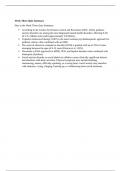
Here is the Week Three Quiz Summary:
According to the Centers for Disease Control and Prevention (CDC, 2022), pediatric
anxiety disorders are among the most diagnosed mental health disorders, affecting 9.4%
of U.S. children and youth (approximately 5.8 billion).
Cognitive-behavioral therapy (CBT) is the most common psychotherapeutic approach for
pediatric clients, often combined with an SSRI.
The onset of obsessive-compulsive disorder (OCD) is gradual with up to 25% of cases
emerging between the ages of 8-12 years (Preston et al., 2021).
Fluoxetine is FDA approved for MDD, OCD, and bipolar disorder when combined with
olanzapine (Symbax).
Social anxiety disorder or social phobia in children causes clinically significant distress
and interferes with daily activities. Physical symptoms may include blushing,
stammering, nausea, difficulty speaking, or a racing heart. social anxiety may manifest
with tantrums, crying, clinging, freezing up, or withdrawing from social situations.
Here is the Week Three Quiz Summary:
According to the Centers for Disease Control and Prevention (CDC, 2022), pediatric
anxiety disorders are among the most diagnosed mental health disorders, affecting 9.4%
of U.S. children and youth (approximately 5.8 billion).
Cognitive-behavioral therapy (CBT) is the most common psychotherapeutic approach for
pediatric clients, often combined with an SSRI.
The onset of obsessive-compulsive disorder (OCD) is gradual with up to 25% of cases
emerging between the ages of 8-12 years (Preston et al., 2021).
Fluoxetine is FDA approved for MDD, OCD, and bipolar disorder when combined with
olanzapine (Symbax).
Social anxiety disorder or social phobia in children causes clinically significant distress
and interferes with daily activities. Physical symptoms may include blushing,
stammering, nausea, difficulty speaking, or a racing heart. social anxiety may manifest
with tantrums, crying, clinging, freezing up, or withdrawing from social situations.


