

NR 547 MIDTERM STUDY GUIDE
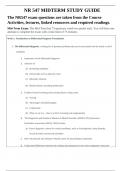
The NR547 exam questions are taken from the Course
Activities, lectures, linked resources and required readings.
Mid-Term Exam: The Mid-Term has 75 questions worth two points each. You will have one
attempt to complete the exam with a time limit of 75 minutes.
Week 1: Foundations in Differential Diagnosis Formulation
1. The differential diagnosis: working list of potential problems that can be associated with the initial or chief
complaint.
1. Importance of the differential diagnosis
2. Analysis of:
a) presenting symptoms
b) clinical data such as physical exam
c) laboratory analysis.
d) Medical history including medications
3. Evidence-based screening tools and psychiatric rating scales
a) Scoring
b) Advantages and disadvantages
c) Components
d) When to use (i.e., when is a brief screening tool inappropriate)
4. The Diagnostic and Statistical Manual of Mental Disorders (DSM-5-TR) (American
Psychiatric Association [APA], 2022) criteria.
a) Know diagnostic criteria for various problems, such as Schizophrenia, sleep disorder,
sexual disorders and anxiety disorders
5. Rule out physical and substance-related causes for psychological symptoms.
6. Understand differences between the workup and treatment for new onset symptoms versus pre-
, existing symptoms
a) New patients or new onset symptoms require full workup
b) Pre-existing conditions and diagnosis should be taken into account when formulating
your differentials
c) Pre-existing conditions may exclude some differentials
2. Social determinants of health and the psychiatric mental health nurse practitioners (PMHNPs) role in
addressing SDOH at the individual and population levels. SDOH have a significant impact on health, quality
of life, and life expectancy in relation to mental health. Social and environmental factors can influence genetic
determinants of health and illness and affect the risk for mental illness and substance use disorders.
Discrimination, racism, social exclusion, Adverse early life experiences, Poor education, Unemployment,
underemployment, job insecurity, Poverty, Neighborhood deprivation, Food insecurity, Poor housing
quality and housing instability
3. Review basics of laboratory analysis including:
1. CBC- Hgb 12-18 grams/100 mL /hct: 38%-48%/ Plt: 150,000-300,000/mL /WBC 5k-10k
2. CMP-NA 135-145/ K 3.5-5/ CL95-105/BICARB 22-28/ CREAT 0.6-1.2 BUN 7-18
3. Thyroid function tests TSH: 0.4-4.5 mIU/L T3: 100-200 ng/dL T4: 5-11 ug/dL
4. Vitamin B12 levels- psychiatric symptoms associated with B12 deficiency include depression,
mania, psychotic symptoms, and cognitive impairment B12 190-950 ok if 2-300 borderline
and additional testing possibly needed
5. Vitamin D levels- 20-50 ng/mL. A level less than 12 ng/mL indicates a deficiency.
4. Know terms
1. Alogia- short answers, using few words to communicate.
2. Avolition- lack of initiative, withdrawal from work/school
3. Anosognosia- functional inability to recognize illness.
, 4. Affective flattening- lack of emotional response to given
situation
Week 2: Differential Diagnosis of Anxiety
1. Anxiety- worry,restlessness, irritability, muscle tension, fatigue, and sleep disturbances.
a) GAD- characterized by persistent, uncontrollable worry about ordinary, everyday situations for
6 months or longer and 3 specific symptoms Anxiety characterized by: Restlessness Fatigue Poor
concentration Irritability Muscle tension Insomnia.
b) OCD - characterized by persistent, uncontrollable thoughts(obsessions) or actions(compulsions)
that occur over an hour or more per day, know comorbidities.
1. Compulsions typically performed in response to an obsessive thought.
2. Subclinical versus clinical symptoms
c) Panic disorder – know diagnostic criteria and physiological symptoms- an acute intense attack of
anxiety (a panic attack) accompanied by feelings of impending doom. The anxiety occurs during
discrete periods of intense fear that can vary from several attacks during 1 day to only a few
attacks during a year. (Cardio, GI, Skin, Neuro, psych symptoms) Requires -1) Panic aGack: 4+
symptoms
2) at least 1 attack and avoidance behavior or anticipatory anxiety: for 1 month
d) Social phobias/SAD – know various phobias and diagnostic criteria- condition in which typical,
everyday social interactions cause significant anxiety, self-consciousness, fear of embarrassment,
or a feeling of being judged negatively by others Avoidance behaviors: of the feared social
situations.
Requires anxiety is persistent and last greater then 6 months requires all symptoms above
e) Agorophobia – know definition and symptoms- fear of or anxiety regarding places from which
escape might be difficult (crowds, public transportation, open or closed spaces). Requires 6 or
more months and 1 source of fear for diagnosis, avoid leaving home without lay person or they’ll
have panic attack can coincide with panic disorder but is s separate diagnosis as well.
f) General phobias Natural or Environmental Type: fear of lightning, water, tornado. Injury type:
The NR547 exam questions are taken from the Course
Activities, lectures, linked resources and required readings.
Mid-Term Exam: The Mid-Term has 75 questions worth two points each. You will have one
attempt to complete the exam with a time limit of 75 minutes.
Week 1: Foundations in Differential Diagnosis Formulation
1. The differential diagnosis: working list of potential problems that can be associated with the initial or chief
complaint.
1. Importance of the differential diagnosis
2. Analysis of:
a) presenting symptoms
b) clinical data such as physical exam
c) laboratory analysis.
d) Medical history including medications
3. Evidence-based screening tools and psychiatric rating scales
a) Scoring
b) Advantages and disadvantages
c) Components
d) When to use (i.e., when is a brief screening tool inappropriate)
4. The Diagnostic and Statistical Manual of Mental Disorders (DSM-5-TR) (American
Psychiatric Association [APA], 2022) criteria.
a) Know diagnostic criteria for various problems, such as Schizophrenia, sleep disorder,
sexual disorders and anxiety disorders
5. Rule out physical and substance-related causes for psychological symptoms.
6. Understand differences between the workup and treatment for new onset symptoms versus pre-
, existing symptoms
a) New patients or new onset symptoms require full workup
b) Pre-existing conditions and diagnosis should be taken into account when formulating
your differentials
c) Pre-existing conditions may exclude some differentials
2. Social determinants of health and the psychiatric mental health nurse practitioners (PMHNPs) role in
addressing SDOH at the individual and population levels. SDOH have a significant impact on health, quality
of life, and life expectancy in relation to mental health. Social and environmental factors can influence genetic
determinants of health and illness and affect the risk for mental illness and substance use disorders.
Discrimination, racism, social exclusion, Adverse early life experiences, Poor education, Unemployment,
underemployment, job insecurity, Poverty, Neighborhood deprivation, Food insecurity, Poor housing
quality and housing instability
3. Review basics of laboratory analysis including:
1. CBC- Hgb 12-18 grams/100 mL /hct: 38%-48%/ Plt: 150,000-300,000/mL /WBC 5k-10k
2. CMP-NA 135-145/ K 3.5-5/ CL95-105/BICARB 22-28/ CREAT 0.6-1.2 BUN 7-18
3. Thyroid function tests TSH: 0.4-4.5 mIU/L T3: 100-200 ng/dL T4: 5-11 ug/dL
4. Vitamin B12 levels- psychiatric symptoms associated with B12 deficiency include depression,
mania, psychotic symptoms, and cognitive impairment B12 190-950 ok if 2-300 borderline
and additional testing possibly needed
5. Vitamin D levels- 20-50 ng/mL. A level less than 12 ng/mL indicates a deficiency.
4. Know terms
1. Alogia- short answers, using few words to communicate.
2. Avolition- lack of initiative, withdrawal from work/school
3. Anosognosia- functional inability to recognize illness.
, 4. Affective flattening- lack of emotional response to given
situation
Week 2: Differential Diagnosis of Anxiety
1. Anxiety- worry,restlessness, irritability, muscle tension, fatigue, and sleep disturbances.
a) GAD- characterized by persistent, uncontrollable worry about ordinary, everyday situations for
6 months or longer and 3 specific symptoms Anxiety characterized by: Restlessness Fatigue Poor
concentration Irritability Muscle tension Insomnia.
b) OCD - characterized by persistent, uncontrollable thoughts(obsessions) or actions(compulsions)
that occur over an hour or more per day, know comorbidities.
1. Compulsions typically performed in response to an obsessive thought.
2. Subclinical versus clinical symptoms
c) Panic disorder – know diagnostic criteria and physiological symptoms- an acute intense attack of
anxiety (a panic attack) accompanied by feelings of impending doom. The anxiety occurs during
discrete periods of intense fear that can vary from several attacks during 1 day to only a few
attacks during a year. (Cardio, GI, Skin, Neuro, psych symptoms) Requires -1) Panic aGack: 4+
symptoms
2) at least 1 attack and avoidance behavior or anticipatory anxiety: for 1 month
d) Social phobias/SAD – know various phobias and diagnostic criteria- condition in which typical,
everyday social interactions cause significant anxiety, self-consciousness, fear of embarrassment,
or a feeling of being judged negatively by others Avoidance behaviors: of the feared social
situations.
Requires anxiety is persistent and last greater then 6 months requires all symptoms above
e) Agorophobia – know definition and symptoms- fear of or anxiety regarding places from which
escape might be difficult (crowds, public transportation, open or closed spaces). Requires 6 or
more months and 1 source of fear for diagnosis, avoid leaving home without lay person or they’ll
have panic attack can coincide with panic disorder but is s separate diagnosis as well.
f) General phobias Natural or Environmental Type: fear of lightning, water, tornado. Injury type:


