

Lymphatic System
the immune system is strategically distributed throughout the body, particularly at those points such as the respiratory and
digestive tract mucosae, where pathogens can most easily gain entry to the body
Immune System
Anatomy
the immune system has 2 major anatomical parts
specialized immune cells, many of which are leukocytes and their close relatives
lymphoid organs and tissues including the bone marrow, lymph nodes, spleen and thymus
lymphoid organs and tissues are sites where lymphocytes are produced, reside, and come in contact with pathogens
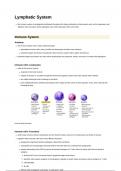
Immune cells: Leukocytes
cells of the immune system
originate in the bone marrow
migrate to tissues or circulate through the blood and lymphatic system and enter tissues when needed
are called leukocytes when traveling in the blood
have traditionally been classified according to their shape and the colors of their granules, if any, when stained with
histological dyes
most to least common
Immune cells: Functions
while many immune cells are leukocytes and are found in blood, many are not leukocytes and reside in tissues
together these immune cells have many different functions
phagocytes engulf and destroy pathogens, dead cells and debris
neutrophils and macrophages primarily perform this task (they are “professional” phagocytes)
antigen-presenting cells (APCs) process and present antigens to T cells. there are three cells that can present
antigens
all three APCs are commonly found in lymphoid organs and tissues
1. dendritic cells capture antigens in the periphery, migrate to lymph nodes and present these antigens to T cells
2. macrophages
3. B cells
effector cells of adaptive community - B cells and T cells
, Primary and Secondary Lymphoid Organs
lymphocytes are a key component of adaptive immunity
leukocytes - originate from bone marrow
B cells - mature in bone marrow
T cells mature in thymus
primary lymphoid organs
bone marrow
thymus
the secondary lymphoid organs
lymph nodes, spleen, peyer’s patches in the small intestine,
appendix, tonsils
where lymphocytes contact pathogens and are activated
are strategically located at potential sites of invasion
house macrophages and other immune system cells
Lymphatic Vessels
the lymphatic system overlaps in structure and function with the immune system
the lymphatic system consists of
a one way system of vessels called lymphatic vessels
the fluid in those vessels, called lymph
lymph nodes
lymphatic capillaries collect excess interstitial
fluid that leaves capillaries and accumulates in
the tissues
this interstitial fluid is drained by lymphatic
capillaries into larger lymph vessels, filtered
through lymph nodes to remove antigens and
eventually returned to the circulatory system
If lymphatic vessels do not function properly,
fluid builds up in tissues ( a condition known as
lymphedema) so antigens are not efficiently
delivered to the lymph nodes
affected tissues are at increased risk of
uncontrolled infection
the immune system is strategically distributed throughout the body, particularly at those points such as the respiratory and
digestive tract mucosae, where pathogens can most easily gain entry to the body
Immune System
Anatomy
the immune system has 2 major anatomical parts
specialized immune cells, many of which are leukocytes and their close relatives
lymphoid organs and tissues including the bone marrow, lymph nodes, spleen and thymus
lymphoid organs and tissues are sites where lymphocytes are produced, reside, and come in contact with pathogens
Immune cells: Leukocytes
cells of the immune system
originate in the bone marrow
migrate to tissues or circulate through the blood and lymphatic system and enter tissues when needed
are called leukocytes when traveling in the blood
have traditionally been classified according to their shape and the colors of their granules, if any, when stained with
histological dyes
most to least common
Immune cells: Functions
while many immune cells are leukocytes and are found in blood, many are not leukocytes and reside in tissues
together these immune cells have many different functions
phagocytes engulf and destroy pathogens, dead cells and debris
neutrophils and macrophages primarily perform this task (they are “professional” phagocytes)
antigen-presenting cells (APCs) process and present antigens to T cells. there are three cells that can present
antigens
all three APCs are commonly found in lymphoid organs and tissues
1. dendritic cells capture antigens in the periphery, migrate to lymph nodes and present these antigens to T cells
2. macrophages
3. B cells
effector cells of adaptive community - B cells and T cells
, Primary and Secondary Lymphoid Organs
lymphocytes are a key component of adaptive immunity
leukocytes - originate from bone marrow
B cells - mature in bone marrow
T cells mature in thymus
primary lymphoid organs
bone marrow
thymus
the secondary lymphoid organs
lymph nodes, spleen, peyer’s patches in the small intestine,
appendix, tonsils
where lymphocytes contact pathogens and are activated
are strategically located at potential sites of invasion
house macrophages and other immune system cells
Lymphatic Vessels
the lymphatic system overlaps in structure and function with the immune system
the lymphatic system consists of
a one way system of vessels called lymphatic vessels
the fluid in those vessels, called lymph
lymph nodes
lymphatic capillaries collect excess interstitial
fluid that leaves capillaries and accumulates in
the tissues
this interstitial fluid is drained by lymphatic
capillaries into larger lymph vessels, filtered
through lymph nodes to remove antigens and
eventually returned to the circulatory system
If lymphatic vessels do not function properly,
fluid builds up in tissues ( a condition known as
lymphedema) so antigens are not efficiently
delivered to the lymph nodes
affected tissues are at increased risk of
uncontrolled infection


