Global trends in consumption
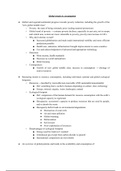
● Global and regional/continental progress towards poverty reduction, including the growth of the
“new global middle class”
○ Poverty: the state of being extremely poor, lacking material possessions
○ Global trend of poverty → extreme poverty declines, especially in east asia, not in europe
and central asia, women are more vulnerable to poverty, poverty rates increase in LICs
○ Why did it decline overall?
■ Increased globalisation and trade made international mobility and more efficient
production possible
■ Health care, education, infrastructure brought improvements to some countries
■ Use and acknowledgement of advanced and appropriate technology
○ Outcomes
■ More income, health standards
■ Decrease in overall malnutrition
■ Better housing
○ Consequences
■ Growth of new global middle class, increase in consumption → shortage of
scarce resources
● Measuring trends in resource consumption, including individual, national and global ecological
footprints
○ Resources - classified by renewable/non-renewable AND sustainable/unsustainable
■ Def: something that is useful to humans depending on culture, time, technology
■ Energy, mineral, organic, water, landscapes, natural
○ Ecological footprint
■ Def: comparison of the human demand for resource consumption with the earth’s
ecological capacity to regenerate
■ Biocapacity: ecosystem’s capacity to produce resources that are used by people,
and to absorb the waste
■ Biocapacity deficit leads to environmental degradation
● Destruction of coral reefs
● Air and water pollution
● Global warming
● Deforestation
● Soil erosion
● Over-exploitation of resources
○ Disadvantages of ecological footprint
■ Energy used for trade isn’t counted
■ Greenhouse gas except from carbon dioxide is ignored
■ International comparisons are not reliable
● An overview of global patterns and trends in the availability and consumption of:
, - Water, including embedded water in food and manufactured goods
○ Global consumption of water increases as global middle class emerged → scarcity
○ Water is a NON RENEWABLE RESOURCE
■ Most water is evaporated and used as embedded water, takes time to recharge
○ Water scarcity
■ Need of water imports, natural water resources can’t meet the demand, poor
management of government and lack of investment for water
○ Embedded water
■ Water used in the process of producing/selling/consuming a product
■ Green water (precipitation stored as moisture), blue water (precipitation collected
in lakes, rivers), grey water (waste water produced by houses)
- Land/food, including changing diets in middle-income countries
○ Homogenization of diet and food culture
■ Rising income and perception towards western food being fashionable,
developed trade link and globalisation
■ More calories and fat consumed, less world hunger BUT more unhealthy
- Energy, including the relative and changing importance of hydrocarbons, nuclear power,
renewables, new sources of modern energy
○ Scarcity of oil: peak oil (the point in time when the maximum rate of global petroleum
extraction is reached)
○ Resource consumption and distribution of oil is uneven - affects development
○ Renewable energy
■ Biomass: important for LICs but increasing burden for women
■ Wind power: air pollution free, visual and noise pollution, kills birds
■ Hydroelectricity: forces migration, animal and human habitat, dams can control
floods and drought
■ Geothermal: escaping gas usually contains CO2, risks of earthquakes and
volcanic eruptions
○ Nuclear energy
■ Pros: cheap, efficient, a lot of reserves, 0 carbon emission
■ Cons: wastes are radioactive, accidents, costly to construct (cheap to operate)
● Global and regional/continental progress towards poverty reduction, including the growth of the
“new global middle class”
○ Poverty: the state of being extremely poor, lacking material possessions
○ Global trend of poverty → extreme poverty declines, especially in east asia, not in europe
and central asia, women are more vulnerable to poverty, poverty rates increase in LICs
○ Why did it decline overall?
■ Increased globalisation and trade made international mobility and more efficient
production possible
■ Health care, education, infrastructure brought improvements to some countries
■ Use and acknowledgement of advanced and appropriate technology
○ Outcomes
■ More income, health standards
■ Decrease in overall malnutrition
■ Better housing
○ Consequences
■ Growth of new global middle class, increase in consumption → shortage of
scarce resources
● Measuring trends in resource consumption, including individual, national and global ecological
footprints
○ Resources - classified by renewable/non-renewable AND sustainable/unsustainable
■ Def: something that is useful to humans depending on culture, time, technology
■ Energy, mineral, organic, water, landscapes, natural
○ Ecological footprint
■ Def: comparison of the human demand for resource consumption with the earth’s
ecological capacity to regenerate
■ Biocapacity: ecosystem’s capacity to produce resources that are used by people,
and to absorb the waste
■ Biocapacity deficit leads to environmental degradation
● Destruction of coral reefs
● Air and water pollution
● Global warming
● Deforestation
● Soil erosion
● Over-exploitation of resources
○ Disadvantages of ecological footprint
■ Energy used for trade isn’t counted
■ Greenhouse gas except from carbon dioxide is ignored
■ International comparisons are not reliable
● An overview of global patterns and trends in the availability and consumption of:
, - Water, including embedded water in food and manufactured goods
○ Global consumption of water increases as global middle class emerged → scarcity
○ Water is a NON RENEWABLE RESOURCE
■ Most water is evaporated and used as embedded water, takes time to recharge
○ Water scarcity
■ Need of water imports, natural water resources can’t meet the demand, poor
management of government and lack of investment for water
○ Embedded water
■ Water used in the process of producing/selling/consuming a product
■ Green water (precipitation stored as moisture), blue water (precipitation collected
in lakes, rivers), grey water (waste water produced by houses)
- Land/food, including changing diets in middle-income countries
○ Homogenization of diet and food culture
■ Rising income and perception towards western food being fashionable,
developed trade link and globalisation
■ More calories and fat consumed, less world hunger BUT more unhealthy
- Energy, including the relative and changing importance of hydrocarbons, nuclear power,
renewables, new sources of modern energy
○ Scarcity of oil: peak oil (the point in time when the maximum rate of global petroleum
extraction is reached)
○ Resource consumption and distribution of oil is uneven - affects development
○ Renewable energy
■ Biomass: important for LICs but increasing burden for women
■ Wind power: air pollution free, visual and noise pollution, kills birds
■ Hydroelectricity: forces migration, animal and human habitat, dams can control
floods and drought
■ Geothermal: escaping gas usually contains CO2, risks of earthquakes and
volcanic eruptions
○ Nuclear energy
■ Pros: cheap, efficient, a lot of reserves, 0 carbon emission
■ Cons: wastes are radioactive, accidents, costly to construct (cheap to operate)