Full Summary Sheet
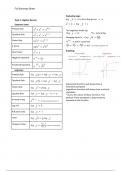
Evaluating Logs:
Topic 1: Algebra Review 𝑙𝑜𝑔 𝑎 𝑏 = 𝑎 𝑡𝑜 𝑡ℎ𝑒 𝑤ℎ𝑎𝑡 𝑝𝑜𝑤𝑒𝑟 = 𝑏
𝑥
Exponent Laws: 𝑎 = 𝑏 → 𝑙𝑜𝑔 𝑎
𝑏 =x
Product Rule 𝑚 𝑛 𝑚+𝑛
𝑎 ×𝑎 = 𝑎 *no negatives inside log
𝑚 𝑛 𝑚−𝑛
*𝑙𝑜𝑔 𝑒𝑥 = 𝑙𝑛 *ln = natural log
Quotient Rule 𝑎 ÷𝑎 =𝑎 𝑙𝑛12
Changing log to ln → 𝑙𝑜𝑔 512 = 𝑙𝑛5
Power Rule 𝑚 𝑛 𝑚×𝑛 𝑙𝑛3
(𝑎 ) =𝑎 *𝑒 → e and ln cancel out
3
𝑙𝑛8 𝑙𝑛2 3𝑙𝑛2
2 Terms 𝑚 𝑚 𝑚 = = = 𝑙𝑛2 - can simplify using power rule
(𝑎𝑏) =𝑎 𝑏 3 3 3
0 Graphing:
Zero Power 𝑎 =1
Negative exponent −𝑚 1
𝑎 = 𝑚
𝑎
𝑚
Fractional Exponent 𝑛
𝑛 𝑚
𝑎 = 𝑎
Log Laws:
Product Rule 𝑙𝑜𝑔 𝑎(𝑥𝑦) = 𝑙𝑜𝑔 𝑎𝑥 + 𝑙𝑜𝑔 𝑎𝑦
Quotient Rule 𝑥
𝑙𝑜𝑔 𝑎( 𝑦 ) = 𝑙𝑜𝑔 𝑎𝑥 − 𝑙𝑜𝑔 𝑎𝑦
Exponential functions will always have a
Power Rule 𝑝 horizontal asymptote
𝑙𝑜𝑔 𝑎𝑥 = 𝑝𝑙𝑜𝑔 𝑎𝑥
Logarithmic functions will always have a vertical
asymptote
Equality Rule 𝑙𝑜𝑔 𝑎𝑥 = 𝑙𝑜𝑔 𝑎𝑦 → 𝑥 = 𝑦
* due to the nature of these functions. The
position of the asymptote is determined by
# raised to log 𝑙𝑜𝑔 𝑎𝑥
𝑎 = 𝑥*base and power cancel out constants in the function.
Log of 1 𝑙𝑜𝑔 𝑎1 = 0
# & base same 𝑙𝑜𝑔 𝑎𝑎 = 1
roots 𝑝 1
𝑙𝑜𝑔 𝑎
𝑥= 𝑝
𝑙𝑜𝑔 𝑎𝑥
Change in Base 𝑙𝑜𝑔 𝑏𝑥
𝑙𝑜𝑔 𝑎𝑥 = 𝑙𝑜𝑔 𝑏𝑎
*base can be anything
, Full Summary Sheet
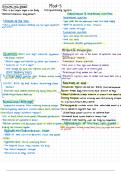
Series and Sequences:
N = term number (#)
Un = value that corresponds with term
number ( 𝑈 (3) = 8)
Sn = sum
d= amount added or subtracted (common
difference)
r = amount multiplied or subtracted
(common ratio) * to find do #2 / #1 =
Common Ratio
Arithmetic sequences - are only numbers that Sigma Notation:
add and subtract values to make a pattern -Used to represent a sum of a sequence
𝑈𝑛 = 𝑈 𝑖 ( 𝑛 − 1) 𝑑
-Used to find the nth term, # of terms in a sequence, set
up 2 equations to find d and ui
Sum:
𝑛
𝑆𝑛 = 2
(𝑈𝑖 + 𝑈𝑛) OR
𝑛
𝑆𝑛 = 2
(2𝑈𝑖 + (𝑛 − 1)𝑑)
* only use 2nd if Un isn’t in equation
Solving
- Isolate for n with 𝑈𝑛 = 𝑈 𝑖 ( 𝑛 − 1) 𝑑 and
plug it in if not in equation
Un = last term
- Substitute equations in to find missing variable
then solve for the sum Arithmetic Series in Sigma Notation:
Geometric Sequences - are only divided and
multiplied values to make a pattern
𝑛 −1
𝑈𝑛 = 𝑈 𝑖
· 𝑟
Finite Sum (comes to an end):
𝑛
𝑈𝑖 ( 1 − 𝑟 )
𝑆𝑛 = 1−𝑟
Or
𝑛
𝑈𝑖 ( 𝑟 −1 ) Geometric Series in Sigma Notation:
𝑆𝑛 = 𝑟−1
𝑛 −1
Find n with 𝑈𝑛 = 𝑈 𝑖
· 𝑟 then plug into equation
above Finding sigma
- Substitute equations in to find missing variable notation from
then solve for the sum
sum:
Infinite Sum:
𝑢𝑖 -Use Un =
𝑆∞ = 1−𝑟 (r<1) equation to
find k
2 types of infinite series:
Evaluating Logs:
Topic 1: Algebra Review 𝑙𝑜𝑔 𝑎 𝑏 = 𝑎 𝑡𝑜 𝑡ℎ𝑒 𝑤ℎ𝑎𝑡 𝑝𝑜𝑤𝑒𝑟 = 𝑏
𝑥
Exponent Laws: 𝑎 = 𝑏 → 𝑙𝑜𝑔 𝑎
𝑏 =x
Product Rule 𝑚 𝑛 𝑚+𝑛
𝑎 ×𝑎 = 𝑎 *no negatives inside log
𝑚 𝑛 𝑚−𝑛
*𝑙𝑜𝑔 𝑒𝑥 = 𝑙𝑛 *ln = natural log
Quotient Rule 𝑎 ÷𝑎 =𝑎 𝑙𝑛12
Changing log to ln → 𝑙𝑜𝑔 512 = 𝑙𝑛5
Power Rule 𝑚 𝑛 𝑚×𝑛 𝑙𝑛3
(𝑎 ) =𝑎 *𝑒 → e and ln cancel out
3
𝑙𝑛8 𝑙𝑛2 3𝑙𝑛2
2 Terms 𝑚 𝑚 𝑚 = = = 𝑙𝑛2 - can simplify using power rule
(𝑎𝑏) =𝑎 𝑏 3 3 3
0 Graphing:
Zero Power 𝑎 =1
Negative exponent −𝑚 1
𝑎 = 𝑚
𝑎
𝑚
Fractional Exponent 𝑛
𝑛 𝑚
𝑎 = 𝑎
Log Laws:
Product Rule 𝑙𝑜𝑔 𝑎(𝑥𝑦) = 𝑙𝑜𝑔 𝑎𝑥 + 𝑙𝑜𝑔 𝑎𝑦
Quotient Rule 𝑥
𝑙𝑜𝑔 𝑎( 𝑦 ) = 𝑙𝑜𝑔 𝑎𝑥 − 𝑙𝑜𝑔 𝑎𝑦
Exponential functions will always have a
Power Rule 𝑝 horizontal asymptote
𝑙𝑜𝑔 𝑎𝑥 = 𝑝𝑙𝑜𝑔 𝑎𝑥
Logarithmic functions will always have a vertical
asymptote
Equality Rule 𝑙𝑜𝑔 𝑎𝑥 = 𝑙𝑜𝑔 𝑎𝑦 → 𝑥 = 𝑦
* due to the nature of these functions. The
position of the asymptote is determined by
# raised to log 𝑙𝑜𝑔 𝑎𝑥
𝑎 = 𝑥*base and power cancel out constants in the function.
Log of 1 𝑙𝑜𝑔 𝑎1 = 0
# & base same 𝑙𝑜𝑔 𝑎𝑎 = 1
roots 𝑝 1
𝑙𝑜𝑔 𝑎
𝑥= 𝑝
𝑙𝑜𝑔 𝑎𝑥
Change in Base 𝑙𝑜𝑔 𝑏𝑥
𝑙𝑜𝑔 𝑎𝑥 = 𝑙𝑜𝑔 𝑏𝑎
*base can be anything
, Full Summary Sheet
Series and Sequences:
N = term number (#)
Un = value that corresponds with term
number ( 𝑈 (3) = 8)
Sn = sum
d= amount added or subtracted (common
difference)
r = amount multiplied or subtracted
(common ratio) * to find do #2 / #1 =
Common Ratio
Arithmetic sequences - are only numbers that Sigma Notation:
add and subtract values to make a pattern -Used to represent a sum of a sequence
𝑈𝑛 = 𝑈 𝑖 ( 𝑛 − 1) 𝑑
-Used to find the nth term, # of terms in a sequence, set
up 2 equations to find d and ui
Sum:
𝑛
𝑆𝑛 = 2
(𝑈𝑖 + 𝑈𝑛) OR
𝑛
𝑆𝑛 = 2
(2𝑈𝑖 + (𝑛 − 1)𝑑)
* only use 2nd if Un isn’t in equation
Solving
- Isolate for n with 𝑈𝑛 = 𝑈 𝑖 ( 𝑛 − 1) 𝑑 and
plug it in if not in equation
Un = last term
- Substitute equations in to find missing variable
then solve for the sum Arithmetic Series in Sigma Notation:
Geometric Sequences - are only divided and
multiplied values to make a pattern
𝑛 −1
𝑈𝑛 = 𝑈 𝑖
· 𝑟
Finite Sum (comes to an end):
𝑛
𝑈𝑖 ( 1 − 𝑟 )
𝑆𝑛 = 1−𝑟
Or
𝑛
𝑈𝑖 ( 𝑟 −1 ) Geometric Series in Sigma Notation:
𝑆𝑛 = 𝑟−1
𝑛 −1
Find n with 𝑈𝑛 = 𝑈 𝑖
· 𝑟 then plug into equation
above Finding sigma
- Substitute equations in to find missing variable notation from
then solve for the sum
sum:
Infinite Sum:
𝑢𝑖 -Use Un =
𝑆∞ = 1−𝑟 (r<1) equation to
find k
2 types of infinite series: