HUG Ch1
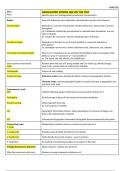
Intro HIGHLIGHTED WORDS ARE ON THE TEST
Place Specific point on E distinguished by particular characteristics
Region Area of E defined by more distinctive characteristics (eg NA, Latin America)
Formal region Defined by a common characteristic whether physical or cultural and is present
throughout
Ch.1 definition: Defined by governmental or administrative boundaries. Are not
open to dispute
ex. Canada, BC, Vancouver, German-speaking region of Europe
Functional region Defined by its function (a set of social, political, or economic activities or
interactions)
Ex. newspaper service area, school catchment area, urban area, city, suburbs
Vernacular/ perceptual region Ideas in our minds based on accumulated knowledge of places and regions, that
define an area of “sameness” or “connectedness”
ex. The south, the mid-atlantic, the middle east
How locations interrelated Relation btwn the part of E being studied and E as whole (eg climate change)
Scale Local scale - preservation of culture/econ activities
Cartography Science of map making
2 types of maps Reference maps-shows absolute locations of places and geographic features
Thematic maps- portrays geographic pattern of particular topic in geographic area
(eg temp, lang, pop)
Contemporary tools
GPS Global Positioning System: determines precise location of place on E
Geotagging ID and storage of piece of info by precise lat+long coordinates
Remote sensing Observing Earth from afar
Ex. from a plane or satellite
GIS Geographic Information System: allows geographers to measure changes over
time in the characteristics of places
VGI Volunteered Geographic Information:Geographic data volunteered by the public
Interpreting maps Relationship of features size on a map to its actual size on E
1. Scale
2. Large scale Provides many detailed abt PLACE: more specific
3. Small scale Omits details due to lack of space - easy to produce
4. Projection Sci method of transferring location on E surface to flat map
4 things that become distorted Shape, distance, relative size, direction
Why Geo concerned with scale Distance on map compared w distance on E
Intro HIGHLIGHTED WORDS ARE ON THE TEST
Place Specific point on E distinguished by particular characteristics
Region Area of E defined by more distinctive characteristics (eg NA, Latin America)
Formal region Defined by a common characteristic whether physical or cultural and is present
throughout
Ch.1 definition: Defined by governmental or administrative boundaries. Are not
open to dispute
ex. Canada, BC, Vancouver, German-speaking region of Europe
Functional region Defined by its function (a set of social, political, or economic activities or
interactions)
Ex. newspaper service area, school catchment area, urban area, city, suburbs
Vernacular/ perceptual region Ideas in our minds based on accumulated knowledge of places and regions, that
define an area of “sameness” or “connectedness”
ex. The south, the mid-atlantic, the middle east
How locations interrelated Relation btwn the part of E being studied and E as whole (eg climate change)
Scale Local scale - preservation of culture/econ activities
Cartography Science of map making
2 types of maps Reference maps-shows absolute locations of places and geographic features
Thematic maps- portrays geographic pattern of particular topic in geographic area
(eg temp, lang, pop)
Contemporary tools
GPS Global Positioning System: determines precise location of place on E
Geotagging ID and storage of piece of info by precise lat+long coordinates
Remote sensing Observing Earth from afar
Ex. from a plane or satellite
GIS Geographic Information System: allows geographers to measure changes over
time in the characteristics of places
VGI Volunteered Geographic Information:Geographic data volunteered by the public
Interpreting maps Relationship of features size on a map to its actual size on E
1. Scale
2. Large scale Provides many detailed abt PLACE: more specific
3. Small scale Omits details due to lack of space - easy to produce
4. Projection Sci method of transferring location on E surface to flat map
4 things that become distorted Shape, distance, relative size, direction
Why Geo concerned with scale Distance on map compared w distance on E