STANDARD ENTHALPIES
#
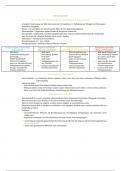
Standard Enthalpy Exothermic/
Definition Symbol BOND ENTHALPY
change of: Endothermic
AVERAGE BOND ENERGY: the energy needed to break one mole of bonds in a
The enthalpy change when the reactants
Reaction Both gaseous molecule average over similar compounds
in the stoichiometric equation react to give
the products under standard conditions
AH = EH/bonds
broken-EHlbonds formed
The enthalpy change when one mole of a reactants) products)
compound is formed from its elements under Both
Formation
standard conditions
enthalpy change forbenhs brone
&H =
The enthalpy change when one mole of
Combustion a substance is burnt in excess oxygen Exothermic
under standard conditions
ACTIVATION ENERGY: the minimum amount of energy needed for reactant
molecules to have a successful collision and start the reaction
The enthalpy change when one mole
Neutralisation of water is formed by reacting an acid Exothermic
and alkali under standard conditions EXOTHERMIC
• the reactants are higher in energy than the products
• the reactants are therefore closer in energy to the transition sate
• lower activation energy (compared to endothermic)
• energy RELEASED
CALORIMETRY • BOND MAKING (energy released)
• is a technique used to measure changes in enthalpy of chemical reactions
• PRODUCTS more stable than REACTANTS
• made up of POLYSTYRENE DRINKING CUP, a VACUUM FLASK or
METAL CAN
ENDOTHERMIC
HEAT CAPACITY
·metee cur
•
•
•
•
the reactants are lower in energy than the products
reactants are further away in energy to the transition state
have higher activation energy compared to exothermic
energy ABSORBED
• BOND BREAKING (energy absorbed)
• PRODUCTS less stable than the REACTANTS
energe
(5)
&
Temperatoree
change
S
q = mxcxy
heat
↓& specific heat
transfereh(5) capacity /5gk')
mass
of solution
(g)
of H20
OZONE
OZONE H
(g) 0z(g)
= -
0
>
-
0 (g) +
,
FORMATION
.
0 (g) - 0 .
(g) +
02(g) H = + (vV)
OZONE
E 03(g)
,
BHt
(g) 29(g)
-
DEPLETION
=
+ 0 .
#
Standard Enthalpy Exothermic/
Definition Symbol BOND ENTHALPY
change of: Endothermic
AVERAGE BOND ENERGY: the energy needed to break one mole of bonds in a
The enthalpy change when the reactants
Reaction Both gaseous molecule average over similar compounds
in the stoichiometric equation react to give
the products under standard conditions
AH = EH/bonds
broken-EHlbonds formed
The enthalpy change when one mole of a reactants) products)
compound is formed from its elements under Both
Formation
standard conditions
enthalpy change forbenhs brone
&H =
The enthalpy change when one mole of
Combustion a substance is burnt in excess oxygen Exothermic
under standard conditions
ACTIVATION ENERGY: the minimum amount of energy needed for reactant
molecules to have a successful collision and start the reaction
The enthalpy change when one mole
Neutralisation of water is formed by reacting an acid Exothermic
and alkali under standard conditions EXOTHERMIC
• the reactants are higher in energy than the products
• the reactants are therefore closer in energy to the transition sate
• lower activation energy (compared to endothermic)
• energy RELEASED
CALORIMETRY • BOND MAKING (energy released)
• is a technique used to measure changes in enthalpy of chemical reactions
• PRODUCTS more stable than REACTANTS
• made up of POLYSTYRENE DRINKING CUP, a VACUUM FLASK or
METAL CAN
ENDOTHERMIC
HEAT CAPACITY
·metee cur
•
•
•
•
the reactants are lower in energy than the products
reactants are further away in energy to the transition state
have higher activation energy compared to exothermic
energy ABSORBED
• BOND BREAKING (energy absorbed)
• PRODUCTS less stable than the REACTANTS
energe
(5)
&
Temperatoree
change
S
q = mxcxy
heat
↓& specific heat
transfereh(5) capacity /5gk')
mass
of solution
(g)
of H20
OZONE
OZONE H
(g) 0z(g)
= -
0
>
-
0 (g) +
,
FORMATION
.
0 (g) - 0 .
(g) +
02(g) H = + (vV)
OZONE
E 03(g)
,
BHt
(g) 29(g)
-
DEPLETION
=
+ 0 .