AP Human Geography Chapter 9 – Agriculture All Answers Correct
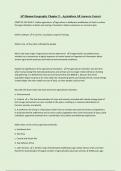
AP Human Geography Chapter 9 – Agriculture All Answers Correct START OF KEY ISSUE 1: Define agriculture Agriculture is deliberate modification of Earth's surface through cultivation of plants and rearing of animals to obtain sustenance or economic gain. Define cultivate Define crop To care for; to prepare crops for farming. Any plant cultivated by people Why is the exact origin of agriculture hard to determine? It began before recorded history; scholars try to reconstruct a logical sequence of events based on fragments of information about ancient agricultural practices and historical environmental conditions. Explain the significance of the agricultural revolution. The agricultural revolution was the time when human being first domesticated plants and animals and no longer relied entirely on hunting and gathering. It is believed to have occurred around the year 8000 B.C. because the world population began to grow at its most rapid rate. By growing plants and raising animals, human beings created larger and more stable sources of food, so more people could survive. Describe the factors that may have lead to the agricultural revolution. a. Environmental b. Cultural a. The first domestication of crops and animals coincided with climate change (end of last ice age; permanent ice cover receded to the poles, resulting in a massive redistribution of humans, animals, and plants) b. A preference for living in a fixed place rather than as nomads may have led hunters and gatherers to build permanent settlements and to store surplus vegetation there. Over thousands of years, plant cultivation apparently evolved from a combination of accident and deliberate experiment. Make notes on the various agricultural hearths: a. Southwest Asia b. East Asia c. Central and South Asia d. Sub-Saharan Africa e. Latin America a. Earliest crops domesticated 10,000 years ago: barley wheat, lentil, and olive. Hearth for domestication of largest number of agriculturally important animals, 8-9,000 years ago: cattle, goats, pigs, and sheep. Domestication of dog: 12,000 years ago. From Southwest Asia, cultivation diffused west to Europe and east to Central Asia. b. Rice domesticated over 10,000 years ago, along Yangtze River in eastern China. Millet cultivated at early date along Yellow River. c. Chickens diffused from South Asia 4,000 years ago. Horse domesticated in Central Asia; its diffusion associated with diffusion of Indo-European language. d. Sorghum domesticated in central Africa 8,000 years ago, yams earlier. Millet and rice possibly domesticated in sub-Saharan Africa, independently of hearth in East Asia. From central Africa, domestication of crops probably diffused further south in Africa. e. Two hearths; Mexico and Peru: 4-5,000 years ago. Mexico hearth for beans and cotton; Peru for potato. Most important contribution to crop domestication: corn; emerged in two hearths independently around same time. Cultivation of maze and other crops diffused northward into North America and southward into tropical South America. Origin of squash: southeastern U.S. What can the percentage of farmers in a country tell us about their development? In developed countries, about 3% of workers are engaged directly in farming, compared to around 42% in developing countries. In developing countries, a large percentage of people are subsistence farmers, as they produce the food they and their families require. In developed countries, however, the relatively few people engaged in farming are commercial farmers, and most people buy food with money earned by working in factories or offices or by performing other services. How have the following improved agriculture? a. Machinery b. Science c. Technology a. The first all-iron plow was made in the 1770s (previous machinery were made from wood) and was followed in the 19th and 20th centuries by inventions that made farming less dependent on human or animal power. Today, farmers use tractors, combines, planters, etc. to increase productivity. b. Experiments conducted generate new fertilizers, herbicides, hybrid plants, animal breeds, and farming practices, which lead to higher crop yields and healthier animals. c. Farmers use GPS systems to determine the precise coordinates for planting seeds and for spreading different types and amounts of fertilizers, as well as monitoring cattle and tractor location. Satellite imagery is used to measure crop progress and to determine the precise number of bushels being harvested. What is significant about the relationship between the number of farmers in the U.S. to the amount of land devoted to farming? People are pushed away from farms by lack of opportunity to earn a decent income, and at the same time are pulled to higher-paying jobs in urban areas; this contributed to the decline of farms from about 6 million in 1940 to 2 million in 1980. Furthermore, the U.S. is a developed country and its use of farm machinery has increased its agricultural efficiency. START OF KEY ISSUE 2: Explain how each of the following impact the diet and nutrition of people around the world. a. Development b. Physical conditions c. Cultural preferences a. People in developed countries tend to consume more food and from different sources than people in developing countries. b. Climate determines what is easily grown and therefore consumed in developing countries. In developed countries, food is shipped long distances to locations with different climates. c. Preferences and avoidances are expressed without regard for physical and economic factors. Define dietary energy consumption in kilocalories (kcal) or calories (U.S.) The amount of food that an individual consumes. Measured Make notes on the different cereal grains around the world. a. Wheat b. Rice c. Maize d. Other a. Principal cereal grain consumed in developed regions of Europe and North America. Most consumed grain in developing regions of Central and Southwest Asia (dry climate makes it best for growing wheat) b. East, South, and Southeast Asia. Most suitable for production in tropical climates. c. Leading crop in the world. Much of it is grown for animal feed, as well as human consumption. Leading crop in some countries of sub-Saharan Africa. d. Handful of countries, especially those in sub-Saharan Africa. Cassava, sorghum, millet, plantains, sweet potatoes, and yams. Sugar: leading source of dietary energy in Venezuela. How do dietary energy needs vary around the world? Needed: 1,844. Average eaten: 2,902. The U.S. (3,800, highest) and other developed countries (3,400) eat more than needed. Sub-Saharan Africa: 2,400. Developing regions: average daily consumption is 2,800. Define food security Physical, social, and economic access at all times to safe and nutritious food sufficient to meet dietary needs and food preferences for an active and healthy life (10% of world pop. does not have this)
Written for
- Institution
- AP Human Geography Chapter 9
- Course
- AP Human Geography Chapter 9
Document information
- Uploaded on
- February 21, 2024
- Number of pages
- 13
- Written in
- 2023/2024
- Type
- Exam (elaborations)
- Contains
- Questions & answers
Subjects
-
ap human geography chapter 9 agriculture all ans

Also available in package deal