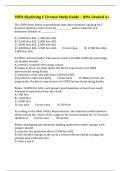
USPA Skydiving C License Study Guide – Q&A Graded A+
The USPA Basic Safety requirements state that container opening for C-
licensed skydivers must occur by _____________ unless waivered to a
minimum altitude of _____________:
A) 2,000 feet AGL, 1,500 feet AGL
B) 2,500 feet AGL, 2,000 feet AGL
C) 3,000 feet AGL, 2,500 feet AGL
D) 4,000 feet AGL, 3,500 feet AGL Correct Ans - B) 2,500 feet AGL,
2,000 feet AGL
A USPA C-license holder who has not made a freefall within the preceding
six months should:
A) attend a complete first-jump course
B) make at least one jump under the direct supervision of a USPA
instructional rating holder
C) perform a clear-and-pull from 3,000 feet AGL
D) perform a static-line jump Correct Ans - B) Make at least one
jump under the direct supervision of a USPA instructional rating holder
Below 10,000 feet AGL, each jumper must maintain at least how much
horizontal separation from any cloud?
A) 500 feet
B) 1,000 feet
C) 2,000 feet
D) one mile Correct Ans - A) 500 feet
According to the Basic Safety Requirements, the minimum radial distance
allowed from the center of the target to the nearest hazard for a C licensed
skydiver is Correct Ans - 50 meters
Before attempting any advanced landing maneuvers under canopy, each
jumper should:
A) practice the maneuver above 2,500 feet AGL
B) use another canopy in the air as a visual reference point to judge the
altitude loss with each turn
C) both a and b
, D) neither a nor b Correct Ans - A) practice the maneuver above
2,500 feet AGL
When choosing to jump a smaller canopy, jumpers should be familiar with
(on their previous canopy):
A) flaring for landing from slow flight
B) consistent soft, stand-up landings within 10 meters of a planned target
in a variety of wind conditions
C) beginning to flare, turning to 10 degree bank, and returning to a level
wing before landing
D) all of the above Correct Ans - D) all of the above
According to SIM Section 6-10, any parachute smaller than 150 square feet:
A) is considered advanced regardless of wing loading
B) is considered advanced only if above a 0.9:1 wing loading
C) is considered advanced only if above a 1.1:1 wing loading
D) is considered advanced only if above a 1.3:1 wing loading Correct
Ans - A) is considered advanced regardless of wing loading
With aircraft flown into the wind for jump run, which exit order provides
the best chance for maintaining adequate horizontal separation between
each group of jumpers?
A) faster falling groups exit first, followed by slower falling groups,
wingsuiters, then tandems
B) slower falling groups exit first, followed by faster falling groups,
tandems, then wingsuiters
C) wingsuiters exit first, followed by faster falling groups, slower falling
groups, then tandems
D) tandems exit first, followed by faster falling groups, slower falling
groups, then wingsuiters Correct Ans - B) slower falling groups exit
first, followed by faster falling groups, tandems, then wingsuiters
Seat belts in an aircraft used for skydiving operations:
A) are required for jumpers only for take-off
B) may be from previous use in automobiles
C) should never be fastened together unless being worn
D) are only required to be used by pilots Correct Ans - are required
for jumpers only for take-off
The USPA Basic Safety requirements state that container opening for C-
licensed skydivers must occur by _____________ unless waivered to a
minimum altitude of _____________:
A) 2,000 feet AGL, 1,500 feet AGL
B) 2,500 feet AGL, 2,000 feet AGL
C) 3,000 feet AGL, 2,500 feet AGL
D) 4,000 feet AGL, 3,500 feet AGL Correct Ans - B) 2,500 feet AGL,
2,000 feet AGL
A USPA C-license holder who has not made a freefall within the preceding
six months should:
A) attend a complete first-jump course
B) make at least one jump under the direct supervision of a USPA
instructional rating holder
C) perform a clear-and-pull from 3,000 feet AGL
D) perform a static-line jump Correct Ans - B) Make at least one
jump under the direct supervision of a USPA instructional rating holder
Below 10,000 feet AGL, each jumper must maintain at least how much
horizontal separation from any cloud?
A) 500 feet
B) 1,000 feet
C) 2,000 feet
D) one mile Correct Ans - A) 500 feet
According to the Basic Safety Requirements, the minimum radial distance
allowed from the center of the target to the nearest hazard for a C licensed
skydiver is Correct Ans - 50 meters
Before attempting any advanced landing maneuvers under canopy, each
jumper should:
A) practice the maneuver above 2,500 feet AGL
B) use another canopy in the air as a visual reference point to judge the
altitude loss with each turn
C) both a and b
, D) neither a nor b Correct Ans - A) practice the maneuver above
2,500 feet AGL
When choosing to jump a smaller canopy, jumpers should be familiar with
(on their previous canopy):
A) flaring for landing from slow flight
B) consistent soft, stand-up landings within 10 meters of a planned target
in a variety of wind conditions
C) beginning to flare, turning to 10 degree bank, and returning to a level
wing before landing
D) all of the above Correct Ans - D) all of the above
According to SIM Section 6-10, any parachute smaller than 150 square feet:
A) is considered advanced regardless of wing loading
B) is considered advanced only if above a 0.9:1 wing loading
C) is considered advanced only if above a 1.1:1 wing loading
D) is considered advanced only if above a 1.3:1 wing loading Correct
Ans - A) is considered advanced regardless of wing loading
With aircraft flown into the wind for jump run, which exit order provides
the best chance for maintaining adequate horizontal separation between
each group of jumpers?
A) faster falling groups exit first, followed by slower falling groups,
wingsuiters, then tandems
B) slower falling groups exit first, followed by faster falling groups,
tandems, then wingsuiters
C) wingsuiters exit first, followed by faster falling groups, slower falling
groups, then tandems
D) tandems exit first, followed by faster falling groups, slower falling
groups, then wingsuiters Correct Ans - B) slower falling groups exit
first, followed by faster falling groups, tandems, then wingsuiters
Seat belts in an aircraft used for skydiving operations:
A) are required for jumpers only for take-off
B) may be from previous use in automobiles
C) should never be fastened together unless being worn
D) are only required to be used by pilots Correct Ans - are required
for jumpers only for take-off