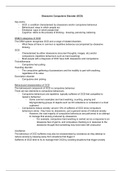
Obsessive Compulsive Disorder (OCD)
Key terms:
- OCD: a condition characterised by obsessions and/or compulsive behaviour
- Behavioural: ways in which people act
- Emotional: ways in which people feel
- Cognitive: refers to the process of thinking - knowing, perceiving, believing
DSM-5 categories of OCD
The DSM system recognises OCD and a range of related disorders
- What these all have in common is repetitive behaviour accompanied by obsessive
thinking
OCD
- Characterised by either obsessions (recurrent thoughts, images, etc) and/or
compulsions (repetitive behaviours such as hand washing)
- Most people with a diagnosis of OCD have both obsessions and compulsions
Trichotillomania
- Compulsive hair pulling
Hoarding disorder
- The compulsive gathering of possessions and the inability to part with anything,
regardless of its value
Excoriation disorder
- Compulsive skin picking
Behavioural characteristics of OCD
The behavioural component of OCD is compulsive behaviour
There are two elements to compulsive behaviours
- Compulsive behaviours are repetitive: typically sufferers of OCD feel compelled to
repeat a behaviour
- Some common examples are hand washing, counting, praying and
tidying/ordering groups of objects such as CD collections or containers in a food
cupboard
- Compulsions reduce anxiety: around 10% of sufferers of OCD show compulsive
behaviours alone - they have no obsessions, just a general sense of irrational anxiety
- However, the vast majority of compulsive behaviours are performed in an attempt
to manage that anxiety produced by obsessions
- For example, compulsive hand washing is carried out as a response to an
obsessive fear of germs, and compulsive checking is in response to the
obsessive thought that something may have been left unsecured
Avoidance
The behaviour of OCD sufferers may also be characterised by avoidance as they attempt to
reduce anxiety by keeping away from situations that trigger it
Sufferers of OCD tend to try to manage their OCD by avoiding situations that trigger anxiety
Key terms:
- OCD: a condition characterised by obsessions and/or compulsive behaviour
- Behavioural: ways in which people act
- Emotional: ways in which people feel
- Cognitive: refers to the process of thinking - knowing, perceiving, believing
DSM-5 categories of OCD
The DSM system recognises OCD and a range of related disorders
- What these all have in common is repetitive behaviour accompanied by obsessive
thinking
OCD
- Characterised by either obsessions (recurrent thoughts, images, etc) and/or
compulsions (repetitive behaviours such as hand washing)
- Most people with a diagnosis of OCD have both obsessions and compulsions
Trichotillomania
- Compulsive hair pulling
Hoarding disorder
- The compulsive gathering of possessions and the inability to part with anything,
regardless of its value
Excoriation disorder
- Compulsive skin picking
Behavioural characteristics of OCD
The behavioural component of OCD is compulsive behaviour
There are two elements to compulsive behaviours
- Compulsive behaviours are repetitive: typically sufferers of OCD feel compelled to
repeat a behaviour
- Some common examples are hand washing, counting, praying and
tidying/ordering groups of objects such as CD collections or containers in a food
cupboard
- Compulsions reduce anxiety: around 10% of sufferers of OCD show compulsive
behaviours alone - they have no obsessions, just a general sense of irrational anxiety
- However, the vast majority of compulsive behaviours are performed in an attempt
to manage that anxiety produced by obsessions
- For example, compulsive hand washing is carried out as a response to an
obsessive fear of germs, and compulsive checking is in response to the
obsessive thought that something may have been left unsecured
Avoidance
The behaviour of OCD sufferers may also be characterised by avoidance as they attempt to
reduce anxiety by keeping away from situations that trigger it
Sufferers of OCD tend to try to manage their OCD by avoiding situations that trigger anxiety