1
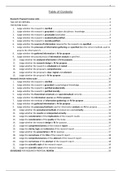
Table of Contents
Research Proposal review scale............................................................................................................................. 2
THE LIST OF CRITERIA.............................................................................................................................................. 2
THE RATING SCALE .................................................................................................................................................. 2
1. Judge whether the research is clarified ..................................................................................................... 2
2. Judge whether the research is grounded in subject disciplinary knowledge ............................................ 3
3. Judge whether the research is practicable (workable) .............................................................................. 3
4. Judge whether the research is academically justified ............................................................................... 4
5. Judge whether the research is morally justified ........................................................................................ 4
6. Judge whether the sources of information required for the research are specified ................................ 5
7. Judge whether the processes of information gathering are specified (Are the correct methods used to
acquire the information?) ........................................................................................................................... 6
8. Judge whether the gathered information is fit for purpose ..................................................................... 6
9. Judge whether the procedures(s) of information analysis is specified ..................................................... 6
10. Judge whether the analysed information is fit for purpose .................................................................. 7
11. Judge whether the research design is fit for purpose ........................................................................... 7
12. Judge whether the research is scheduled and costed ........................................................................... 8
13. Judge whether the proposal is comprehensive ..................................................................................... 8
14. Judge whether the proposal is clear, logical and coherent ................................................................... 9
15. Judge whether the proposal is fit for purpose ....................................................................................... 9
Research Article review scale .............................................................................................................................. 10
1. Judge whether the research is clarified ................................................................................................... 10
2. Judge whether the research is grounded in psychological knowledge .................................................... 10
3. Judge whether the research is justified academically ............................................................................. 11
4. Judge whether the research is justified morally ...................................................................................... 11
5. Judge whether the theoretical constructs are operationalised correctly ............................................... 12
6. Judge whether the information sources are fit for purpose ................................................................... 13
7. Judge whether the methods of information gathering are fit for purpose ............................................ 13
8. Judge whether the gathered information is fit for purpose ................................................................... 14
9. Judge whether the processes/methods used for information analysis are fit for purpose .................... 14
10. Judge whether the procedures/methods of analysis are used correctly ............................................ 15
11. Judge whether the results are interpreted correctly .......................................................................... 15
12. Judge the consideration of the implications of the research results .................................................. 15
13. Judge the consideration of the quality of the study ............................................................................ 16
14. Judge whether the research design is fit for purpose .......................................................................... 16
15. Judge the comprehensiveness of the research report ........................................................................ 17
16. Judge the clarity, logic and coherence of the research report ............................................................ 17
17. Judge whether the presentation is fit for purpose .............................................................................. 17
18. Judge the correctness of the title of the research report .................................................................... 18
19. Judge the comprehensiveness of the abstract of the research report................................................ 18
20. Judge the correctness of the abstract of the research report ............................................................. 18
21. Judge the scientific style of the research report .................................................................................. 19
22. Judge the scientific value of the research report................................................................................. 19
GUIDELINES FOR RESEARCH PROPOSAL REVIEW ................................................................................................. 20
, 2
Research Proposal review scale
THE LIST OF CRITERIA
In TL103, p. 24: “Note that each of the criteria (i.e. each of the sub-actions) is an absolute
statement. This means the action has either been completed correctly or it has not been
completed correctly. There is no in between state of correct completion. For example, the
researcher may have formulated a research problem, but if the formulation of the problem is
somewhat vague, or not quite logical, the criterion as not been met. In other words, then we
simply say: The researcher has not formulated the research problem.
THE RATING SCALE
REMEMBER: Criterion a is viewed as more fundamental than b, and b is seen as more
fundamental than c. In other words, one cannot receive credit for having done b if one has
also not done a, and one cannot get credit for c unless a `and b have been completed
correctly. The highest scale point shows that all criteria have been met (TL103, p. 24).
1. Judge whether the research is clarified
The research is clarified if:
a. Research problem is formulated
Distinguish between the research problem (the problem to be studied) and issues surrounding
the research problem. What is the FOCUS of the research?
Ask yourself “What is this research about?” If you come up with more than one answer then
the research is not clarified correctly AND if it is difficult to answer the question, the study has
not been clarified properly.
If there is more than one statement, one can see that the researcher does not have a clearly
defined focus.
b. One/more research questions is derived from the problem to address the research questions?
The research question must be formulated explicitly
Note that there may not be a direct question (with question mark) but an inference to a
question such as “one could ask the question…”
QUANTITATIVE/relational-causal research, the research question is stated as a hypothesis =
a factual statement to be subjected to analysis (can be in form of statement/intent of what is to
be explored/investigated)
QUALITATIVE research: One or more research aims must be stated.
E.g.: Is there a relationship between quality of life experience and personality type?
c. Research objectives are formulated to address the questions
What does the researcher want to achieve by conducting the study? For e.g. to establish
whether a relationship exists but for what reason?
Research objectives tell us what the contribution is of the information generated by the study
There needs to be a common theme flow of ideas between topic, aim/s and objectives
, 3
2. Judge whether the research is grounded in subject disciplinary knowledge
The research is grounded in subject disciplinary knowledge if:
a. Research is grounded in subject disciplinary knowledge if:
The constructs and their relationship to each other make up the research problem. Are they
psychological in nature; i.e. do they belong to the discipline of psychology?
A theory/approach must be indicated ito subject discipline to explore the factors/data and how
these factors/data may be interrelated.
b. Research problem is discussed ito existing knowledge
Literature is presented to state why relationship/findings may/may not exist (background
information from existing literature related to the topic and problem/aim).
Theory is presented to explain/describe the relationship/findings one can expect =
Prerequisite for grounding research in psychological knowledge.
c. References are provided to relevant resource material
References need to be provided as sources in the text AND in the reference section.
(This issue here is whether references have been provided and NOT whether or not they are
correct)
3. Judge whether the research is practicable (workable)
The research is practicable if:
a. The research topic is ethical? (It’s about the topic and not the execution of the study)
Topic can be considered as not harmful but may still involve sensitive information
Topic may be ethical in itself, but the way the study is to be executed may be unethical but
this is not the issue here.
Participants should be well information med about purpose and aim of study.
Participants must be allowed to decide to participate = voluntarily.
b. The researcher is qualified to conduct the research
Consider training and experience of the researcher (the cover letter should indicate
researcher’s qualification/experience).
c. The research can be translated into practical actions
Can the research actually be conducted/carried out?
The methods required to get the required information are practically and realistically possible;
i.e. does the researcher have access to the participants, are the measurement tools (e.g.
questionnaires) legitimate (permission for use obtained) and will they provide applicable
information?
d. Research is affordable
The authors must indicate if research fits the budget
Pay attention if any mention made by author that certain measurement tools (e.g.
questionnaires) are too expensive to purchase – then research is considered unaffordable.
e. Research can be completed in the time span
Consider time of sessions/ return of questionnaires / analysis/ report writing
Table of Contents
Research Proposal review scale............................................................................................................................. 2
THE LIST OF CRITERIA.............................................................................................................................................. 2
THE RATING SCALE .................................................................................................................................................. 2
1. Judge whether the research is clarified ..................................................................................................... 2
2. Judge whether the research is grounded in subject disciplinary knowledge ............................................ 3
3. Judge whether the research is practicable (workable) .............................................................................. 3
4. Judge whether the research is academically justified ............................................................................... 4
5. Judge whether the research is morally justified ........................................................................................ 4
6. Judge whether the sources of information required for the research are specified ................................ 5
7. Judge whether the processes of information gathering are specified (Are the correct methods used to
acquire the information?) ........................................................................................................................... 6
8. Judge whether the gathered information is fit for purpose ..................................................................... 6
9. Judge whether the procedures(s) of information analysis is specified ..................................................... 6
10. Judge whether the analysed information is fit for purpose .................................................................. 7
11. Judge whether the research design is fit for purpose ........................................................................... 7
12. Judge whether the research is scheduled and costed ........................................................................... 8
13. Judge whether the proposal is comprehensive ..................................................................................... 8
14. Judge whether the proposal is clear, logical and coherent ................................................................... 9
15. Judge whether the proposal is fit for purpose ....................................................................................... 9
Research Article review scale .............................................................................................................................. 10
1. Judge whether the research is clarified ................................................................................................... 10
2. Judge whether the research is grounded in psychological knowledge .................................................... 10
3. Judge whether the research is justified academically ............................................................................. 11
4. Judge whether the research is justified morally ...................................................................................... 11
5. Judge whether the theoretical constructs are operationalised correctly ............................................... 12
6. Judge whether the information sources are fit for purpose ................................................................... 13
7. Judge whether the methods of information gathering are fit for purpose ............................................ 13
8. Judge whether the gathered information is fit for purpose ................................................................... 14
9. Judge whether the processes/methods used for information analysis are fit for purpose .................... 14
10. Judge whether the procedures/methods of analysis are used correctly ............................................ 15
11. Judge whether the results are interpreted correctly .......................................................................... 15
12. Judge the consideration of the implications of the research results .................................................. 15
13. Judge the consideration of the quality of the study ............................................................................ 16
14. Judge whether the research design is fit for purpose .......................................................................... 16
15. Judge the comprehensiveness of the research report ........................................................................ 17
16. Judge the clarity, logic and coherence of the research report ............................................................ 17
17. Judge whether the presentation is fit for purpose .............................................................................. 17
18. Judge the correctness of the title of the research report .................................................................... 18
19. Judge the comprehensiveness of the abstract of the research report................................................ 18
20. Judge the correctness of the abstract of the research report ............................................................. 18
21. Judge the scientific style of the research report .................................................................................. 19
22. Judge the scientific value of the research report................................................................................. 19
GUIDELINES FOR RESEARCH PROPOSAL REVIEW ................................................................................................. 20
, 2
Research Proposal review scale
THE LIST OF CRITERIA
In TL103, p. 24: “Note that each of the criteria (i.e. each of the sub-actions) is an absolute
statement. This means the action has either been completed correctly or it has not been
completed correctly. There is no in between state of correct completion. For example, the
researcher may have formulated a research problem, but if the formulation of the problem is
somewhat vague, or not quite logical, the criterion as not been met. In other words, then we
simply say: The researcher has not formulated the research problem.
THE RATING SCALE
REMEMBER: Criterion a is viewed as more fundamental than b, and b is seen as more
fundamental than c. In other words, one cannot receive credit for having done b if one has
also not done a, and one cannot get credit for c unless a `and b have been completed
correctly. The highest scale point shows that all criteria have been met (TL103, p. 24).
1. Judge whether the research is clarified
The research is clarified if:
a. Research problem is formulated
Distinguish between the research problem (the problem to be studied) and issues surrounding
the research problem. What is the FOCUS of the research?
Ask yourself “What is this research about?” If you come up with more than one answer then
the research is not clarified correctly AND if it is difficult to answer the question, the study has
not been clarified properly.
If there is more than one statement, one can see that the researcher does not have a clearly
defined focus.
b. One/more research questions is derived from the problem to address the research questions?
The research question must be formulated explicitly
Note that there may not be a direct question (with question mark) but an inference to a
question such as “one could ask the question…”
QUANTITATIVE/relational-causal research, the research question is stated as a hypothesis =
a factual statement to be subjected to analysis (can be in form of statement/intent of what is to
be explored/investigated)
QUALITATIVE research: One or more research aims must be stated.
E.g.: Is there a relationship between quality of life experience and personality type?
c. Research objectives are formulated to address the questions
What does the researcher want to achieve by conducting the study? For e.g. to establish
whether a relationship exists but for what reason?
Research objectives tell us what the contribution is of the information generated by the study
There needs to be a common theme flow of ideas between topic, aim/s and objectives
, 3
2. Judge whether the research is grounded in subject disciplinary knowledge
The research is grounded in subject disciplinary knowledge if:
a. Research is grounded in subject disciplinary knowledge if:
The constructs and their relationship to each other make up the research problem. Are they
psychological in nature; i.e. do they belong to the discipline of psychology?
A theory/approach must be indicated ito subject discipline to explore the factors/data and how
these factors/data may be interrelated.
b. Research problem is discussed ito existing knowledge
Literature is presented to state why relationship/findings may/may not exist (background
information from existing literature related to the topic and problem/aim).
Theory is presented to explain/describe the relationship/findings one can expect =
Prerequisite for grounding research in psychological knowledge.
c. References are provided to relevant resource material
References need to be provided as sources in the text AND in the reference section.
(This issue here is whether references have been provided and NOT whether or not they are
correct)
3. Judge whether the research is practicable (workable)
The research is practicable if:
a. The research topic is ethical? (It’s about the topic and not the execution of the study)
Topic can be considered as not harmful but may still involve sensitive information
Topic may be ethical in itself, but the way the study is to be executed may be unethical but
this is not the issue here.
Participants should be well information med about purpose and aim of study.
Participants must be allowed to decide to participate = voluntarily.
b. The researcher is qualified to conduct the research
Consider training and experience of the researcher (the cover letter should indicate
researcher’s qualification/experience).
c. The research can be translated into practical actions
Can the research actually be conducted/carried out?
The methods required to get the required information are practically and realistically possible;
i.e. does the researcher have access to the participants, are the measurement tools (e.g.
questionnaires) legitimate (permission for use obtained) and will they provide applicable
information?
d. Research is affordable
The authors must indicate if research fits the budget
Pay attention if any mention made by author that certain measurement tools (e.g.
questionnaires) are too expensive to purchase – then research is considered unaffordable.
e. Research can be completed in the time span
Consider time of sessions/ return of questionnaires / analysis/ report writing