UNIT 10
Biological Molecules and metabolic Pathways
Learning Aim B
B1 Respiration
Respiration
The transfer of oxygen from the outside environment to cells within tissues, as well
as the removal of carbon dioxide in the opposite way. Respiration occurs in
mitochondria in eukaryotic cells.
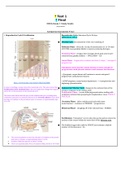
Adenosine triphosphate: The energy cell of the body. It is the energy currency of the
cell because it provides easily releasable energy in the bond between the second and
third phosphate groups.
(1)
Socratic.org. (n.d.). What are three parts of an ATP molecule? | Socratic. [online]
Available at: https://socratic.org/questions/what-are-three-parts-of-an-atp-
molecule
Aerobic respiration: C6 H12 O6 + 6H2 O 6CO2 + 6H2 O + 36ATP
Respiration with oxygen to make energy from sugars. There are four stages of
aerobic respiration.
Stages in aerobic respiration:
1. Glycolysis that occurs in the cell cytoplasm, splitting of glucose and carries out the
process of phosphorylation.
Pyruvate can enter mitochondria and join the citric acid cycle, where it generates
reducing equivalents in the form of NADH and FADH2. Glucose is broken down
without the presence of oxygen during anaerobic cellular metabolism. The
chemical reaction provides energy to the organism in the form of glucose. Lactic
acid is created during fermentation instead of carbon dioxide and water.
Yeasts can directly ferment simple sugars into ethanol, whereas other feedstocks
must first be transformed to fermentable sugars before being fermented to
ethanol. Pre-treatment, hydrolysis, and fermentation are typical processes in
ethanol production. Temperature, sugar concentration, pH, fermentation
Biological Molecules and metabolic Pathways
Learning Aim B
B1 Respiration
Respiration
The transfer of oxygen from the outside environment to cells within tissues, as well
as the removal of carbon dioxide in the opposite way. Respiration occurs in
mitochondria in eukaryotic cells.
Adenosine triphosphate: The energy cell of the body. It is the energy currency of the
cell because it provides easily releasable energy in the bond between the second and
third phosphate groups.
(1)
Socratic.org. (n.d.). What are three parts of an ATP molecule? | Socratic. [online]
Available at: https://socratic.org/questions/what-are-three-parts-of-an-atp-
molecule
Aerobic respiration: C6 H12 O6 + 6H2 O 6CO2 + 6H2 O + 36ATP
Respiration with oxygen to make energy from sugars. There are four stages of
aerobic respiration.
Stages in aerobic respiration:
1. Glycolysis that occurs in the cell cytoplasm, splitting of glucose and carries out the
process of phosphorylation.
Pyruvate can enter mitochondria and join the citric acid cycle, where it generates
reducing equivalents in the form of NADH and FADH2. Glucose is broken down
without the presence of oxygen during anaerobic cellular metabolism. The
chemical reaction provides energy to the organism in the form of glucose. Lactic
acid is created during fermentation instead of carbon dioxide and water.
Yeasts can directly ferment simple sugars into ethanol, whereas other feedstocks
must first be transformed to fermentable sugars before being fermented to
ethanol. Pre-treatment, hydrolysis, and fermentation are typical processes in
ethanol production. Temperature, sugar concentration, pH, fermentation