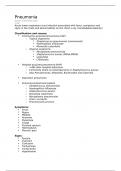
Pneumonia
Sunday, 27 November 2022
21:48
Acute lower respiratory tract infection associated with fever, symptoms and
signs in the chest and abnormalities on the chest x-ray (consolidation/opacity)
Classification and causes:
Community-acquired pneumonia (CAP)
o Typical organisms
Streptococcus pneumoniae (commonest)
Haemophilus influenzae
Moraxella catarrhalis
o Atypical organisms
Mycoplasma pneumoniae
Staphylococcus aureus (MSSA,MRSA)
Legionella
Chlamydia
Hospital-acquired pneumonia (HAP)
o >48h after hospital admission
o Commonly Gram-ve enterobacteria or Staphylococcus aureus
o Also Pseudomonas, Klebsiella, Bacteroides and Clostridia
Aspiration pneumonia
Immunocompromised patient
o Streptococcus pneumoniae
o Haemophilus influenzae
o Staphylococcus aureus
o Moraxella catarrhalis
o Mycoplasma pneumoniae
o Gram -ve bacilli
o Pneumocystis jirovecii
Symptoms:
Fever
Rigors
Malaise
Anorexia
Dyspnoea
Cough
Purulent sputum
Haemoptysis
Pleuritic pain
Signs:
Pyrexia
Cyanosis
Confusion
Tachypnoea
Tachycardia
Hypotension
, Signs of consolidation (reduced expansion, dull percussion, increased
tactile vocal fremitus/vocal resonance, bronchial breathing)
Pleural rub
Tests:
Oxygenation
o Sats
o ABG if SaO2 <92% or severe pneumonia
o BP
CXR
o Lobar infiltrates
o Cavitation
o Pleural effusion
Sputum - MC+S
Urine - Legionella, pneumococcal urinary antigens
Severity: CURB-65
Confusion (AMT <9)
Urea >=7mmol/L
Respiratory rate >= 30/min
BP <90 systolic and or <60
diastolic
Age >= 65
0-1=PO antibiotic/home treatment
2 = hospital therapy
>=3 = severe pneumonia -> ITU
Treatment:
Antibiotics - see below
o CURB 1-2 - PO
o CURB >=3 - IV
Oxygen
o PaO2 - >8.0 and/or sats >=94%
IV fluids
o Anorexia, dehydration, shock
VTE prophylaxis
Analgesia
o Pleurisy
Pneumococcal vaccine every 5 years
o Who?
All >=65 yrs old
Chronic heart, liver, renal or lung conditions
Diabetes mellitus not controlled by diet
Immunosuppression e.g. hyposplenism, AIDS, chemotherapy
or prednisolone, cochlear implant, occupation risk
PNEUMONIA ANTIBIOTICS
>Community-acquired
Clinical setting Organisms Antibiotic
Mild Streptoc Oral
not occus amoxicillin/clarithromyci
, prev pneumo n/doxycycline for 5 days
iousl niae
y Haemop
treat hilus
ed influenz
CUR ae
B 0-
1
Mod Streptoc Oral amoxicillin +
erat occus clarithromycin/doxycycli
e pneumo ne
CUR niae If IV required -
B2 Haemop amoxicillin +
hilus clarithromycin for 7 days
influenz
ae
Mycopla
sma
pneumo
niae
Sev As above Co-amoxiclav/
ere cefuroxime IV +
CUR clarithromycin for 7 days
B Add flucloxacillin if Staph
>3 suspected
Add vancomycin or
teicoplanin if MRSA
suspected
Atypical Legionel Fluoroquinolone
la +clarithromycin/rifampici
pneumo n
philia Tetracycline
Chlamy High-dose co-trimoxazole
dophila
Pneumo
cystis
jirovecii
>Hospital-acquired
Gram -ve IV gentamicin + antipseudomonal
bacilli penicillin IV/ cefuroxime IV
Pseudomo
nas
Anaerobes
>Aspiration
Gram -ve Cefuroxime IV +
bacilli metronidazole IV
Pseudomo
nas
, Anaerobes
>Neutropenic patients
Gram -ve Gentamicin IV + antipseudomonal
cocci penicillin IV/Cefuroxime IV
Gram -ve Consider antifungals after 48h
bacilli
Fungi
COMPLICATIONS OF PENUMONIA
Respiratory failure
o T1RF common
o Treatment:
High flow oxygen @ 60% aiming for 94-98%, PaO2 >=8kPa
Hypotension
o If systolic <90mmHg - IV fluid challenge f 250ml colloid/crystalloid
over 15 mins
Atrial fibrillation
o Usually self resolving but may require short term beta-blocker or
digoxin
Pleural effusion
o Inflammation of the pleura by adjacent pneumonia -> fluid
exudation into pleural space
o If large, symptomatic, or infective (empyema) -> drainage
Empyema
o Pus in the pleural space
o Clinical features:
CXR - pleural effusion
Pleural fluid is yellow, turbid, and has a pH <7.2, low glucose
and high LDH
o Treatment:
Drainage using a chest drain
Lung abscess
o Cavitating area of localised infection within the lung
o Causes:
Poorly treated pneumonia
Aspiration
Bronchial obstruction
Pulmonary infarction
Septic emboli
o Clinical features
Swinging fever
Cough
Purulent foul smelling sputum
Pleuritic chest pain
Haemoptysis
Malaise
Weight loss
Clubbing
Anaemia
Crepitations
o Tests:
Blood:
Sunday, 27 November 2022
21:48
Acute lower respiratory tract infection associated with fever, symptoms and
signs in the chest and abnormalities on the chest x-ray (consolidation/opacity)
Classification and causes:
Community-acquired pneumonia (CAP)
o Typical organisms
Streptococcus pneumoniae (commonest)
Haemophilus influenzae
Moraxella catarrhalis
o Atypical organisms
Mycoplasma pneumoniae
Staphylococcus aureus (MSSA,MRSA)
Legionella
Chlamydia
Hospital-acquired pneumonia (HAP)
o >48h after hospital admission
o Commonly Gram-ve enterobacteria or Staphylococcus aureus
o Also Pseudomonas, Klebsiella, Bacteroides and Clostridia
Aspiration pneumonia
Immunocompromised patient
o Streptococcus pneumoniae
o Haemophilus influenzae
o Staphylococcus aureus
o Moraxella catarrhalis
o Mycoplasma pneumoniae
o Gram -ve bacilli
o Pneumocystis jirovecii
Symptoms:
Fever
Rigors
Malaise
Anorexia
Dyspnoea
Cough
Purulent sputum
Haemoptysis
Pleuritic pain
Signs:
Pyrexia
Cyanosis
Confusion
Tachypnoea
Tachycardia
Hypotension
, Signs of consolidation (reduced expansion, dull percussion, increased
tactile vocal fremitus/vocal resonance, bronchial breathing)
Pleural rub
Tests:
Oxygenation
o Sats
o ABG if SaO2 <92% or severe pneumonia
o BP
CXR
o Lobar infiltrates
o Cavitation
o Pleural effusion
Sputum - MC+S
Urine - Legionella, pneumococcal urinary antigens
Severity: CURB-65
Confusion (AMT <9)
Urea >=7mmol/L
Respiratory rate >= 30/min
BP <90 systolic and or <60
diastolic
Age >= 65
0-1=PO antibiotic/home treatment
2 = hospital therapy
>=3 = severe pneumonia -> ITU
Treatment:
Antibiotics - see below
o CURB 1-2 - PO
o CURB >=3 - IV
Oxygen
o PaO2 - >8.0 and/or sats >=94%
IV fluids
o Anorexia, dehydration, shock
VTE prophylaxis
Analgesia
o Pleurisy
Pneumococcal vaccine every 5 years
o Who?
All >=65 yrs old
Chronic heart, liver, renal or lung conditions
Diabetes mellitus not controlled by diet
Immunosuppression e.g. hyposplenism, AIDS, chemotherapy
or prednisolone, cochlear implant, occupation risk
PNEUMONIA ANTIBIOTICS
>Community-acquired
Clinical setting Organisms Antibiotic
Mild Streptoc Oral
not occus amoxicillin/clarithromyci
, prev pneumo n/doxycycline for 5 days
iousl niae
y Haemop
treat hilus
ed influenz
CUR ae
B 0-
1
Mod Streptoc Oral amoxicillin +
erat occus clarithromycin/doxycycli
e pneumo ne
CUR niae If IV required -
B2 Haemop amoxicillin +
hilus clarithromycin for 7 days
influenz
ae
Mycopla
sma
pneumo
niae
Sev As above Co-amoxiclav/
ere cefuroxime IV +
CUR clarithromycin for 7 days
B Add flucloxacillin if Staph
>3 suspected
Add vancomycin or
teicoplanin if MRSA
suspected
Atypical Legionel Fluoroquinolone
la +clarithromycin/rifampici
pneumo n
philia Tetracycline
Chlamy High-dose co-trimoxazole
dophila
Pneumo
cystis
jirovecii
>Hospital-acquired
Gram -ve IV gentamicin + antipseudomonal
bacilli penicillin IV/ cefuroxime IV
Pseudomo
nas
Anaerobes
>Aspiration
Gram -ve Cefuroxime IV +
bacilli metronidazole IV
Pseudomo
nas
, Anaerobes
>Neutropenic patients
Gram -ve Gentamicin IV + antipseudomonal
cocci penicillin IV/Cefuroxime IV
Gram -ve Consider antifungals after 48h
bacilli
Fungi
COMPLICATIONS OF PENUMONIA
Respiratory failure
o T1RF common
o Treatment:
High flow oxygen @ 60% aiming for 94-98%, PaO2 >=8kPa
Hypotension
o If systolic <90mmHg - IV fluid challenge f 250ml colloid/crystalloid
over 15 mins
Atrial fibrillation
o Usually self resolving but may require short term beta-blocker or
digoxin
Pleural effusion
o Inflammation of the pleura by adjacent pneumonia -> fluid
exudation into pleural space
o If large, symptomatic, or infective (empyema) -> drainage
Empyema
o Pus in the pleural space
o Clinical features:
CXR - pleural effusion
Pleural fluid is yellow, turbid, and has a pH <7.2, low glucose
and high LDH
o Treatment:
Drainage using a chest drain
Lung abscess
o Cavitating area of localised infection within the lung
o Causes:
Poorly treated pneumonia
Aspiration
Bronchial obstruction
Pulmonary infarction
Septic emboli
o Clinical features
Swinging fever
Cough
Purulent foul smelling sputum
Pleuritic chest pain
Haemoptysis
Malaise
Weight loss
Clubbing
Anaemia
Crepitations
o Tests:
Blood: