Practical 11
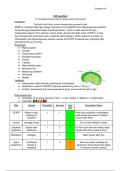
Hill reaction
To investigate photosynthesis using isolated chloroplasts
Hypothesis:
Test tube 4 will have a colour change when exposed to light
NADP is combined with high-energy hydrogen to form NADPH (the dehydrogenase reaction)
during the light dependent stage of photosynthesis,[1] which is later used in the light
independent stage to form glucose, amino acids, glycerol and fatty acids. DCPIP is a blue
dye that becomes colourless when combined with hydrogen. When added to a solution of
chloroplasts, the dehydrogenase reaction causes the DCPIP to decolourise, indicating that
photosynthesis is occurring.
Equipment:
● Plastic beaker
● Ice bath
● Young leaves 250ml
● Handheld liquidiser
● Funnel
● 3 Muslin
● High intensity lamp
● Aluminium foil
● Measuring cylinders
● Test tubes
● Beaker
Variables:
● Independent- light intensity reaching the chloroplasts
● Dependent- amount of DCPIP reduced( measure by colour change)
● Control- chloroplasts from same species of plant, amount of time left in light
Risk assessment
● Probability of occuring/ severity of risk: 1- Low/ unlikely, 2- Medium, 3- Highly likely
● Total Risk: 1, 2, 3, 4, 6, 9
Risk Hazard Probability Severity Total Precaution Taken
risk
DCPIP irritant to eye; 1 1 1 Wear eye protection; immediately
staining on wash hands and eyes if it makes
surfaces contact with them
Lamps damage to eye 1 1 1 Do not look directly in lamp
Electrical liquids near 1 2 2 Do not touch with wet hands; keep
appliance appliance liquids away from power source
Biohazard allergies 1 1 1 Wash hands after use
glass Accidental 1 3 3 Take care when handling the
equipment injuries if equipment; keep away from edges
smashed to ensure it doesn’t smash
Hill reaction
To investigate photosynthesis using isolated chloroplasts
Hypothesis:
Test tube 4 will have a colour change when exposed to light
NADP is combined with high-energy hydrogen to form NADPH (the dehydrogenase reaction)
during the light dependent stage of photosynthesis,[1] which is later used in the light
independent stage to form glucose, amino acids, glycerol and fatty acids. DCPIP is a blue
dye that becomes colourless when combined with hydrogen. When added to a solution of
chloroplasts, the dehydrogenase reaction causes the DCPIP to decolourise, indicating that
photosynthesis is occurring.
Equipment:
● Plastic beaker
● Ice bath
● Young leaves 250ml
● Handheld liquidiser
● Funnel
● 3 Muslin
● High intensity lamp
● Aluminium foil
● Measuring cylinders
● Test tubes
● Beaker
Variables:
● Independent- light intensity reaching the chloroplasts
● Dependent- amount of DCPIP reduced( measure by colour change)
● Control- chloroplasts from same species of plant, amount of time left in light
Risk assessment
● Probability of occuring/ severity of risk: 1- Low/ unlikely, 2- Medium, 3- Highly likely
● Total Risk: 1, 2, 3, 4, 6, 9
Risk Hazard Probability Severity Total Precaution Taken
risk
DCPIP irritant to eye; 1 1 1 Wear eye protection; immediately
staining on wash hands and eyes if it makes
surfaces contact with them
Lamps damage to eye 1 1 1 Do not look directly in lamp
Electrical liquids near 1 2 2 Do not touch with wet hands; keep
appliance appliance liquids away from power source
Biohazard allergies 1 1 1 Wash hands after use
glass Accidental 1 3 3 Take care when handling the
equipment injuries if equipment; keep away from edges
smashed to ensure it doesn’t smash