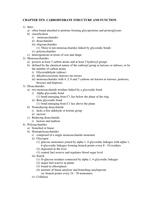
CHAPTER TEN: CARBOHYDRATE STRUCTURE AND FUNCTION
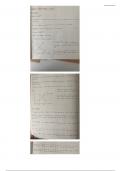
1) Intro
a) often found attached to proteins forming glycoproteins and proteoglycans
b) classification
i) monosaccharides
ii) disaccharides
iii) oligosaccharides
(1) Three to ten monosaccharides linked by glycosidic bonds
iv) polysaccharides
c) heterogeneous in terms of size and shape
2) Monosaccharides
a) possess at least 3 carbon atoms and at least 2 hydroxyl groups
b) defined by the chemical nature of the carbonyl group as ketoses or aldoses, or by
the number of carbon atoms
i) Glyceraldehyde (aldose)
ii) dihydroxyacetone (ketose) are trioses
iii) monosaccharides with 4, 5, 6 and 7 carbons are known as tetroses, pentoses,
hexoses and heptoses
3) Disaccharides
a) two monosaccharide residues linked by a glycosidic bond
i) Alpha glycosidic bond
(1) bond emerging from C1 lies below the plane of the ring
ii) Beta glycosidic bond
(1) bond emerging from C1 lies above the plane
b) Nonreducing disaccharide
i) lacks a free aldehyde or ketone group
ii) sucrose
c) Reducing disaccharide
i) lactose and maltose
4) Polysaccharides
a) branched or linear
b) Homopolysaccharides
i) composed of a single monosaccharide monomer
ii) Glycogen
(1) glucose monomers joined by alpha 1, 4-glycosidic linkages with alpha 1,
6-glycosidic linkages forming branch points every 8 - 10 residues
(2) deposited in the liver
(3) central fuel reserve and regulates blood sugar level
iii) Starch
(1) D-glucose residues connected by alpha 1, 4-glycosidic linkages
(2) major fuel reserve in plants
(3) found in chloroplasts
(4) mixture of linear amylose and branching amylopectin
(a) branch points every 24 - 30 monomers.
iv) Cellulose
1) Intro
a) often found attached to proteins forming glycoproteins and proteoglycans
b) classification
i) monosaccharides
ii) disaccharides
iii) oligosaccharides
(1) Three to ten monosaccharides linked by glycosidic bonds
iv) polysaccharides
c) heterogeneous in terms of size and shape
2) Monosaccharides
a) possess at least 3 carbon atoms and at least 2 hydroxyl groups
b) defined by the chemical nature of the carbonyl group as ketoses or aldoses, or by
the number of carbon atoms
i) Glyceraldehyde (aldose)
ii) dihydroxyacetone (ketose) are trioses
iii) monosaccharides with 4, 5, 6 and 7 carbons are known as tetroses, pentoses,
hexoses and heptoses
3) Disaccharides
a) two monosaccharide residues linked by a glycosidic bond
i) Alpha glycosidic bond
(1) bond emerging from C1 lies below the plane of the ring
ii) Beta glycosidic bond
(1) bond emerging from C1 lies above the plane
b) Nonreducing disaccharide
i) lacks a free aldehyde or ketone group
ii) sucrose
c) Reducing disaccharide
i) lactose and maltose
4) Polysaccharides
a) branched or linear
b) Homopolysaccharides
i) composed of a single monosaccharide monomer
ii) Glycogen
(1) glucose monomers joined by alpha 1, 4-glycosidic linkages with alpha 1,
6-glycosidic linkages forming branch points every 8 - 10 residues
(2) deposited in the liver
(3) central fuel reserve and regulates blood sugar level
iii) Starch
(1) D-glucose residues connected by alpha 1, 4-glycosidic linkages
(2) major fuel reserve in plants
(3) found in chloroplasts
(4) mixture of linear amylose and branching amylopectin
(a) branch points every 24 - 30 monomers.
iv) Cellulose