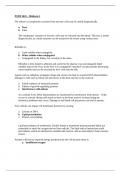
PATH 3610 – Midterm 1
The release of cytoplasmic enzymes from necrotic cells may be useful diagnostically.
a. True
b. False
The cytoplasmic enzymes of necrotic cells may be released into the blood. This fact is useful
diagnostically, as certain enzymes can be assayed in the serum using various tests.
Bilirubin is:
a. Lipid soluble when conjugated.
b. Water soluble when conjugated.
c. Conjugated in the kidney for excretion in the urine.
Bilirubin is then bound to albumin and carried in the plasma in an unconjugated (lipid
soluble) form to the liver. In the liver it is conjugated (“attached”) to glucuronide (becoming
water-soluble) and can be excreted by liver cells into the bile.
Agents such as radiation, mutagenic drugs and viruses can lead to acquired DNA abnormalities.
Damage to cells such as blood cell precursors in the bone marrow is the result of:
a. Failed synthesis of structural proteins
b. Failure of growth regulating proteins
c. Interference with mitosis
At a cellular level, DNA abnormalities are manifested by interference with mitosis – if this
occurs in actively diving cells (such as those in the bone marrow or those lining the
intestine), problems may occur. Damage to red blood cell precursors can lead to anemia.
Free radicals can impair cell membrane function by causing:
a. Lesions in DNA
b. Lipid peroxidation
c. Protein cross-linking
Lipid peroxidation of membranes. Double bonds in membrane polyunsaturated lipids are
vulnerable to attach by oxygen-derived free radicals. The lipid-radical interactions yield
peroxidases, which are themselves unstable and reactive, and an autocatalytic chain reaction
ensues.
Anemia will lead to impaired energy production by the cell because there is:
a. Insufficient oxygen
, b. Low glucose levels
c. Enzyme inhibition
Impaired energy production occurs during hypoxia (insufficient oxygen in the cells).
Problem: decreased ability of blood to carry oxygen. E.g. anemias, where there are fewer
red blood cells to carry oxygen or insufficient hemoglobin to bind the oxygen, would
mean that oxygen isn’t carried effectively by the blood to the tissues.
The primary change in hemolytic jaundice is:
a. Inadequate bilirubin excretion
b. Increased production of bilirubin
c. Serum accumulation of conjugated bilirubin
Hemolytic jaundice – if red blood cells are broken down in overly large numbers, production
of bilirubin is increased, and the liver cannot conjugate bilirubin fast enough. Unconjugated
bilirubin accumulates in the serum.
Triglyceride accumulation in the cytoplasm of parenchymal cells (such as the liver) is termed:
a. Cytoplasmic vacuolation
b. Hyperglycemia
c. Fatty degeneration
Fatty degeneration (fatty change) when triglyceride accumulates in the cytoplasm of
parenchymal cells in organs such as the liver, it is termed fatty degeneration or fatty chance.
Hypoxia, leading to impaired energy production by the cell, may be caused by:
a. Anemia
b. Low blood glucose levels
c. Inhibition of respiratory enzymes
Hypoxia (insufficient oxygen in the cells) might occur because of a decreased ability of
blood to carry oxygen (e.g. anemias).
Death of cells in a living organism is termed:
a. Gangrene
b. Necrosis
c. Ischemia
If injury which has caused cell degeneration persists or worsens, and cell injury reaches a
point of “no return”, then cell death will occur – what pathologists term necrosis.
Starvation can lead to the development of fatty liver.
The release of cytoplasmic enzymes from necrotic cells may be useful diagnostically.
a. True
b. False
The cytoplasmic enzymes of necrotic cells may be released into the blood. This fact is useful
diagnostically, as certain enzymes can be assayed in the serum using various tests.
Bilirubin is:
a. Lipid soluble when conjugated.
b. Water soluble when conjugated.
c. Conjugated in the kidney for excretion in the urine.
Bilirubin is then bound to albumin and carried in the plasma in an unconjugated (lipid
soluble) form to the liver. In the liver it is conjugated (“attached”) to glucuronide (becoming
water-soluble) and can be excreted by liver cells into the bile.
Agents such as radiation, mutagenic drugs and viruses can lead to acquired DNA abnormalities.
Damage to cells such as blood cell precursors in the bone marrow is the result of:
a. Failed synthesis of structural proteins
b. Failure of growth regulating proteins
c. Interference with mitosis
At a cellular level, DNA abnormalities are manifested by interference with mitosis – if this
occurs in actively diving cells (such as those in the bone marrow or those lining the
intestine), problems may occur. Damage to red blood cell precursors can lead to anemia.
Free radicals can impair cell membrane function by causing:
a. Lesions in DNA
b. Lipid peroxidation
c. Protein cross-linking
Lipid peroxidation of membranes. Double bonds in membrane polyunsaturated lipids are
vulnerable to attach by oxygen-derived free radicals. The lipid-radical interactions yield
peroxidases, which are themselves unstable and reactive, and an autocatalytic chain reaction
ensues.
Anemia will lead to impaired energy production by the cell because there is:
a. Insufficient oxygen
, b. Low glucose levels
c. Enzyme inhibition
Impaired energy production occurs during hypoxia (insufficient oxygen in the cells).
Problem: decreased ability of blood to carry oxygen. E.g. anemias, where there are fewer
red blood cells to carry oxygen or insufficient hemoglobin to bind the oxygen, would
mean that oxygen isn’t carried effectively by the blood to the tissues.
The primary change in hemolytic jaundice is:
a. Inadequate bilirubin excretion
b. Increased production of bilirubin
c. Serum accumulation of conjugated bilirubin
Hemolytic jaundice – if red blood cells are broken down in overly large numbers, production
of bilirubin is increased, and the liver cannot conjugate bilirubin fast enough. Unconjugated
bilirubin accumulates in the serum.
Triglyceride accumulation in the cytoplasm of parenchymal cells (such as the liver) is termed:
a. Cytoplasmic vacuolation
b. Hyperglycemia
c. Fatty degeneration
Fatty degeneration (fatty change) when triglyceride accumulates in the cytoplasm of
parenchymal cells in organs such as the liver, it is termed fatty degeneration or fatty chance.
Hypoxia, leading to impaired energy production by the cell, may be caused by:
a. Anemia
b. Low blood glucose levels
c. Inhibition of respiratory enzymes
Hypoxia (insufficient oxygen in the cells) might occur because of a decreased ability of
blood to carry oxygen (e.g. anemias).
Death of cells in a living organism is termed:
a. Gangrene
b. Necrosis
c. Ischemia
If injury which has caused cell degeneration persists or worsens, and cell injury reaches a
point of “no return”, then cell death will occur – what pathologists term necrosis.
Starvation can lead to the development of fatty liver.