Inherited Hb Disorders
·
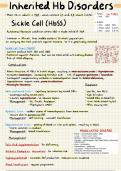
Main Hb in adults is HbA, which contains 2 and 2B chains (22B2). Hb TYPES
Sickle Cell (HbSS)
Autosomal Recessive condition where HDS is made insted ofHbA.
·
Common in African, then middle eastern/SE asian
populations
as
carrying protects
the trait againstmalaria, so itis
genetically selected.
Sickle Cell Trait (HbAS):
carriers produce both HDS and HbA.
·
·
Protection against Malaria, but can be associated with kidney disease.
·
Risk HDSS
of
offspring.
Complications:
Alters structure of RBCs to 'sickle' shape, resulting in vaso-occlusive crises/Hyposplenism.
·
Increases haemolysis, increasing bilirubin and ... risk ofpigment gallstones/Jaundice.
·
Consequentcompensatory increase in haematopoiesis leads to folate deficiency.
·
·
Hyposplenism means to infections.
more
prone
Microcytic Anaemia. Diagnosis:
·
Vaso-occlusive Crisis -
Capillary occlusion by sickled RBCs. -low Hb, low MCV
accompanied by severe pain. high bilirubin
· -
·
Causes hyposplenism, so beware sepsis. -
sickled RBCs on blood film
Management:-82, Fluids, Analgesia. ttive sickle
solubility test
· -
Prophylactic (MWH. HPLC showing HbS
- -
Aplastic Crisis- sudden cease haematopoiesis
of from bone marrow.
·
occurs due to parvovirus BIG.
consider transfusion.
Management:self-limiting,
·
Sequastration Crisis -
pooling of blood in liver and spleen, resulting in shock.
in children.
·
more common
ASOCIATED DISEASE
Management:blood transfusion.
· S
Management:
Folic Acid supplementation:for deficiency.
Antibiotic Prophylaxis, Vaccinations:for infection risk.
carbimide:increases
my production, reduces crisis incidence.
HIF
Blood Transfusions:regular
programme.
·
Main Hb in adults is HbA, which contains 2 and 2B chains (22B2). Hb TYPES
Sickle Cell (HbSS)
Autosomal Recessive condition where HDS is made insted ofHbA.
·
Common in African, then middle eastern/SE asian
populations
as
carrying protects
the trait againstmalaria, so itis
genetically selected.
Sickle Cell Trait (HbAS):
carriers produce both HDS and HbA.
·
·
Protection against Malaria, but can be associated with kidney disease.
·
Risk HDSS
of
offspring.
Complications:
Alters structure of RBCs to 'sickle' shape, resulting in vaso-occlusive crises/Hyposplenism.
·
Increases haemolysis, increasing bilirubin and ... risk ofpigment gallstones/Jaundice.
·
Consequentcompensatory increase in haematopoiesis leads to folate deficiency.
·
·
Hyposplenism means to infections.
more
prone
Microcytic Anaemia. Diagnosis:
·
Vaso-occlusive Crisis -
Capillary occlusion by sickled RBCs. -low Hb, low MCV
accompanied by severe pain. high bilirubin
· -
·
Causes hyposplenism, so beware sepsis. -
sickled RBCs on blood film
Management:-82, Fluids, Analgesia. ttive sickle
solubility test
· -
Prophylactic (MWH. HPLC showing HbS
- -
Aplastic Crisis- sudden cease haematopoiesis
of from bone marrow.
·
occurs due to parvovirus BIG.
consider transfusion.
Management:self-limiting,
·
Sequastration Crisis -
pooling of blood in liver and spleen, resulting in shock.
in children.
·
more common
ASOCIATED DISEASE
Management:blood transfusion.
· S
Management:
Folic Acid supplementation:for deficiency.
Antibiotic Prophylaxis, Vaccinations:for infection risk.
carbimide:increases
my production, reduces crisis incidence.
HIF
Blood Transfusions:regular
programme.