Ellie Mae Smith Unit 10: Assignment 1
P1: Describe types of market research
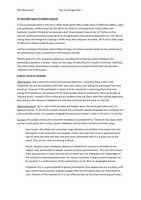
A current popular trend in the UK is coffee shops which offer a wide menu of different coffees, cakes
and sandwiches, coffee shops like this which are found in most towns are Costa Coffee and
Starbucks. Another thing that has become a part of everybody’s lives in the 21st century is the
internet, which particularly young adults of this generation have become dependent on. The idea of
mixing these two things and creating a coffee shop with computer terminals, Wi-Fi and a wide range
of difference coffees could be very successful.
I will be providing information about different types of market research which can be carried out to
the entrepreneur who is interested in this business venture.
Market research is the systematic gathering, recording and analysing of data relating to the
marketing of goods or a service. There are two ways of collecting this research: primarily- collecting
new information yourself and secondary- using statistics and research which have already been
collected from a third party.
Primary research methods:
Observations: this is where the researcher watches behaviour. A positive thing of this is the
researcher can see the behaviour with their own eyes, rather than asking the participant how they
would act. However if the participant is aware that the researcher is observing them they may
change their behaviour. An example of this when people observe restaurants, these are known as
‘mystery diners’, workers in the restaurant are unaware they are there, after their dining experience
they will give the restaurant feedback and rate how well they did and areas to improve.
Experimentations: this is used to find out what will happen when the participant takes part in a
particular action. To do this for market research the researcher would manipulate the marketing mix
and record the results, for example changing the place your product is sold or the price it is sold for.
Surveys: this usually involves the researcher handing out questionnaires. There are four ways which
surveys can be done: face-to-face, postal, telephone and by email, I will discuss all four ways.
Face-to-face: this allows the researcher to get detailed and sensitive information from the
participant. If the researcher visits people’s homes and asks them to do a questionnaire it
may be more personal and they may give more information than if it is given out on the
street. This can be a time consuming method.
Postal: response rates completely depend on whether the receiver is interested in the
subject, only around 10% of people respond to postal questionnaires. This rate will increase
if the questionnaire is short and only sent to those who are interested in it. Advantages of
this method are postal questionnaires are cheap to produce, a large amount of people can
be reached in a small amount of time and surveys can be done on geographical areas.
Telephone: this is a good method of getting information from people who are too busy to fill
out a written questionnaire; however people often put the phone down on these kinds of
calls. Positives of this method are it is cost effective and not too time consuming and takes
P1: Describe types of market research
A current popular trend in the UK is coffee shops which offer a wide menu of different coffees, cakes
and sandwiches, coffee shops like this which are found in most towns are Costa Coffee and
Starbucks. Another thing that has become a part of everybody’s lives in the 21st century is the
internet, which particularly young adults of this generation have become dependent on. The idea of
mixing these two things and creating a coffee shop with computer terminals, Wi-Fi and a wide range
of difference coffees could be very successful.
I will be providing information about different types of market research which can be carried out to
the entrepreneur who is interested in this business venture.
Market research is the systematic gathering, recording and analysing of data relating to the
marketing of goods or a service. There are two ways of collecting this research: primarily- collecting
new information yourself and secondary- using statistics and research which have already been
collected from a third party.
Primary research methods:
Observations: this is where the researcher watches behaviour. A positive thing of this is the
researcher can see the behaviour with their own eyes, rather than asking the participant how they
would act. However if the participant is aware that the researcher is observing them they may
change their behaviour. An example of this when people observe restaurants, these are known as
‘mystery diners’, workers in the restaurant are unaware they are there, after their dining experience
they will give the restaurant feedback and rate how well they did and areas to improve.
Experimentations: this is used to find out what will happen when the participant takes part in a
particular action. To do this for market research the researcher would manipulate the marketing mix
and record the results, for example changing the place your product is sold or the price it is sold for.
Surveys: this usually involves the researcher handing out questionnaires. There are four ways which
surveys can be done: face-to-face, postal, telephone and by email, I will discuss all four ways.
Face-to-face: this allows the researcher to get detailed and sensitive information from the
participant. If the researcher visits people’s homes and asks them to do a questionnaire it
may be more personal and they may give more information than if it is given out on the
street. This can be a time consuming method.
Postal: response rates completely depend on whether the receiver is interested in the
subject, only around 10% of people respond to postal questionnaires. This rate will increase
if the questionnaire is short and only sent to those who are interested in it. Advantages of
this method are postal questionnaires are cheap to produce, a large amount of people can
be reached in a small amount of time and surveys can be done on geographical areas.
Telephone: this is a good method of getting information from people who are too busy to fill
out a written questionnaire; however people often put the phone down on these kinds of
calls. Positives of this method are it is cost effective and not too time consuming and takes