Cell membranes
-
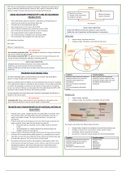
All membranes are composed of lipids, proteins and carbohydrates
⑱
The fluid mosaic model was suggested to describe the arrangement of molecules in the membrane
-
Phospholipid molecules form a continuous bilayer which is fluid because the phospholipids are
constantly moving
Phospholipid molecules
J
Have a head and tail
J
The head contains the phosphate group and is hydrophilic (attracts water)
>
The tail is made of 2 fatty acids and is hydrophobic
S
Due to this, the molecules arrange themselves into a bilayer where the hydrophilic heads face out
towards the water on either side of the membrane. The tails are on the inside, making the centre of the
bilayer hydrophobic
-
The membrane doesn’t allow water soluble substances like ions through it
-
Protein molecules are scattered through the bilayer like tiles in a mosaic. The proteins can move within it
due to the fluid phospholipid bilayer
⑱
Some proteins have a polysaccharide chain attached (glycolipids)
Cholesterol (a type of lipid) is present in the membrane. It fits in between the phospholipids, forming bonds
· with them; this makes the membrane rigid
The membrane is partially permeable - small molecules can move through the gaps between the
phospholipids but large molecules and ions can only pass through special membrane proteins called
channel proteins and carrier proteins
-
Before this model, scientists believes there was a phospholipid layer between two continuous layers of
protein due to three layers being shown on an EM
L
Improved EM techniques showed a bilayer of phospholipids and a new method for analysing proteins
showed they were randomly distributed and not in a continuous layer
-
Experiments (on mice) showed the membrane was fluid
-
All of this led to the fluid mosaic model
-
All membranes are composed of lipids, proteins and carbohydrates
⑱
The fluid mosaic model was suggested to describe the arrangement of molecules in the membrane
-
Phospholipid molecules form a continuous bilayer which is fluid because the phospholipids are
constantly moving
Phospholipid molecules
J
Have a head and tail
J
The head contains the phosphate group and is hydrophilic (attracts water)
>
The tail is made of 2 fatty acids and is hydrophobic
S
Due to this, the molecules arrange themselves into a bilayer where the hydrophilic heads face out
towards the water on either side of the membrane. The tails are on the inside, making the centre of the
bilayer hydrophobic
-
The membrane doesn’t allow water soluble substances like ions through it
-
Protein molecules are scattered through the bilayer like tiles in a mosaic. The proteins can move within it
due to the fluid phospholipid bilayer
⑱
Some proteins have a polysaccharide chain attached (glycolipids)
Cholesterol (a type of lipid) is present in the membrane. It fits in between the phospholipids, forming bonds
· with them; this makes the membrane rigid
The membrane is partially permeable - small molecules can move through the gaps between the
phospholipids but large molecules and ions can only pass through special membrane proteins called
channel proteins and carrier proteins
-
Before this model, scientists believes there was a phospholipid layer between two continuous layers of
protein due to three layers being shown on an EM
L
Improved EM techniques showed a bilayer of phospholipids and a new method for analysing proteins
showed they were randomly distributed and not in a continuous layer
-
Experiments (on mice) showed the membrane was fluid
-
All of this led to the fluid mosaic model