

Question 1
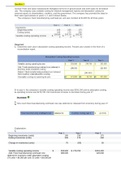
Sunrise Pools and Spas manufactures fibreglass forms for in-ground pools and swim spas for all-season
use. The company uses variable costing for internal management reports and absorption costing for
external reports to shareholders, creditors, and the government. The company has provided the data for
their swim spa business in years 1, 2, and 3 shown below.
The company’s fixed manufacturing overhead per unit was constant at $4,000 for all three years:
Year 1 Year 2 Year 3
Inventories:
Beginning (units) 165 235 175
Ending (units) 235 175 230
293,90 270,70 253,30
Variable costing operating income $ $ $
0 0 0
Required:
1. Determine each year’s absorption costing operating income. Present your answer in the form of a
reconciliation report.
2- In year 4, the company’s variable costing operating income was $255,200 and its absorption costing
a. operating income was $278,700. Did inventories increase or decrease during year 4?
Increase
2-
How much fixed manufacturing overhead cost was deferred or released from inventory during year 4?
b.
Explanation:
1.
Year 1 Year 2 Year 3
Beginning inventories (units) 165 235 175
Ending inventories (units) 235 175 230
Change in inventories (units) 70 (60) 55
Variable costing operating income $ 293,900 $ 270,700 $253,300
Add: Fixed manufacturing overhead cost 280,000 220,000
deferred in inventory under absorption costing
(70 units × $4,000 per unit; 55 units × $4,000 per
, unit)
Deduct: Fixed manufacturing overhead cost
released from inventory under absorption costing
(60 units × $4,000 per unit) (240,000)
Absorption costing operating income $ 573,900 $ 30,700 $473,300
2.
Because absorption costing operating income was less than variable costing operating income in Year 4,
inventories must have increased during the year and hence fixed manufacturing overhead was deferred
in inventories. The amount deferred is just the difference between the two operating incomes or −
$23,500 = $255,200 − $278,700.
Note: Using the change in inventory to do reconciliation is easy when production levels remain the same
from year to year but students should be cautioned that when production levels change, so do fixed
overhead costs per unit and you then must calculate overhead costs released and deferred in inventories
separately.
Question 2
Baxtell Company manufactures and sells a single product. The following costs were incurred during the
company’s first year of operations:
Variable costs per unit:
Manufacturing:
Direct materials $ 45
Direct labour 13
Variable manufacturing overhead 4
Variable selling and administrative 6
Fixed costs per year:
375,00
Fixed manufacturing overhead
0
238,50
Fixed selling and administrative expense
0
During the year, the company produced 31,250 units and sold 26,500 units. The selling price of the
company’s product is $94 per unit.
Required:
1. Assume that the company uses absorption costing.
a.
Compute the unit product cost.
b.
Prepare an income statement for the year.
Sunrise Pools and Spas manufactures fibreglass forms for in-ground pools and swim spas for all-season
use. The company uses variable costing for internal management reports and absorption costing for
external reports to shareholders, creditors, and the government. The company has provided the data for
their swim spa business in years 1, 2, and 3 shown below.
The company’s fixed manufacturing overhead per unit was constant at $4,000 for all three years:
Year 1 Year 2 Year 3
Inventories:
Beginning (units) 165 235 175
Ending (units) 235 175 230
293,90 270,70 253,30
Variable costing operating income $ $ $
0 0 0
Required:
1. Determine each year’s absorption costing operating income. Present your answer in the form of a
reconciliation report.
2- In year 4, the company’s variable costing operating income was $255,200 and its absorption costing
a. operating income was $278,700. Did inventories increase or decrease during year 4?
Increase
2-
How much fixed manufacturing overhead cost was deferred or released from inventory during year 4?
b.
Explanation:
1.
Year 1 Year 2 Year 3
Beginning inventories (units) 165 235 175
Ending inventories (units) 235 175 230
Change in inventories (units) 70 (60) 55
Variable costing operating income $ 293,900 $ 270,700 $253,300
Add: Fixed manufacturing overhead cost 280,000 220,000
deferred in inventory under absorption costing
(70 units × $4,000 per unit; 55 units × $4,000 per
, unit)
Deduct: Fixed manufacturing overhead cost
released from inventory under absorption costing
(60 units × $4,000 per unit) (240,000)
Absorption costing operating income $ 573,900 $ 30,700 $473,300
2.
Because absorption costing operating income was less than variable costing operating income in Year 4,
inventories must have increased during the year and hence fixed manufacturing overhead was deferred
in inventories. The amount deferred is just the difference between the two operating incomes or −
$23,500 = $255,200 − $278,700.
Note: Using the change in inventory to do reconciliation is easy when production levels remain the same
from year to year but students should be cautioned that when production levels change, so do fixed
overhead costs per unit and you then must calculate overhead costs released and deferred in inventories
separately.
Question 2
Baxtell Company manufactures and sells a single product. The following costs were incurred during the
company’s first year of operations:
Variable costs per unit:
Manufacturing:
Direct materials $ 45
Direct labour 13
Variable manufacturing overhead 4
Variable selling and administrative 6
Fixed costs per year:
375,00
Fixed manufacturing overhead
0
238,50
Fixed selling and administrative expense
0
During the year, the company produced 31,250 units and sold 26,500 units. The selling price of the
company’s product is $94 per unit.
Required:
1. Assume that the company uses absorption costing.
a.
Compute the unit product cost.
b.
Prepare an income statement for the year.


