
Cassidy Jackson (1083279)
GEOG 3000 – Lab 1 – Drainage Network Surveys
Dendritic
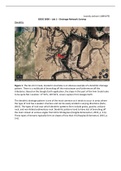
Figure 1: The Gin Arm Creek, located in Australia is an obvious example of a dendritic drainage
pattern. There is a multitude of branching off the mainstream and furthermore off the
tributaries. Based on the Google Earth application, the slope in this part of Gin Arm Creek looks
to be quite flat. Location: 17°34’S, 139°26’E, screen capture from Google Earth.
The dendritic drainage pattern is one of the most common as it tends to occur in areas where
the type of rock has a weaker structure and can be easily eroded in varying directions (Earle,
2015). The types of rock over which dendritic patterns form include gneiss, granite, volcanic
rock, and non-folded sedimentary rock. Dendritic patterns tend to have lots of branching off
the main stream at various angles from 60 to 90 degrees (Hargitai & Kereszturi, 2015, p. 5-6).
These types of streams typically form on slopes of less than 1% (Hargitai & Kereszturi, 2015, p.
5-6).
, Annular
Figure 2: Located in Florida, the Chassahowitzka River and its tributaries demonstrate an
annular drainage pattern. As marked in the picture, there is a circular area through which the
main stream flows and tributaries that stems off the circle. Location: 28°44’N, 82°41’W, screen
capture from Google Earth.
The annular drainage pattern is ring-like in nature with tributaries stemming off from the main
stream (Hargitai & Kereszturi, 2015, p. 4). An annular drainage pattern typically forms in areas
with a circular dome/basin or from impact craters (Hargitai & Kereszturi, 2015, p. 4). The rocks
are concentric in form and typically exhibit varying resistances to erosion which can form the
circular shape of an annular drainage pattern (Oxford Reference, n.d.-a).
GEOG 3000 – Lab 1 – Drainage Network Surveys
Dendritic
Figure 1: The Gin Arm Creek, located in Australia is an obvious example of a dendritic drainage
pattern. There is a multitude of branching off the mainstream and furthermore off the
tributaries. Based on the Google Earth application, the slope in this part of Gin Arm Creek looks
to be quite flat. Location: 17°34’S, 139°26’E, screen capture from Google Earth.
The dendritic drainage pattern is one of the most common as it tends to occur in areas where
the type of rock has a weaker structure and can be easily eroded in varying directions (Earle,
2015). The types of rock over which dendritic patterns form include gneiss, granite, volcanic
rock, and non-folded sedimentary rock. Dendritic patterns tend to have lots of branching off
the main stream at various angles from 60 to 90 degrees (Hargitai & Kereszturi, 2015, p. 5-6).
These types of streams typically form on slopes of less than 1% (Hargitai & Kereszturi, 2015, p.
5-6).
, Annular
Figure 2: Located in Florida, the Chassahowitzka River and its tributaries demonstrate an
annular drainage pattern. As marked in the picture, there is a circular area through which the
main stream flows and tributaries that stems off the circle. Location: 28°44’N, 82°41’W, screen
capture from Google Earth.
The annular drainage pattern is ring-like in nature with tributaries stemming off from the main
stream (Hargitai & Kereszturi, 2015, p. 4). An annular drainage pattern typically forms in areas
with a circular dome/basin or from impact craters (Hargitai & Kereszturi, 2015, p. 4). The rocks
are concentric in form and typically exhibit varying resistances to erosion which can form the
circular shape of an annular drainage pattern (Oxford Reference, n.d.-a).


