Semester 1, Block 1 – 2022
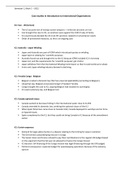
Case studies in Introduction to International Organisations
ICJ: Iran - US (lecture)
▪ The US accused Iran of having nuclear weapons -> enforced sanctions on Iran
▪ Iran brought the case to ICJ, as sanctions were against the 1955 Treaty of Amity
▪ ICJ unanimously decided the US must lift sanctions related to humanitarian needs
▪ Order of provisional measures, as this is an ongoing case
ICJ: Australia - Japan Whaling
▪ Japan and Australia are part of ICRW which introduced quotas on whaling
▪ Japan kept on whaling for 'scientific purposes
▪ Australia found out and brought this to the ICJ because ICRW included ICJ in its treaty
▪ Japan lost, and the requirements for 'scientific purposes' got stricter
▪ Japan withdrew from the International Whaling Commission so that it could continue to whale
▪ Ironic end: Japan whaling industry demand is declining
ICJ: Yerodia Congo - Belgium
▪ Belgium created a domestic law that has universal applicability (according to Belgium)
▪ Using that law, Belgium prosecuted Congo's President Yerodia
▪ Congo brought the case to ICJ, arguing Belgium had violated its sovereignty
▪ ICJ used customary law, and Belgium lost
ICJ: Canada optional clause
▪ Canada wanted to decrease fishing in the international water close to its EEZ
▪ Canada amended its domestic law, omitting the optional clause of the ICJ
▪ When Spain fishermen came close to Canada's EEZ, Canada deployed its warships and air force
on Spanish boats
▪ Spain complained to the ICJ, but they could not bring Canada to ICJ because of the amendment
earlier
ICJ: Certain expenses
▪ Demand for legal advice by GA on a dispute relating to the Uniting for peace resolution
▪ The GA formed a peacekeeping mission in Congo
▪ The Soviet Union and France refused to pay their contributions to the regular UN budget based
on the argument that the GA was not allowed to finance the Congo mission
▪ ICJ decision: GA financing of the Congo mission was legal (financing through the UN budget)
▪ Political consequence: separate budget for peacekeeping operations because of the advisory
opinion
Case studies in Introduction to International Organisations
ICJ: Iran - US (lecture)
▪ The US accused Iran of having nuclear weapons -> enforced sanctions on Iran
▪ Iran brought the case to ICJ, as sanctions were against the 1955 Treaty of Amity
▪ ICJ unanimously decided the US must lift sanctions related to humanitarian needs
▪ Order of provisional measures, as this is an ongoing case
ICJ: Australia - Japan Whaling
▪ Japan and Australia are part of ICRW which introduced quotas on whaling
▪ Japan kept on whaling for 'scientific purposes
▪ Australia found out and brought this to the ICJ because ICRW included ICJ in its treaty
▪ Japan lost, and the requirements for 'scientific purposes' got stricter
▪ Japan withdrew from the International Whaling Commission so that it could continue to whale
▪ Ironic end: Japan whaling industry demand is declining
ICJ: Yerodia Congo - Belgium
▪ Belgium created a domestic law that has universal applicability (according to Belgium)
▪ Using that law, Belgium prosecuted Congo's President Yerodia
▪ Congo brought the case to ICJ, arguing Belgium had violated its sovereignty
▪ ICJ used customary law, and Belgium lost
ICJ: Canada optional clause
▪ Canada wanted to decrease fishing in the international water close to its EEZ
▪ Canada amended its domestic law, omitting the optional clause of the ICJ
▪ When Spain fishermen came close to Canada's EEZ, Canada deployed its warships and air force
on Spanish boats
▪ Spain complained to the ICJ, but they could not bring Canada to ICJ because of the amendment
earlier
ICJ: Certain expenses
▪ Demand for legal advice by GA on a dispute relating to the Uniting for peace resolution
▪ The GA formed a peacekeeping mission in Congo
▪ The Soviet Union and France refused to pay their contributions to the regular UN budget based
on the argument that the GA was not allowed to finance the Congo mission
▪ ICJ decision: GA financing of the Congo mission was legal (financing through the UN budget)
▪ Political consequence: separate budget for peacekeeping operations because of the advisory
opinion