Neurologisch stelsel
CVA
HC 1 + 2 + 3
Inleiding
o Definitie volgens WHO
= “stroke is a focal (or at times global) neurological impairment of sudden onset, and lasting more than
24 hours (or leading to death) and of presumed vascular origin”
vasculaire aandoening waardoor er een neurologische uitval is.
= stroke is the most important cause of dependency in ADL among elderly
o cijfers in België
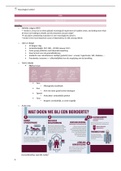
52 belgen/ dag
Incidentie België: 20/1 000 ~ 20 000 nieuwe CVA’s
Grote groep patiënten met blijvende beperking
Enorme kost voor de gezondheidszorg
Aandacht voor risicofactoren: leeftijd, geslach( (man > vrouw), hypertensie, VKF, diabetes, …
Prevalentie: toename <-> afhenkelijkheid van de vergrijzing van de bevolking
o TIME IS BRAIN
FAST principe
Face
− Afhangende mondhoek
Arm
− Arm niet meer goed kunnen bewegen
Speech
− Articulatie/ uinduidelijk spreken
Time
− Reageer onmiddellijk, zo wnel mogelijk
o Acute zorg
Hersenbloeding: operatie nodig?
1
, Neurologisch stelsel
Meeste ¾ CVA patiënten hebben een herseninfarct = ischemie
via infuus medicatie inbrengen om klonter op te lossen OF trombectomie: via interventie, catheter
via lies kleine tang klonter wegnemen.
Oorzaken
Ischemie/ infarct (80%) FAST (3-4,5u) trombose of trombectomie
Bloeding (20%)
Infarctgebieden
A. cerebri media (3/4 van alle CVA’s): arm/hand en aangezicht (vnl mond)
A. cerebri anterior been en romp
A. cerebri posterior visus aangetast
Algemeen klinisch beeld
Afhankelijk van lokalisatie, grootte, type en spontaan neurologisch herstel
Hemiparese/ hemiplegie (arm-been-romp en aangezicht): gestoorde ‘willekeurige/
doelgerichte motoriek’
OOK stoornissen in sensoriek, cognitie, communicatie, planning, gedrag, …
Been meestal beter recupereren vnl arm/ hand problemen
Herstel en prognose (ZEER GOED KENNEN)
o Tijdskader en intensiteit van revalidatie
o Verschillende fasen: acute, subacute (revalidatie) en chronische fase
Acute fase: stroke unit
Subacute fase: fase van intensieve revalidatie
Chronische fase: na 6 maand post-CVA
Niet strikt afgelijnd, deels overlappend: eerste fase is het belangrijkste door het spontaan
herstel, belang intensieve revalidatie vanaf P te beginnen stagneren gaan ze niet meer
zoveel herstellen
o Herstel vnl in de eerste weken cerebrale shockfase, onmiddellijk verhoogde plasticiteit om letsel zo
klein mogelijk te houden
o Periode van verhoogde plasticiteit
Spontaan neurologisch herstel
Meeste kans op werkelijk herste ‘true recovery’
Belang van een vroege start revalidatie
Revalidatie meest effectief: taak-gerichte training + aerobe training
At present, it appears that intensive motor training during the early period of spontaneous
biological recovery may be best suited for optimization of both surviving and new networks
that results in substantial recovery of motor performance
netwerken herstellen
penumbra = zone waar letsel plaats heeft gevonden, necrose hersencellen daarrond kring
van oedeem, hersenen proberen zoveel mogelijk bloed naar die zone te sturen oedeem gaat
wegtrekken, eerst serieus verlamd erna beter
deactivatie van de deaschisis (‘scheur’ = onderbreking) connecties met andere zone ook
tijdelijke onderbroken banen gaan herstellen
o Plateaufase tss 3de en 6de maand post-CVA
o Verbeterde functionaliteit door compensatiestrategieën
compenseren bv met ander hand leren of proximaal compenseren bv romp overcompenseren om
hand naar voor te brengen
Alternatieve bewegingspatronen
Aangeleerd
o Intensieve training
More is better: tijdsduur – hehalingen van oefeningen
Cave: verloren tijd
meestal voor 1x naar oefenzaal maar veel beter om te spreiden in voor- en namiddag
hersenen actief bezig zijn, elk moment van de dag MAAR rust is ook belangrijk
2
, Neurologisch stelsel
o Na 6 maand: chronische fase
Stagnatie
Verbetering (door blijvende intensieve training)
Achteruitgang
An ideal post-stroke therapy scheme include a ramped intensity increase over the first few
weeks after stroke, continued by high-intensity therapy for several weeks, and a a transition to
a program of similar intensity in the outpatient setting, supplemented by a home exercise
program with measureable practice and outcomes.
er kan nog verbetering zijn maar niet zo spectaculair als in de eerste weken!
o Determinanten/ modellen die motorische prognose kunnen bepalen
o Zeer vroeg na het CVA (eerste dagen/ week/ weken)
Being able to predict functional motor outcomes help clinicians, patients and families tot set
appropriate rehabilitation goals and make suitable plans for the level of support the patient is likely
to need after discharge from the hospital
o Predictie herstel arm-handfunctie
SAFE-model: behouden/snel herwinnen van schouderabductie en vingerextensie
Recent onderzoek
Extra gebruik van biomarkers (MRI – TMS – MEP)
Leeftijd (<80j)
3
, Neurologisch stelsel
- SAFE shoulder abduction en finger extension: op de MRC schaal
- MEP speciaal apparatuur prikkels door hersenen sturen om beweging te provoceren = Motor Evoked
Potentials = magneetstimulatie
- NIHSS National Institute of Health Stroke Scale: schaal, afgenomen om neurologische kenmerken in
kaart te brengen
o Predictie herstel stappen
Mate van zitbalans (score trunk control test)
Kracht in het onderste lidmaat (milde parese)
Recent onderzoek (TWIST): actieve heupextensie
o Predictie herstel ADL-vaardigheden
Mate van zelfstandigheid in ADL (eerste week) (score op barthel index)
- TCT Trunk Control Test: rollen naar L en R op rand van het bed blijven zitten, max 100 punten
- Hip extension tekort aan romp stabiliteit kunnen compenseren ≥ 3 op RMC schaal
4
CVA
HC 1 + 2 + 3
Inleiding
o Definitie volgens WHO
= “stroke is a focal (or at times global) neurological impairment of sudden onset, and lasting more than
24 hours (or leading to death) and of presumed vascular origin”
vasculaire aandoening waardoor er een neurologische uitval is.
= stroke is the most important cause of dependency in ADL among elderly
o cijfers in België
52 belgen/ dag
Incidentie België: 20/1 000 ~ 20 000 nieuwe CVA’s
Grote groep patiënten met blijvende beperking
Enorme kost voor de gezondheidszorg
Aandacht voor risicofactoren: leeftijd, geslach( (man > vrouw), hypertensie, VKF, diabetes, …
Prevalentie: toename <-> afhenkelijkheid van de vergrijzing van de bevolking
o TIME IS BRAIN
FAST principe
Face
− Afhangende mondhoek
Arm
− Arm niet meer goed kunnen bewegen
Speech
− Articulatie/ uinduidelijk spreken
Time
− Reageer onmiddellijk, zo wnel mogelijk
o Acute zorg
Hersenbloeding: operatie nodig?
1
, Neurologisch stelsel
Meeste ¾ CVA patiënten hebben een herseninfarct = ischemie
via infuus medicatie inbrengen om klonter op te lossen OF trombectomie: via interventie, catheter
via lies kleine tang klonter wegnemen.
Oorzaken
Ischemie/ infarct (80%) FAST (3-4,5u) trombose of trombectomie
Bloeding (20%)
Infarctgebieden
A. cerebri media (3/4 van alle CVA’s): arm/hand en aangezicht (vnl mond)
A. cerebri anterior been en romp
A. cerebri posterior visus aangetast
Algemeen klinisch beeld
Afhankelijk van lokalisatie, grootte, type en spontaan neurologisch herstel
Hemiparese/ hemiplegie (arm-been-romp en aangezicht): gestoorde ‘willekeurige/
doelgerichte motoriek’
OOK stoornissen in sensoriek, cognitie, communicatie, planning, gedrag, …
Been meestal beter recupereren vnl arm/ hand problemen
Herstel en prognose (ZEER GOED KENNEN)
o Tijdskader en intensiteit van revalidatie
o Verschillende fasen: acute, subacute (revalidatie) en chronische fase
Acute fase: stroke unit
Subacute fase: fase van intensieve revalidatie
Chronische fase: na 6 maand post-CVA
Niet strikt afgelijnd, deels overlappend: eerste fase is het belangrijkste door het spontaan
herstel, belang intensieve revalidatie vanaf P te beginnen stagneren gaan ze niet meer
zoveel herstellen
o Herstel vnl in de eerste weken cerebrale shockfase, onmiddellijk verhoogde plasticiteit om letsel zo
klein mogelijk te houden
o Periode van verhoogde plasticiteit
Spontaan neurologisch herstel
Meeste kans op werkelijk herste ‘true recovery’
Belang van een vroege start revalidatie
Revalidatie meest effectief: taak-gerichte training + aerobe training
At present, it appears that intensive motor training during the early period of spontaneous
biological recovery may be best suited for optimization of both surviving and new networks
that results in substantial recovery of motor performance
netwerken herstellen
penumbra = zone waar letsel plaats heeft gevonden, necrose hersencellen daarrond kring
van oedeem, hersenen proberen zoveel mogelijk bloed naar die zone te sturen oedeem gaat
wegtrekken, eerst serieus verlamd erna beter
deactivatie van de deaschisis (‘scheur’ = onderbreking) connecties met andere zone ook
tijdelijke onderbroken banen gaan herstellen
o Plateaufase tss 3de en 6de maand post-CVA
o Verbeterde functionaliteit door compensatiestrategieën
compenseren bv met ander hand leren of proximaal compenseren bv romp overcompenseren om
hand naar voor te brengen
Alternatieve bewegingspatronen
Aangeleerd
o Intensieve training
More is better: tijdsduur – hehalingen van oefeningen
Cave: verloren tijd
meestal voor 1x naar oefenzaal maar veel beter om te spreiden in voor- en namiddag
hersenen actief bezig zijn, elk moment van de dag MAAR rust is ook belangrijk
2
, Neurologisch stelsel
o Na 6 maand: chronische fase
Stagnatie
Verbetering (door blijvende intensieve training)
Achteruitgang
An ideal post-stroke therapy scheme include a ramped intensity increase over the first few
weeks after stroke, continued by high-intensity therapy for several weeks, and a a transition to
a program of similar intensity in the outpatient setting, supplemented by a home exercise
program with measureable practice and outcomes.
er kan nog verbetering zijn maar niet zo spectaculair als in de eerste weken!
o Determinanten/ modellen die motorische prognose kunnen bepalen
o Zeer vroeg na het CVA (eerste dagen/ week/ weken)
Being able to predict functional motor outcomes help clinicians, patients and families tot set
appropriate rehabilitation goals and make suitable plans for the level of support the patient is likely
to need after discharge from the hospital
o Predictie herstel arm-handfunctie
SAFE-model: behouden/snel herwinnen van schouderabductie en vingerextensie
Recent onderzoek
Extra gebruik van biomarkers (MRI – TMS – MEP)
Leeftijd (<80j)
3
, Neurologisch stelsel
- SAFE shoulder abduction en finger extension: op de MRC schaal
- MEP speciaal apparatuur prikkels door hersenen sturen om beweging te provoceren = Motor Evoked
Potentials = magneetstimulatie
- NIHSS National Institute of Health Stroke Scale: schaal, afgenomen om neurologische kenmerken in
kaart te brengen
o Predictie herstel stappen
Mate van zitbalans (score trunk control test)
Kracht in het onderste lidmaat (milde parese)
Recent onderzoek (TWIST): actieve heupextensie
o Predictie herstel ADL-vaardigheden
Mate van zelfstandigheid in ADL (eerste week) (score op barthel index)
- TCT Trunk Control Test: rollen naar L en R op rand van het bed blijven zitten, max 100 punten
- Hip extension tekort aan romp stabiliteit kunnen compenseren ≥ 3 op RMC schaal
4