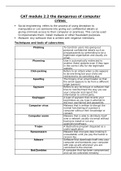
CAT module 2.2 the dangerous of computer
crime:
Social engineering: refers to the process of using deception to
manipulate or con someone into giving out confidential details or
giving criminals access to their computer or premises. This can be used
to impersonate them, install malware or other fraudulent purposes.
Malware: Any software that is written with negative intentions.
Techniques and tools of cybercrime:
Phishing To Con/trick users into giving out
personal confidential details such as
pins/passwords by pretending to be a
legitimate organisation and usually via
email.
Pharming User is automatically redirected to
another (fake) website even if they type
in the correct URL for the legitimate
website.
Click-jacking Refers to an attack when a site appears
to do one thing but your clicks are
redirected to do something else.
Spoofing The forgery of an email header so that
the email appears to be from a different
origin (person)
Spyware Refers to any technique or software that
tries to monitor/track the way you use
your computer and report this
information to a third party.
Keylogger A type of spyware that records your
keystrokes as you type in attempt to
discover usernames and passwords.
Computer virus Malware that is written to disrupt the
normal functioning of a person’s
computer without their knowledge or
consent.
Computer worm Malware that is able to distribute itself
over a network usually via email without
having to install or run any
application/software.
Trojan A destructive program disguised as a
useful application
Ransomware Malware that encrypts data (making it
unavailable) until you pay the hacker a
ransom fee.
Adware Software that downloads itself onto your
computer and bombards your computer
with pop-up ads whenever you are
connected to the internet.
Bot/Zombies A computer that has been compromised
and can be controlled remotely
crime:
Social engineering: refers to the process of using deception to
manipulate or con someone into giving out confidential details or
giving criminals access to their computer or premises. This can be used
to impersonate them, install malware or other fraudulent purposes.
Malware: Any software that is written with negative intentions.
Techniques and tools of cybercrime:
Phishing To Con/trick users into giving out
personal confidential details such as
pins/passwords by pretending to be a
legitimate organisation and usually via
email.
Pharming User is automatically redirected to
another (fake) website even if they type
in the correct URL for the legitimate
website.
Click-jacking Refers to an attack when a site appears
to do one thing but your clicks are
redirected to do something else.
Spoofing The forgery of an email header so that
the email appears to be from a different
origin (person)
Spyware Refers to any technique or software that
tries to monitor/track the way you use
your computer and report this
information to a third party.
Keylogger A type of spyware that records your
keystrokes as you type in attempt to
discover usernames and passwords.
Computer virus Malware that is written to disrupt the
normal functioning of a person’s
computer without their knowledge or
consent.
Computer worm Malware that is able to distribute itself
over a network usually via email without
having to install or run any
application/software.
Trojan A destructive program disguised as a
useful application
Ransomware Malware that encrypts data (making it
unavailable) until you pay the hacker a
ransom fee.
Adware Software that downloads itself onto your
computer and bombards your computer
with pop-up ads whenever you are
connected to the internet.
Bot/Zombies A computer that has been compromised
and can be controlled remotely