Unit 2 – P4 Task
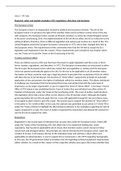
Research, select and explain examples of EU regulations, directives and decisions
The European Union
The European Union is an organization formed by political and economic interests. The aim of the
European Union is to preserve the right of the member states and to enhance various areas of the law
with solidarity. The European Union consists of 28 state members, to which the United Kingdom exited
in the years commencing 2016. Any implementations of EU law do not affect the UK as it did prior to the
exiting of Britain, therefore, there is different legislation and systems put in place as a result of this. The
United Kingdom joined the European Economic Community in 1973, which later changed their title to
the European Union. The requirements of this community were that the UK had to accept the Eu’s
legislation and implement it into the country. These requirements were entailed in two treaties which
was the Treaty on EU and the Treaty on the Functioning of the EU.
Treaties and Direct Effect
There are distinct sources of EU Law that have the power to apply legislation and they come in three
forms: treaties, regulations, and directives. In 1972, The European Communities act was passed to allow
the Uk to join the European Union which also stated that any legislation or statutes that the European
Union has passed automatically apply to the UK. For this law to be applicable to all 28 member states,
the leaders of these countries must sign a legal document to proclaim their acceptance of this act which
will allow the law to be introduced. The doctrine of “direct effect” supports the principle of automatic
application of law and protects the rights of individuals within the member states. This allows individuals
to challenge any misconduct that has breached the EU law and will be tried with the same level of
importance as any larger organization. A case to support the tenet of “direct effect” is Van Duyn v Home
Office (1974) where it was established by the Court of Justice that any individual can utilize article 45,
freedom of Movement, under the Treaty of the Functioning of EU. The court of Justice could introduce
this legislation which had a direct effect on the citizens in the 28 member states. Although the English
governing bodies did not directly apply this law, it was still applicable through EU law and citizens were
encouraged to place reliance upon this creed. The second case to support the doctrine of “direct effect”
is McCarthy’s LTD v Smith (1980). In this case, the claimant was permitted to use article 157 of the TFEU
under the Treaty of Rome to highlight the discriminatory behavior in her workplace regarding her lack of
wages compared to a male. The court of Justice recognized this misconduct and allowed the claimant to
use the EU law to support her claim.
Regulations
Regulations is the second type of institution that can pass laws under the European Union. Article 288
under the Treaty of the Functioning of EU law allows the EU to implement binding law, under
regulations, that has direct applicability which means that members states cannot choose to follow
certain laws and disregard others. This principle can only be directed by the European Union. Upon the
creation of Eu law, it will surpass the law of the individual states and will have a direct effect and
applicability of administration. A case to support this is Commission v Uk (1979) regarding Tachographs.
In this case, the UK government failed to introduce the law regarding technical equipment requirements
within vehicles. As a result of this, owners of the respective vehicles were given the choice whether they
Research, select and explain examples of EU regulations, directives and decisions
The European Union
The European Union is an organization formed by political and economic interests. The aim of the
European Union is to preserve the right of the member states and to enhance various areas of the law
with solidarity. The European Union consists of 28 state members, to which the United Kingdom exited
in the years commencing 2016. Any implementations of EU law do not affect the UK as it did prior to the
exiting of Britain, therefore, there is different legislation and systems put in place as a result of this. The
United Kingdom joined the European Economic Community in 1973, which later changed their title to
the European Union. The requirements of this community were that the UK had to accept the Eu’s
legislation and implement it into the country. These requirements were entailed in two treaties which
was the Treaty on EU and the Treaty on the Functioning of the EU.
Treaties and Direct Effect
There are distinct sources of EU Law that have the power to apply legislation and they come in three
forms: treaties, regulations, and directives. In 1972, The European Communities act was passed to allow
the Uk to join the European Union which also stated that any legislation or statutes that the European
Union has passed automatically apply to the UK. For this law to be applicable to all 28 member states,
the leaders of these countries must sign a legal document to proclaim their acceptance of this act which
will allow the law to be introduced. The doctrine of “direct effect” supports the principle of automatic
application of law and protects the rights of individuals within the member states. This allows individuals
to challenge any misconduct that has breached the EU law and will be tried with the same level of
importance as any larger organization. A case to support the tenet of “direct effect” is Van Duyn v Home
Office (1974) where it was established by the Court of Justice that any individual can utilize article 45,
freedom of Movement, under the Treaty of the Functioning of EU. The court of Justice could introduce
this legislation which had a direct effect on the citizens in the 28 member states. Although the English
governing bodies did not directly apply this law, it was still applicable through EU law and citizens were
encouraged to place reliance upon this creed. The second case to support the doctrine of “direct effect”
is McCarthy’s LTD v Smith (1980). In this case, the claimant was permitted to use article 157 of the TFEU
under the Treaty of Rome to highlight the discriminatory behavior in her workplace regarding her lack of
wages compared to a male. The court of Justice recognized this misconduct and allowed the claimant to
use the EU law to support her claim.
Regulations
Regulations is the second type of institution that can pass laws under the European Union. Article 288
under the Treaty of the Functioning of EU law allows the EU to implement binding law, under
regulations, that has direct applicability which means that members states cannot choose to follow
certain laws and disregard others. This principle can only be directed by the European Union. Upon the
creation of Eu law, it will surpass the law of the individual states and will have a direct effect and
applicability of administration. A case to support this is Commission v Uk (1979) regarding Tachographs.
In this case, the UK government failed to introduce the law regarding technical equipment requirements
within vehicles. As a result of this, owners of the respective vehicles were given the choice whether they