=====================Textbook Note Goes Under This Line================
1.1 The Science of Psychology
● This section discusses procedures related towards scientific study
● Scientific method- It’s the way of learning about the world through collecting
observations, developing theories to explain these observations, and using theories
to make predictions
○ Example: A person who carefully follows a system of observing, predicting
and testing conducts science regardless what the subject matter is (chemical,
psychological, etc)
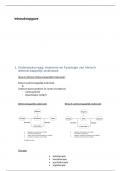
● The scientific method involves dynamic interaction between hypothesis testing and
construction of theories, an example of one way this method can be visualized is
above
● Hypothesis: A testable prediction about a process that can be observed/measured
● Falsifiable: For a hypothesis to be testable, it should be falsifiable, hypothesis is
precise enough that it can be proven false
○ Example: All swans are white is falsifiable since finding a non white swan
would make this statement false
● Pseudoscience - an idea that is presented as science but doesn’t actually utilize
basic principles of scientific thinking or procedure (eg astrology)
○ Example: 2005 gallup poll that found 25% canadians who believe star
positions affect a person’s behaviour --- didn’t use any actual science but
strictly in what they believed to be the truth
● Theory- explanation for a broad range of observations that also generates a new
hypothesis and integrates numerous findings into a coherent whole
○ In other words theories are general principles or explanations of certain
aspects of the world (a theory is NOT a hypothesis but generally what a
hypothesis is based upon)
● Some misconceptions on theories
○ Theories are not the same as opinions or beliefs (opinions of others are not
theories)
○ All theories aren’t equally plausible
■ example: several theories on why people become depressed, this
doesn't mean anyone can add their own theory and claim equal status
for their own theory, good theories develop on previous research and
lead to more testable hypothesis
○ Quality of a theory does not depend on how many people believe its true
● Biopsychosocial model
○ Definition: Biopsychosocial model is a means of explaining behaviour as a
product of biological, psychological and sociocultural factors
○ Biological factor: These factors involve brain structures and chemicals,
hormones and external substances such as drugs
○ Psychological factor: These factors involve our memories, emotions, and
personalities, and how these factors shape the way we think about and
respond to different people and situations
, ○ Social factor: Factors such as family, peers, ethnicity and culture affect
behaviour---social situations affect how we think(ex. Annoyed by crowded
hallway)
● This is the biopsychosocial model which provides some more examples on what was
listed above
Perspective Focus Examples
Biological Genes, brain anatomy and Genetics of behaviour and
function, and evolution psychological disorders,
Brain-behaviour relationships,
Drug effects
Psychologic Behaviour, perception, Language, Memory, Decision
al thought, and experience making, Personality
Sociocultural Interpersonal relationships, Attraction, Attitudes and
families, groups, societies, stereotypes, conformity
and ethnicities
● Scientific Literacy
○ Definition: The ability to understand, analyze and apply scientific information
○ This model outlines the four different skills of scientific literacy, knowledge
gathering, scientific explanation, critical thinking and application
● Massed learning - Studying for an exam or evaluation in one lengthy session
● Spaced/distributed learning - Shorter study sessions but with spreading them over
several days
● Research determines that distributed learning is a more effective way of studying,
distributed learners are more likely to pay attention to material than massed learners
which improves performance
● Critical thinking- exercising curiosity and skepticism when evaluating claims of others
and with our own assumptions and beliefs--this means being skeptic when receiving
information
○ Example: Being told a product controls body weight etc we should ask
ourselves if there is sound evidence that the product works and challenging
the claims a salesmen for the product would make
1.2 How Psychology Became a Science
● Empiricism
, ○ Definition: Empiricism is a philosophical tenet (Latin tenere = to hold) that
knowledge comes through experience (ex. “Seeing is believing”)
■ Knowledge about the world is based on careful observation, not on
common sense or speculation
■ Whatever we see or measure should be observable by anyone else
who follows the same methods
■ Scientific theories must be logical explanations of how the
observations fit together
● Determinism
○ Definition: Determinism is the belief that all events are governed by lawful,
cause-and-effect relationships.
■ Free will vs. Determinism
● To be a psychologist, you do not have to believe that every
single thought, behavior, or experience is determined by
natural laws.
● But psychologists certainly do recognize that behavior is
determined by both internal (e.g. genes, brain chemistry) and
external (e.g. cultural) influences.
● Personality classification scheme
○ Physician Hippocrates developed the world’s first personality classification
scheme.
○ The ancient Greeks believed that four humors or fluids flowed throughout the
body and influenced both health and personality.
■ Different combination results in specific moods and behaviors.
■ Galen of Pergamon refined Hippocrates’ more general work and
suggested that the four humors (shown below) combined to create
temperaments, or emotional and personality.
1. Sanguine (blood), a tendency to be impulsive,
pleasure-seeking, and charismatic
2. Choleric (yellow bile), a tendency to be ambitious, energetic,
and a bit aggressive
3. Melancholic (black bile), a tendency to be independent,
perfectionistic, and a bit introverted
4. Phlegmatic (phlegm), a tendency to be quiet, relaxed, and
content with life.
● Zeitgeist
○ Definition: Zeitgeist refers to a general set of beliefs of a particular culture at a
specific time in history.
○ In 1600s, viewing human behaviour as the result of predictable physical laws
was troubling because it would seem to imply the philosophy of materialism.
○ Materialism
■ Definition: the belief that humans and other living beings are
composed exclusively of physical matter.
■ We are nothing more than complex machines that lack a
self-conscious, self-controlling soul.
○ Dualism
■ Definition: There are properties of humans that are not material (a
mind or soul separate from the body)
■ It’s an opposing belief of the materialism.
● Psychophysics
○ Definition: Psychophysics is the study of the relationship between the physical
, world and the mental representation of that world.
○ Example: Fechner studied relationships between the physical world and our
mental representations of that world by testing how people detect changes in
physical stimuli.
○ studied sensation and perception
● Influences from evolutionary theory
○ Darwin noticed that animal groups that were isolated from one another often
differed by only minor variations in physical features.
○ Darwin’s theory of evolution by natural selection was based on his
observations that the genetically inherited traits that contribute to survival and
reproductive success are more likely to flourish within the breeding
population.
■ Behaviors are shaped by natural selection, just as physical traits are.
● Clinical Psychology
○ Definition: Clinical psychology is the field of psychology that concentrates on
the diagnosis and treatment of psychological disorders.
○ Example: the study of localization of brain function
■ Certain parts of the brain control specific mental abilities and
personality characteristics.
■ Localization was studied in 2 different ways:
■ Approach #1: Phrenology
● Early scholars of the brain believed that mental capacities and
personalities could be measured by the contours, bumps, and
ridges distributed across the surface of the skull.
■ Approach #2: entailed the study of brain injuries and the ways in which
they affect behavior.
● Example: Physician Paul Broca found that a patient who had
difficulties producing spoken language had brain damage in an
area of the left frontal lobes of brain.
● now known as Broca’s area (part of brain)
● Hysterical Paralysis
○ Definition: hysterical paralysis is a condition in which an individual loses
feeling and control in a specific body part, despite the lack of any known
neurological damage or disease.
● Psychoanalysis
○ Definition: Psychoanalysis is a psychological approach that attempts to
explain how behavior and personality are influenced by unconscious
processes.
■ Freud acknowledged that conscious experience includes perceptions,
thoughts, a sense of self and the sense that we are in control of
ourselves.
■ An unconscious mind that contained forgotten episodes from early
childhood as well as urges to fulfill self-serving sexual and aggressive
impulses.
■ Freud proposed that because these urges were unconscious, they
could exert influence in strange ways (ex. restricting the use of a body
part).
○ Human experience was the result of unconscious forces at work deep in the
human psyche.
● How Freud’s legacy impact scientific psychology?
○ Many modern psychologists make inferences about unconscious mental
1.1 The Science of Psychology
● This section discusses procedures related towards scientific study
● Scientific method- It’s the way of learning about the world through collecting
observations, developing theories to explain these observations, and using theories
to make predictions
○ Example: A person who carefully follows a system of observing, predicting
and testing conducts science regardless what the subject matter is (chemical,
psychological, etc)
● The scientific method involves dynamic interaction between hypothesis testing and
construction of theories, an example of one way this method can be visualized is
above
● Hypothesis: A testable prediction about a process that can be observed/measured
● Falsifiable: For a hypothesis to be testable, it should be falsifiable, hypothesis is
precise enough that it can be proven false
○ Example: All swans are white is falsifiable since finding a non white swan
would make this statement false
● Pseudoscience - an idea that is presented as science but doesn’t actually utilize
basic principles of scientific thinking or procedure (eg astrology)
○ Example: 2005 gallup poll that found 25% canadians who believe star
positions affect a person’s behaviour --- didn’t use any actual science but
strictly in what they believed to be the truth
● Theory- explanation for a broad range of observations that also generates a new
hypothesis and integrates numerous findings into a coherent whole
○ In other words theories are general principles or explanations of certain
aspects of the world (a theory is NOT a hypothesis but generally what a
hypothesis is based upon)
● Some misconceptions on theories
○ Theories are not the same as opinions or beliefs (opinions of others are not
theories)
○ All theories aren’t equally plausible
■ example: several theories on why people become depressed, this
doesn't mean anyone can add their own theory and claim equal status
for their own theory, good theories develop on previous research and
lead to more testable hypothesis
○ Quality of a theory does not depend on how many people believe its true
● Biopsychosocial model
○ Definition: Biopsychosocial model is a means of explaining behaviour as a
product of biological, psychological and sociocultural factors
○ Biological factor: These factors involve brain structures and chemicals,
hormones and external substances such as drugs
○ Psychological factor: These factors involve our memories, emotions, and
personalities, and how these factors shape the way we think about and
respond to different people and situations
, ○ Social factor: Factors such as family, peers, ethnicity and culture affect
behaviour---social situations affect how we think(ex. Annoyed by crowded
hallway)
● This is the biopsychosocial model which provides some more examples on what was
listed above
Perspective Focus Examples
Biological Genes, brain anatomy and Genetics of behaviour and
function, and evolution psychological disorders,
Brain-behaviour relationships,
Drug effects
Psychologic Behaviour, perception, Language, Memory, Decision
al thought, and experience making, Personality
Sociocultural Interpersonal relationships, Attraction, Attitudes and
families, groups, societies, stereotypes, conformity
and ethnicities
● Scientific Literacy
○ Definition: The ability to understand, analyze and apply scientific information
○ This model outlines the four different skills of scientific literacy, knowledge
gathering, scientific explanation, critical thinking and application
● Massed learning - Studying for an exam or evaluation in one lengthy session
● Spaced/distributed learning - Shorter study sessions but with spreading them over
several days
● Research determines that distributed learning is a more effective way of studying,
distributed learners are more likely to pay attention to material than massed learners
which improves performance
● Critical thinking- exercising curiosity and skepticism when evaluating claims of others
and with our own assumptions and beliefs--this means being skeptic when receiving
information
○ Example: Being told a product controls body weight etc we should ask
ourselves if there is sound evidence that the product works and challenging
the claims a salesmen for the product would make
1.2 How Psychology Became a Science
● Empiricism
, ○ Definition: Empiricism is a philosophical tenet (Latin tenere = to hold) that
knowledge comes through experience (ex. “Seeing is believing”)
■ Knowledge about the world is based on careful observation, not on
common sense or speculation
■ Whatever we see or measure should be observable by anyone else
who follows the same methods
■ Scientific theories must be logical explanations of how the
observations fit together
● Determinism
○ Definition: Determinism is the belief that all events are governed by lawful,
cause-and-effect relationships.
■ Free will vs. Determinism
● To be a psychologist, you do not have to believe that every
single thought, behavior, or experience is determined by
natural laws.
● But psychologists certainly do recognize that behavior is
determined by both internal (e.g. genes, brain chemistry) and
external (e.g. cultural) influences.
● Personality classification scheme
○ Physician Hippocrates developed the world’s first personality classification
scheme.
○ The ancient Greeks believed that four humors or fluids flowed throughout the
body and influenced both health and personality.
■ Different combination results in specific moods and behaviors.
■ Galen of Pergamon refined Hippocrates’ more general work and
suggested that the four humors (shown below) combined to create
temperaments, or emotional and personality.
1. Sanguine (blood), a tendency to be impulsive,
pleasure-seeking, and charismatic
2. Choleric (yellow bile), a tendency to be ambitious, energetic,
and a bit aggressive
3. Melancholic (black bile), a tendency to be independent,
perfectionistic, and a bit introverted
4. Phlegmatic (phlegm), a tendency to be quiet, relaxed, and
content with life.
● Zeitgeist
○ Definition: Zeitgeist refers to a general set of beliefs of a particular culture at a
specific time in history.
○ In 1600s, viewing human behaviour as the result of predictable physical laws
was troubling because it would seem to imply the philosophy of materialism.
○ Materialism
■ Definition: the belief that humans and other living beings are
composed exclusively of physical matter.
■ We are nothing more than complex machines that lack a
self-conscious, self-controlling soul.
○ Dualism
■ Definition: There are properties of humans that are not material (a
mind or soul separate from the body)
■ It’s an opposing belief of the materialism.
● Psychophysics
○ Definition: Psychophysics is the study of the relationship between the physical
, world and the mental representation of that world.
○ Example: Fechner studied relationships between the physical world and our
mental representations of that world by testing how people detect changes in
physical stimuli.
○ studied sensation and perception
● Influences from evolutionary theory
○ Darwin noticed that animal groups that were isolated from one another often
differed by only minor variations in physical features.
○ Darwin’s theory of evolution by natural selection was based on his
observations that the genetically inherited traits that contribute to survival and
reproductive success are more likely to flourish within the breeding
population.
■ Behaviors are shaped by natural selection, just as physical traits are.
● Clinical Psychology
○ Definition: Clinical psychology is the field of psychology that concentrates on
the diagnosis and treatment of psychological disorders.
○ Example: the study of localization of brain function
■ Certain parts of the brain control specific mental abilities and
personality characteristics.
■ Localization was studied in 2 different ways:
■ Approach #1: Phrenology
● Early scholars of the brain believed that mental capacities and
personalities could be measured by the contours, bumps, and
ridges distributed across the surface of the skull.
■ Approach #2: entailed the study of brain injuries and the ways in which
they affect behavior.
● Example: Physician Paul Broca found that a patient who had
difficulties producing spoken language had brain damage in an
area of the left frontal lobes of brain.
● now known as Broca’s area (part of brain)
● Hysterical Paralysis
○ Definition: hysterical paralysis is a condition in which an individual loses
feeling and control in a specific body part, despite the lack of any known
neurological damage or disease.
● Psychoanalysis
○ Definition: Psychoanalysis is a psychological approach that attempts to
explain how behavior and personality are influenced by unconscious
processes.
■ Freud acknowledged that conscious experience includes perceptions,
thoughts, a sense of self and the sense that we are in control of
ourselves.
■ An unconscious mind that contained forgotten episodes from early
childhood as well as urges to fulfill self-serving sexual and aggressive
impulses.
■ Freud proposed that because these urges were unconscious, they
could exert influence in strange ways (ex. restricting the use of a body
part).
○ Human experience was the result of unconscious forces at work deep in the
human psyche.
● How Freud’s legacy impact scientific psychology?
○ Many modern psychologists make inferences about unconscious mental