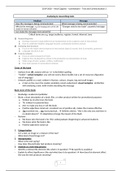
Chapter 20: Option Markets: An introduction
Derivatives are securities whose prices are determined by the
prices of other securities, like options and futures contracts.
They can be powerful tools for both hedging and speculation.
Option contracts are traded on several exchanges. They are
written on common stock, indexes, forex, agricultural
commodities, precious metals, and interest rate futures.
20.1 The option contract
A call option gives its holder the right to purchase an asset for
a specified price (exercise/strike) on or before (only in
America) some specified expiration date. If the stock price is
greater than the exercise price on the expiration date, the
value of the call option equals the difference between the
stock price and the exercise price. If it is lower, it will be
worthless. The net profit on the call is the value of the option
minus the price originally paid to purchase it. This purchase
price is called the premium.
Sellers of call options (writers) receive premium income now
as payment against the possibility they will be required at
some later date to deliver the asset in return for an exercise
price less than the market value of the asset. The profit of the
option writer is the premium income minus the difference
between the value of the stock and the strike price.
A put option gives its holder the right to sell an asset for a
specified exercise or strike price on or before some expiration
date. Profits on put options increase when the asset price falls.
It will be exercised if the strike price is grater than the prie of
the underlying asset, incurring the difference as profit. Net
profit is then this minus the costs of the option.
An option is in the money when its exercise would produce a
positive cash flow.
The OTC market offers the advantage that the terms of the
option contract can be tailored to the needs of the traders.
Option contracts traded on exchanges are standardised by
allowable expiration dates and exercise prices for each listed
option.
Each stock option provides for the right to buy or sell 100
shares of stock (except with stock splits).
The standardisation means all market participants trade in a
limited and uniform set of securities and this increases the
depth of trading.
The value of a call is lower when the exercise price is higher,
whereas put options are worth more when the exercise price is
higher. This is because there is a higher chance of being in the
money.
American and European Options: An American option allows
its holder to exercise the right to purchase or sell the
, underlying asset on or before the expiration date, whereas the
European options allows for exercise only on the expiration
date. American options will generally be more valuable
because of this.
A stock dividend of more than 10% increases the number of
shares covered by each option in proportion to the stock
dividend and the exercise price is reduced by that same
proportion. Cash dividends do not affect the terms of an
option contract.
Call option values are lower for high-dividend payout policies,
since such policies slow the rate of increase of stock price. Put
value are higher for high-dividend payouts.
The Options Clearing Corporation: the OCC places itself
between two traders, becoming the effective buyer of the
option from the writer and the effective writer of the option to
the buyer. Because it guarantees contract performance, it
requires option writers to post margin to guarantee that they
can fulfil their contract obligations. When the required margin
exceeds the posted margin, the writer will receive a margin
call.
Futures option: gives their holders the right to buy or sell a
specified futures contract, suing as a futures prices the
exercise price of the option. The option holders receives upon
exercise a net payoff equal to the difference between the
current futures price on the specified asset and the exercise
price of the option.
Foreign currency options: a currency option offers the right to
buy or sell a quantity of foreign currency for a specified
amount of domestic currency.
Interest rate option
20.2 Values of options at expiration
Payoff to call holder = St-X or 0
Payoff to call writer = -(St-X) or 0 St = Stock at expiration
X = strike price
The payoff to call holder and call writer are mirror images.
Payoff to put holder = 0 or X-St
Writing puts naked (writing a put without an offsetting short
position in the stock for hedging purposes) exposes the writer
to losses if the market falls. Writing naked, deep out of the
money puts was once considered an attractive way to
generate income as long as the market did not fall sharply.
The crash in October 1987 proved that this may be a erred
belief.
Purchasing call options and writing put options are considered
bullish. Calling put options and writing call options is
considered bearish.
, Why would you purchase a call rather than plain stock?
Options offer two interesting features. First it offers leverage.
Their values respond more than proportionately to changes in
stock value. The second features it the potential insurance
value. When combined with t-bills, there is a limit as to how
low the portfolio value can go, but with the puts it can rise
nicely. This reduces risk and volatility (and reward obviously).
Although options can be used speculatively, it can thus also
be used to hedge investments.
Option strategies
Protective put: Investing in a stock (go long), while
simultaneously buy a put to hedge against a potential decline
in stock price. Whatever happens, you are guaranteed a
payoff at least equal to the put option’s exercise price
because the put gives you the right to sell your shares for that
price.
Protective put offers some insurance against stock price
declines in that it limits losses. Therefore, protective put
strategies provide a form of portfolio insurance.
Covered call: Is the purchase of a share of stock with a
simultaneous sale of a call option on that stock. The call is
covered because the potential obligation to deliver the stock
can be satisfied suing the stock held in the portfolio.
Otherwise, it would be naked option writing. The value of a
covered call position at expiration equal the stock value minus
the value of the call. You collect premium income, but have to
forfeit potential capital gains should the stock price rise above
the exercise price.
Straddle: A long straddle is established by buying both a call
and a put on a stock, each with the same exercise price, X,
and the same expiration date, T. Straddles are useful
strategies for investors who leieve a stock will move a lot in
price but are uncertain about the direction of the move. The
worst-case scenario for a straddle in no movement in stock
price. The best scenario is for example a court case which
could drastically improve or worsen the stock price. Investors
who write straddles must believe the stock is less volatile. The
payoff of a straddle is never negative; however it must exceed
the initial cash outlay for buying a straddle to clear a profit.
Spreads: is a combination of two or more call options on the
same stock with differing exercise prices or times to maturity.
Some options are bought, whereas others are sold, or written.
A money spread involves the purchase of one option and the
simultaneous sale of another with a different exercise price. A
time spread refers to the sale and purchase of options with
differing expiration dates. A bullish spread (purchase call and
write a call) is where a payoff either increases or is unaffected
by stock price increases. A motivation for a bullish spread may
Derivatives are securities whose prices are determined by the
prices of other securities, like options and futures contracts.
They can be powerful tools for both hedging and speculation.
Option contracts are traded on several exchanges. They are
written on common stock, indexes, forex, agricultural
commodities, precious metals, and interest rate futures.
20.1 The option contract
A call option gives its holder the right to purchase an asset for
a specified price (exercise/strike) on or before (only in
America) some specified expiration date. If the stock price is
greater than the exercise price on the expiration date, the
value of the call option equals the difference between the
stock price and the exercise price. If it is lower, it will be
worthless. The net profit on the call is the value of the option
minus the price originally paid to purchase it. This purchase
price is called the premium.
Sellers of call options (writers) receive premium income now
as payment against the possibility they will be required at
some later date to deliver the asset in return for an exercise
price less than the market value of the asset. The profit of the
option writer is the premium income minus the difference
between the value of the stock and the strike price.
A put option gives its holder the right to sell an asset for a
specified exercise or strike price on or before some expiration
date. Profits on put options increase when the asset price falls.
It will be exercised if the strike price is grater than the prie of
the underlying asset, incurring the difference as profit. Net
profit is then this minus the costs of the option.
An option is in the money when its exercise would produce a
positive cash flow.
The OTC market offers the advantage that the terms of the
option contract can be tailored to the needs of the traders.
Option contracts traded on exchanges are standardised by
allowable expiration dates and exercise prices for each listed
option.
Each stock option provides for the right to buy or sell 100
shares of stock (except with stock splits).
The standardisation means all market participants trade in a
limited and uniform set of securities and this increases the
depth of trading.
The value of a call is lower when the exercise price is higher,
whereas put options are worth more when the exercise price is
higher. This is because there is a higher chance of being in the
money.
American and European Options: An American option allows
its holder to exercise the right to purchase or sell the
, underlying asset on or before the expiration date, whereas the
European options allows for exercise only on the expiration
date. American options will generally be more valuable
because of this.
A stock dividend of more than 10% increases the number of
shares covered by each option in proportion to the stock
dividend and the exercise price is reduced by that same
proportion. Cash dividends do not affect the terms of an
option contract.
Call option values are lower for high-dividend payout policies,
since such policies slow the rate of increase of stock price. Put
value are higher for high-dividend payouts.
The Options Clearing Corporation: the OCC places itself
between two traders, becoming the effective buyer of the
option from the writer and the effective writer of the option to
the buyer. Because it guarantees contract performance, it
requires option writers to post margin to guarantee that they
can fulfil their contract obligations. When the required margin
exceeds the posted margin, the writer will receive a margin
call.
Futures option: gives their holders the right to buy or sell a
specified futures contract, suing as a futures prices the
exercise price of the option. The option holders receives upon
exercise a net payoff equal to the difference between the
current futures price on the specified asset and the exercise
price of the option.
Foreign currency options: a currency option offers the right to
buy or sell a quantity of foreign currency for a specified
amount of domestic currency.
Interest rate option
20.2 Values of options at expiration
Payoff to call holder = St-X or 0
Payoff to call writer = -(St-X) or 0 St = Stock at expiration
X = strike price
The payoff to call holder and call writer are mirror images.
Payoff to put holder = 0 or X-St
Writing puts naked (writing a put without an offsetting short
position in the stock for hedging purposes) exposes the writer
to losses if the market falls. Writing naked, deep out of the
money puts was once considered an attractive way to
generate income as long as the market did not fall sharply.
The crash in October 1987 proved that this may be a erred
belief.
Purchasing call options and writing put options are considered
bullish. Calling put options and writing call options is
considered bearish.
, Why would you purchase a call rather than plain stock?
Options offer two interesting features. First it offers leverage.
Their values respond more than proportionately to changes in
stock value. The second features it the potential insurance
value. When combined with t-bills, there is a limit as to how
low the portfolio value can go, but with the puts it can rise
nicely. This reduces risk and volatility (and reward obviously).
Although options can be used speculatively, it can thus also
be used to hedge investments.
Option strategies
Protective put: Investing in a stock (go long), while
simultaneously buy a put to hedge against a potential decline
in stock price. Whatever happens, you are guaranteed a
payoff at least equal to the put option’s exercise price
because the put gives you the right to sell your shares for that
price.
Protective put offers some insurance against stock price
declines in that it limits losses. Therefore, protective put
strategies provide a form of portfolio insurance.
Covered call: Is the purchase of a share of stock with a
simultaneous sale of a call option on that stock. The call is
covered because the potential obligation to deliver the stock
can be satisfied suing the stock held in the portfolio.
Otherwise, it would be naked option writing. The value of a
covered call position at expiration equal the stock value minus
the value of the call. You collect premium income, but have to
forfeit potential capital gains should the stock price rise above
the exercise price.
Straddle: A long straddle is established by buying both a call
and a put on a stock, each with the same exercise price, X,
and the same expiration date, T. Straddles are useful
strategies for investors who leieve a stock will move a lot in
price but are uncertain about the direction of the move. The
worst-case scenario for a straddle in no movement in stock
price. The best scenario is for example a court case which
could drastically improve or worsen the stock price. Investors
who write straddles must believe the stock is less volatile. The
payoff of a straddle is never negative; however it must exceed
the initial cash outlay for buying a straddle to clear a profit.
Spreads: is a combination of two or more call options on the
same stock with differing exercise prices or times to maturity.
Some options are bought, whereas others are sold, or written.
A money spread involves the purchase of one option and the
simultaneous sale of another with a different exercise price. A
time spread refers to the sale and purchase of options with
differing expiration dates. A bullish spread (purchase call and
write a call) is where a payoff either increases or is unaffected
by stock price increases. A motivation for a bullish spread may