ICE Master Study Guide
Therapeutics
Infectious Disease
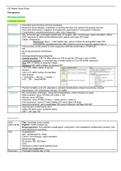
C.difficile Diarrhea
Pathology Anaerobic spore forming rod toxin producing
Exotoxins cause disease: enterotoxin A causing diarrhea and cytotoxin B causing necrosis
Fecal oral transmission, ingestion of endospores: germination colonization disease
Complications: pseudomembranous colitis, toxic megacolon
Risk factors Abx, advanced age, prolonged hospital stay, GI surgery, IBD, immunosupp, organ transplant, chemo,
CKD, exposure to infant carrier/infected adult, gastric acid supp, NG tubes
Cephs, clindamycin
i. Recurrence: 65yo<, >16d hospital stay, admin of other Ab during/after initial CDI,
comorbidities, hypoalbuminemia, IBD, defective immune response against toxin A
Symptoms 3 loose stools wi 24h period or toxic megacolon AND lab confirmation of Cdiff toxin
OR
Dx of typical pseudo membranes
OR
histological/pathological diagnosis
Hospital acquired: >48-72h after admin wo CDI in past 8w OR hosp in prev 30-60d
Community acquired: no overnight stay in health facility wi 12w OR wi 48h admission
New CDI: no history or episode in 8wks
Relapsed CDI: within 2-8wks of previous CDI
Signs >15 x 109L WBC marker of severe
disease
>50 x 109L WBC marker of potentially
fatal disease
↑ neutrophils, ↓ albumin, ↑ lactate, ↑
SrCr, ↓ BP, ↑ temp/HR/RR
GoT Prevent mortality, cure infx, alleviate sx, prevent complications, prevent recurrence, prevent
transmission, min unnecessary Ab use, min ADRs
Treatment DC unnecessary antibiotics, correct electrolytes/fluids, empiric therapy wo delay
Mild-moderate: vanco OR fidax OR metro x 10d
Severe: vanco OR fidax
Fulminant: vanco PO/NG (if ileus: + rectal vanco) + metro IV
First recurrence: vanco (if metro initially) OR vanco taper OR fidax
Second recurrence: vanco pulse/taper OR vancorifaximin OR fidax OR FMT
Monitoring Improvement of diarrhea by d4-6
Vitals, OD abdo exam, hydration status
CBC + diff, lytes OD
Risk Factors
AAD Clav: stimulates bowel motility
High risk Ab Erythro: motilin receptor Ag
Broad spectrum: flora alterationpathogenic overgrowth, carb metabolism interference (osmotic), bile
acid interference (secretory
CDI Hospitalization
Abx: cephalosporins, clinda
Chemo, immunosupp, organ transplant
Advanced age
GI surgery, IBD, NG tubes
CKD
Exposure to infant carrier/infected adult
Gastric acid suppression
Recurrent Prolonged hospital stay (>16d)
, CDI Other abx during/after initial CDI
Comorbidities, IBD
Hypoalbuminemia
Defective toxin A immune response
Etiology
- Vs. AAD: self-limiting diarrhea
- Clostridium difficile: anaerobic grm + spore forming rods
Exotoxin A: Enterotoxin causes diarrhea
Exotoxin B: Cytotoxin causing colonic epithelial cell necrosis
- Disruption of gut microbiota + acquisition (production of toxinssymptoms)
- Fecal-oral transmission (ingestion of endospore)
Signs and Symptoms
AAD Mild
Afebrile
No abd pain
WBC not elevated
Cdiff neg
Resolves w Ab d/c
CDI 1.Diarrhea (3 liq stools/24h) or toxic megacolon
AND
Lab confirmation of C diff toxin
2.Dx of pseudomembranes
3.histological/pathological Dx (+/- diarrhea)
Vitals: fever, high RR/HR, low BP
Rigors, chills, malaise
Watery diarrhea, bloody stools, loss of appetite, nausea, abd pain, cramping, pseudomemb colitis, colonic
ileus, toxic megacolon
Increased SrCr
WBC >15 x 109 severe disease
WBC >50 x 109 fulminant, potentially fatal
↑ neutrophils/bands, decreased albumin, increased lactate
New No episode in past 8wks
Relapsed Recurrence within 2-8wks
Hospital >48-72h after hospital admin wo CDI in past 8wks
acquired OR
CDI in PTs hospitalized in previous 30-60d
Communit No overnight stay in facility within 12wks before infection
y acquired OR
Within 48h of admission
Severe Fulminant
WBC >15,000 Toxic megacolon
SCr >1.5x Perforation
PMC Peritonitis
clinical judgement (>60, fever) Ileus
Severe sepsis/septic shock
Severe ARF
Questions for the Patient
- Have you recently been hospitalized?
- Have you had CDI before?
,Goals of Therapy
- Prevent mortality
- Cure infx
- Alleviate sx
- Prevent complications: need for surg, toxic megacolon, PMC
- Min recurrence risk
- Prevent transmission
- Min unnecessary antibiotic use
- PT edu: sx monitoring, infx control strategies
- Min ADRs
Pharmacological Recommendations
- d/c unnecessary abx/PPIs/anti-peristaltics/promotility agents, empiric therapy wo delay when CDI suspected
Non-pharmacological Recommendations
- Prevent spread w good hand washing (fecal oral transmission)
- Fluid hydration/electrolyte abnormality correction
- Fecal transplant ADR: diarrhea, cramping, belching, potential transmission, upper GI bleed, peritonitis, enteritis,
long term effects of gut microbiome change
Monitoring Parameters
Effectiveness No test of cure
Diarrhea: resolution in 4-6d
Vitals: depends on clinical ppx
GI: daily ab exam (bowel sounds, stool frequency, volume, consistency, abd pain/distention)
Hydration status
Labs: CBC + diff OD, lytes OD, AXR imaging
Vancomycin levels
Safety Metro: nausea, headache, dry mouth, metallic taste
Vanco: bitter taste, N/V, stomatitis, chills, fever, eosinophilia
Complications
- Pseudomembranous colitis necrosis
- Toxic megacolon perforation
- dehydration, electrolyte depletion, nutrient malabsorption, hemorrhoids, rectal prolapse
Pneumonia: Community Acquired
Pathology Streptococcus pneumonia grm + short chains, Haemophilus influenza grm- coccobacillus (COPD,
smokers, alcoholics), atypicals: mycoplasma pneumonia, chlamydia pneumonia, grm – legionella
(immunocomp)
Acute infx of pulmonary parenchyma and alveoli via aspiration of oral contents/aerosolized particles,
via bloodstream
Risk Factors Altered mental status, smoking, OH
consumption, malnutrition, immunosupp,
underlying lung disease, 65yo<, asthma,
ventilation
Signs CXR acute infiltrate (aspiration RL, atypical diffuse), auscultation findings (crackles, rhonchi, dullness)
Fever, leukocytosis, PO2 ↓
Gram stain/culture: >25 neutrophils, <10 epithelial cells
, Symptoms CAP: not hosp for >14d before onset
HAP: development >48h after admission
HCAP: non-hosp w extensive healthcare contact
VAP: 48-72h post-intubation
Cough + sputum, SOB, chest pain
Treatment CURB-65: confusion, BUN>7, resp rate 30 or more, BP <90 or diastolic <=60, >=65yo
i. 0-1 outpatient, 2 inPT, 3 inPT-ICU, 4 ICU
outPT and no risk factors: macrolide clarithromycin 500mg PO BID/1000mg ER PO OD or doxy
100mg PO BID x 5-7d
outPT w risk factors: quinolone levofloxacin 750mg PO OD OR beta lactam amox clav 875mg PO BID
+ macrolide x 5-7d
inPT, non-ICU: BL +/- macrolide OR respiratory quinolone x 5-10d (10-14d if bacteremia)
inPT ICU: BL + azithro/resp quinolone x 10-14d IV
*PPV23 for 2-64yo at high risk, >=65yo, LCTF (x 2 doses in immunocomp) (give PCV13 1y later)
*PCV13 in children, high risk (give PPV23 8w later)
Monitoring Clinical stability: <=37.8 temp, <=100 HR, <=24 RR, arterial O2 >=90, maintain PO, normal mental
status
Risk Factors
- Very old and very young, >65yo
- Altered mental status: unconscious, stroke, OH intoxication, CNS depressants, dementia
- Smoking
- OH consumption
- Malnutrition
- Immunosupp
- Underlying lung disease
- Altered mechanical defenses: asthma, underlying lung disease, ventilated
- Poor prognostics: >65, nursing home resident, chronic lung disease, mechanical ventilation
Penicillin-resistant and drug resistant pneumococci >65yo
(strep pneumo) Beta lactam therapy within last 3mo
Alcoholism
Immune suppressive illness/medications
Multiple medical comorbid conditions
Exposure to child in daycare center
Enteric grm- bacteria Residence in nursing home
(H flu, M cat) Underlying cardiopulmonary disease
Multiple medical comorbid conditions
Recent Ab therapy
Pseudomonas aeruginosa Structural lung disease
Corticosteroid therapy (pred >10mg/d)
Broad spectrum ab >7d in past mo
Malnutrition
Etiology
- Streptococcus pneumonia in short chains-capsule of complex polysaccharides stable to macrocyte engulfment
- Bacteria, fungi, viruses, protozoa
- Viruses: influenza, RSAV, parainfluenza
- Via LRT: aspiration, inhalation, via bloodstream
Organism S/S + Risk factors
Streptococcus pneumonia Abrupt onset of chills, CP, productive rust cough, preceded by
Grm+ malaise, sore throat, rhinorrhea
Haemophilus influenza Smokers, COPD, alcoholics
Grm-
Atypicals (mycoplasma pneumonia, chlamydia Prodrome: fever, chills, headache, sore throat, malaise, dry
pneumonia) coughmucoid
Therapeutics
Infectious Disease
C.difficile Diarrhea
Pathology Anaerobic spore forming rod toxin producing
Exotoxins cause disease: enterotoxin A causing diarrhea and cytotoxin B causing necrosis
Fecal oral transmission, ingestion of endospores: germination colonization disease
Complications: pseudomembranous colitis, toxic megacolon
Risk factors Abx, advanced age, prolonged hospital stay, GI surgery, IBD, immunosupp, organ transplant, chemo,
CKD, exposure to infant carrier/infected adult, gastric acid supp, NG tubes
Cephs, clindamycin
i. Recurrence: 65yo<, >16d hospital stay, admin of other Ab during/after initial CDI,
comorbidities, hypoalbuminemia, IBD, defective immune response against toxin A
Symptoms 3 loose stools wi 24h period or toxic megacolon AND lab confirmation of Cdiff toxin
OR
Dx of typical pseudo membranes
OR
histological/pathological diagnosis
Hospital acquired: >48-72h after admin wo CDI in past 8w OR hosp in prev 30-60d
Community acquired: no overnight stay in health facility wi 12w OR wi 48h admission
New CDI: no history or episode in 8wks
Relapsed CDI: within 2-8wks of previous CDI
Signs >15 x 109L WBC marker of severe
disease
>50 x 109L WBC marker of potentially
fatal disease
↑ neutrophils, ↓ albumin, ↑ lactate, ↑
SrCr, ↓ BP, ↑ temp/HR/RR
GoT Prevent mortality, cure infx, alleviate sx, prevent complications, prevent recurrence, prevent
transmission, min unnecessary Ab use, min ADRs
Treatment DC unnecessary antibiotics, correct electrolytes/fluids, empiric therapy wo delay
Mild-moderate: vanco OR fidax OR metro x 10d
Severe: vanco OR fidax
Fulminant: vanco PO/NG (if ileus: + rectal vanco) + metro IV
First recurrence: vanco (if metro initially) OR vanco taper OR fidax
Second recurrence: vanco pulse/taper OR vancorifaximin OR fidax OR FMT
Monitoring Improvement of diarrhea by d4-6
Vitals, OD abdo exam, hydration status
CBC + diff, lytes OD
Risk Factors
AAD Clav: stimulates bowel motility
High risk Ab Erythro: motilin receptor Ag
Broad spectrum: flora alterationpathogenic overgrowth, carb metabolism interference (osmotic), bile
acid interference (secretory
CDI Hospitalization
Abx: cephalosporins, clinda
Chemo, immunosupp, organ transplant
Advanced age
GI surgery, IBD, NG tubes
CKD
Exposure to infant carrier/infected adult
Gastric acid suppression
Recurrent Prolonged hospital stay (>16d)
, CDI Other abx during/after initial CDI
Comorbidities, IBD
Hypoalbuminemia
Defective toxin A immune response
Etiology
- Vs. AAD: self-limiting diarrhea
- Clostridium difficile: anaerobic grm + spore forming rods
Exotoxin A: Enterotoxin causes diarrhea
Exotoxin B: Cytotoxin causing colonic epithelial cell necrosis
- Disruption of gut microbiota + acquisition (production of toxinssymptoms)
- Fecal-oral transmission (ingestion of endospore)
Signs and Symptoms
AAD Mild
Afebrile
No abd pain
WBC not elevated
Cdiff neg
Resolves w Ab d/c
CDI 1.Diarrhea (3 liq stools/24h) or toxic megacolon
AND
Lab confirmation of C diff toxin
2.Dx of pseudomembranes
3.histological/pathological Dx (+/- diarrhea)
Vitals: fever, high RR/HR, low BP
Rigors, chills, malaise
Watery diarrhea, bloody stools, loss of appetite, nausea, abd pain, cramping, pseudomemb colitis, colonic
ileus, toxic megacolon
Increased SrCr
WBC >15 x 109 severe disease
WBC >50 x 109 fulminant, potentially fatal
↑ neutrophils/bands, decreased albumin, increased lactate
New No episode in past 8wks
Relapsed Recurrence within 2-8wks
Hospital >48-72h after hospital admin wo CDI in past 8wks
acquired OR
CDI in PTs hospitalized in previous 30-60d
Communit No overnight stay in facility within 12wks before infection
y acquired OR
Within 48h of admission
Severe Fulminant
WBC >15,000 Toxic megacolon
SCr >1.5x Perforation
PMC Peritonitis
clinical judgement (>60, fever) Ileus
Severe sepsis/septic shock
Severe ARF
Questions for the Patient
- Have you recently been hospitalized?
- Have you had CDI before?
,Goals of Therapy
- Prevent mortality
- Cure infx
- Alleviate sx
- Prevent complications: need for surg, toxic megacolon, PMC
- Min recurrence risk
- Prevent transmission
- Min unnecessary antibiotic use
- PT edu: sx monitoring, infx control strategies
- Min ADRs
Pharmacological Recommendations
- d/c unnecessary abx/PPIs/anti-peristaltics/promotility agents, empiric therapy wo delay when CDI suspected
Non-pharmacological Recommendations
- Prevent spread w good hand washing (fecal oral transmission)
- Fluid hydration/electrolyte abnormality correction
- Fecal transplant ADR: diarrhea, cramping, belching, potential transmission, upper GI bleed, peritonitis, enteritis,
long term effects of gut microbiome change
Monitoring Parameters
Effectiveness No test of cure
Diarrhea: resolution in 4-6d
Vitals: depends on clinical ppx
GI: daily ab exam (bowel sounds, stool frequency, volume, consistency, abd pain/distention)
Hydration status
Labs: CBC + diff OD, lytes OD, AXR imaging
Vancomycin levels
Safety Metro: nausea, headache, dry mouth, metallic taste
Vanco: bitter taste, N/V, stomatitis, chills, fever, eosinophilia
Complications
- Pseudomembranous colitis necrosis
- Toxic megacolon perforation
- dehydration, electrolyte depletion, nutrient malabsorption, hemorrhoids, rectal prolapse
Pneumonia: Community Acquired
Pathology Streptococcus pneumonia grm + short chains, Haemophilus influenza grm- coccobacillus (COPD,
smokers, alcoholics), atypicals: mycoplasma pneumonia, chlamydia pneumonia, grm – legionella
(immunocomp)
Acute infx of pulmonary parenchyma and alveoli via aspiration of oral contents/aerosolized particles,
via bloodstream
Risk Factors Altered mental status, smoking, OH
consumption, malnutrition, immunosupp,
underlying lung disease, 65yo<, asthma,
ventilation
Signs CXR acute infiltrate (aspiration RL, atypical diffuse), auscultation findings (crackles, rhonchi, dullness)
Fever, leukocytosis, PO2 ↓
Gram stain/culture: >25 neutrophils, <10 epithelial cells
, Symptoms CAP: not hosp for >14d before onset
HAP: development >48h after admission
HCAP: non-hosp w extensive healthcare contact
VAP: 48-72h post-intubation
Cough + sputum, SOB, chest pain
Treatment CURB-65: confusion, BUN>7, resp rate 30 or more, BP <90 or diastolic <=60, >=65yo
i. 0-1 outpatient, 2 inPT, 3 inPT-ICU, 4 ICU
outPT and no risk factors: macrolide clarithromycin 500mg PO BID/1000mg ER PO OD or doxy
100mg PO BID x 5-7d
outPT w risk factors: quinolone levofloxacin 750mg PO OD OR beta lactam amox clav 875mg PO BID
+ macrolide x 5-7d
inPT, non-ICU: BL +/- macrolide OR respiratory quinolone x 5-10d (10-14d if bacteremia)
inPT ICU: BL + azithro/resp quinolone x 10-14d IV
*PPV23 for 2-64yo at high risk, >=65yo, LCTF (x 2 doses in immunocomp) (give PCV13 1y later)
*PCV13 in children, high risk (give PPV23 8w later)
Monitoring Clinical stability: <=37.8 temp, <=100 HR, <=24 RR, arterial O2 >=90, maintain PO, normal mental
status
Risk Factors
- Very old and very young, >65yo
- Altered mental status: unconscious, stroke, OH intoxication, CNS depressants, dementia
- Smoking
- OH consumption
- Malnutrition
- Immunosupp
- Underlying lung disease
- Altered mechanical defenses: asthma, underlying lung disease, ventilated
- Poor prognostics: >65, nursing home resident, chronic lung disease, mechanical ventilation
Penicillin-resistant and drug resistant pneumococci >65yo
(strep pneumo) Beta lactam therapy within last 3mo
Alcoholism
Immune suppressive illness/medications
Multiple medical comorbid conditions
Exposure to child in daycare center
Enteric grm- bacteria Residence in nursing home
(H flu, M cat) Underlying cardiopulmonary disease
Multiple medical comorbid conditions
Recent Ab therapy
Pseudomonas aeruginosa Structural lung disease
Corticosteroid therapy (pred >10mg/d)
Broad spectrum ab >7d in past mo
Malnutrition
Etiology
- Streptococcus pneumonia in short chains-capsule of complex polysaccharides stable to macrocyte engulfment
- Bacteria, fungi, viruses, protozoa
- Viruses: influenza, RSAV, parainfluenza
- Via LRT: aspiration, inhalation, via bloodstream
Organism S/S + Risk factors
Streptococcus pneumonia Abrupt onset of chills, CP, productive rust cough, preceded by
Grm+ malaise, sore throat, rhinorrhea
Haemophilus influenza Smokers, COPD, alcoholics
Grm-
Atypicals (mycoplasma pneumonia, chlamydia Prodrome: fever, chills, headache, sore throat, malaise, dry
pneumonia) coughmucoid