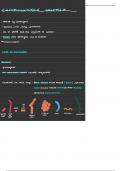
10.1 - NOTES = classification
Classification Systems - Process of living organisms are sorted into groups.
- Taxonomic group – KPCOFGS
- Kingdom is biggest and broadest, and species is the smallest and most specific.
- Hierarchical - Linnaean
reasons - Identification = species an organism belong can be easily identified
- Predict characteristics = if several members in group have specific characteristic, likely
that another species group will do too.
- Evolutionary links – species in same group share characteristics as they have evolved
from common ancestor.
- Share research and links can be seen in different habitats.
- Only for observed organisms.
How they're classified - 3 domains = Archaea, Bacteria and Eukarya (broadest)
- End with species and are smallest units (group of organisms that can reproduce to
produce fertile offspring.
naming - Common names aren't same in all languages, and do not provide information about
relationships with other organisms.
- Binomial nomenclature.
- First word is organism's genus (generic name) with capital.
- Second is species (unspecific name) and underlined.
- Could have same specific name but genus is different.
10.2 - NOTES = 5 kingdoms + changes to classification systems
prokaryote - Bacteria
- Unicellular
- No nucleus or membrane bound organelles.
- Plasmids or free-floating DNA/ small ribosomes
- No visible feeding mechanisms – nutrients are absorbed through cell wall or photosynthesis.
Protoctista - Unicellular eukaryotes
- A nucleus and membrane bound organelles.
- May have chloroplast.
- Can be sessile (immobile) or move via cilia or flagella.
- Can be autotrophic – via photosynthesis so they are self-feeding.
- Can be heterotrophic – feed off other organisms.
- Can be both or parasitic.
fungi - Yeasts, moulds and mushrooms
- Multi/Unicellular
- A nucleus and other membrane bound organelles and cell wall (chitin)
- No chloroplast or chlorophyll
- No mechanism for movement
- Most have a body of mycelium of threads and hyphae.
- Nutrients absorbed from decaying material (saprophytic) and can be parasitic.
- Most store their food as glycogen.
plantae - The plants
- Second largest kingdom
- Multicellular
- With nucleus and membrane bound organelles with chloroplast + cell wall with chitin
- All have chlorophyll.
- Most do not move; gametes move with cilia or flagella.
- Nutrients via photosynthesis (autotrophic)
- Store food as starch
animalia - The animals
- Multicellular
- A nucleus and other membrane bound organelles (no cell walls)
- No chloroplast
- Move with cilia, flagella or contractile proteins (can be in form of muscular organs)
- Heterotrophic (depend on organisms)
- Food stored as glycogen.
, Changes to system - Before just on observation but now with genetics and biological molecules – links between
other organisms can be seen.
- As organisms evolve – internal and external features change + DNA.
- DNA determines proteins which determines organism's characteristics.
- So, for change in characteristic their DNA must be changed too.
- Comparing similarities in DNA and proteins of species – you can find relationships between
them.
domain - Woese's system organises groups using differences in sequence of nucleotides in rRNA +
membrane lipid structure and sensitivity to antibiotics.
- 3 domain system – 3 domains + 6 kingdoms (different domains have unique form of rRNA
and different ribosomes)
- Eukarya – 80s ribosomes = RNA polymerase contains 12 proteins
- Archaea – 70s ribosomes = RNA polymerase have 8-10 proteins (similar to eukaryotic
ribosomes)
- Bacteria – 70s ribosomes = RNA polymerase has 5 proteins
Common ancestor -> [bacteria or [[archaea + eukarya]]]
Bacteria -> eubacteria
Archaea -> archaebacteria
Eukarya -> [Protoctista [plantae [fungi [animalia]]]]
archaebacteria - Single celled prokaryotes
- Ancient bacteria
- Can live in extreme environments.
eubacteria - Single celled prokaryotes
- Chemical makeup is different from archaebacteria.
- True bacteria
- In all environments
- Most bacteria are out of eubacteria kingdom.
10.3 - NOTES = phylogeny
phylogeny - Evolutionary relationships between organisms
- Study of evolutionary history of groups of organisms – phylogenetics
- Reveals which group an organism is related to and how closely.
- Classification can occur without knowledge of phylogeny.
Phylogenetic - Diagram to represent evolutionary relationships between organisms.
trees - Branched diagrams to show evolved species with common ancestors.
- Earliest species is found at base and most recent at top.
- Produced by looking at similarities and differences in species physical characteristics and genetic
makeup.
- Evidence gathered from DNA, proteins and fossil records.
Advantages to - Can be done without reference to Linnaean classification.
phylogenetic - Classification uses knowledge of phylogeny for confirmation of classification groups (correct or can
classification be changed)
- Phylogeny produced continuous tree, but classification requires discrete taxonomical groups – if
they do not fit then they are not put there.
- Linnean can be misleading – implied different groups within same rank are equivalent.
10.4 - NOTES = evidence for evolution
evolution - Theory that describes the way in which organisms evolve, change over many years because of
natural selection.
- Darwin realised that organisms best suited to their environment = more likely to survive and
reproduce which passes characteristics to offspring.
- Gradually species change to have more advantageous phenotype for environment it lives in which
is passed onto the following generations (genes in DNA)
Evidence for - Palaeontology – study of fossils and fossil record
evolution - Comparative anatomy – study of similarities and differences between organisms’ anatomy
- Comparative biochemistry – similarities and differences between chemical makeup of organisms
palaeontology - Fossils are formed when animal and plant remain are preserved in rocks, sediment forms and
forms layers of rock (overtime)
- Different layers correspond to different geological eras (more recent layer is found on top)
- Fossil record – fossils found are difference which shows organisms have changed overtime.
Classification Systems - Process of living organisms are sorted into groups.
- Taxonomic group – KPCOFGS
- Kingdom is biggest and broadest, and species is the smallest and most specific.
- Hierarchical - Linnaean
reasons - Identification = species an organism belong can be easily identified
- Predict characteristics = if several members in group have specific characteristic, likely
that another species group will do too.
- Evolutionary links – species in same group share characteristics as they have evolved
from common ancestor.
- Share research and links can be seen in different habitats.
- Only for observed organisms.
How they're classified - 3 domains = Archaea, Bacteria and Eukarya (broadest)
- End with species and are smallest units (group of organisms that can reproduce to
produce fertile offspring.
naming - Common names aren't same in all languages, and do not provide information about
relationships with other organisms.
- Binomial nomenclature.
- First word is organism's genus (generic name) with capital.
- Second is species (unspecific name) and underlined.
- Could have same specific name but genus is different.
10.2 - NOTES = 5 kingdoms + changes to classification systems
prokaryote - Bacteria
- Unicellular
- No nucleus or membrane bound organelles.
- Plasmids or free-floating DNA/ small ribosomes
- No visible feeding mechanisms – nutrients are absorbed through cell wall or photosynthesis.
Protoctista - Unicellular eukaryotes
- A nucleus and membrane bound organelles.
- May have chloroplast.
- Can be sessile (immobile) or move via cilia or flagella.
- Can be autotrophic – via photosynthesis so they are self-feeding.
- Can be heterotrophic – feed off other organisms.
- Can be both or parasitic.
fungi - Yeasts, moulds and mushrooms
- Multi/Unicellular
- A nucleus and other membrane bound organelles and cell wall (chitin)
- No chloroplast or chlorophyll
- No mechanism for movement
- Most have a body of mycelium of threads and hyphae.
- Nutrients absorbed from decaying material (saprophytic) and can be parasitic.
- Most store their food as glycogen.
plantae - The plants
- Second largest kingdom
- Multicellular
- With nucleus and membrane bound organelles with chloroplast + cell wall with chitin
- All have chlorophyll.
- Most do not move; gametes move with cilia or flagella.
- Nutrients via photosynthesis (autotrophic)
- Store food as starch
animalia - The animals
- Multicellular
- A nucleus and other membrane bound organelles (no cell walls)
- No chloroplast
- Move with cilia, flagella or contractile proteins (can be in form of muscular organs)
- Heterotrophic (depend on organisms)
- Food stored as glycogen.
, Changes to system - Before just on observation but now with genetics and biological molecules – links between
other organisms can be seen.
- As organisms evolve – internal and external features change + DNA.
- DNA determines proteins which determines organism's characteristics.
- So, for change in characteristic their DNA must be changed too.
- Comparing similarities in DNA and proteins of species – you can find relationships between
them.
domain - Woese's system organises groups using differences in sequence of nucleotides in rRNA +
membrane lipid structure and sensitivity to antibiotics.
- 3 domain system – 3 domains + 6 kingdoms (different domains have unique form of rRNA
and different ribosomes)
- Eukarya – 80s ribosomes = RNA polymerase contains 12 proteins
- Archaea – 70s ribosomes = RNA polymerase have 8-10 proteins (similar to eukaryotic
ribosomes)
- Bacteria – 70s ribosomes = RNA polymerase has 5 proteins
Common ancestor -> [bacteria or [[archaea + eukarya]]]
Bacteria -> eubacteria
Archaea -> archaebacteria
Eukarya -> [Protoctista [plantae [fungi [animalia]]]]
archaebacteria - Single celled prokaryotes
- Ancient bacteria
- Can live in extreme environments.
eubacteria - Single celled prokaryotes
- Chemical makeup is different from archaebacteria.
- True bacteria
- In all environments
- Most bacteria are out of eubacteria kingdom.
10.3 - NOTES = phylogeny
phylogeny - Evolutionary relationships between organisms
- Study of evolutionary history of groups of organisms – phylogenetics
- Reveals which group an organism is related to and how closely.
- Classification can occur without knowledge of phylogeny.
Phylogenetic - Diagram to represent evolutionary relationships between organisms.
trees - Branched diagrams to show evolved species with common ancestors.
- Earliest species is found at base and most recent at top.
- Produced by looking at similarities and differences in species physical characteristics and genetic
makeup.
- Evidence gathered from DNA, proteins and fossil records.
Advantages to - Can be done without reference to Linnaean classification.
phylogenetic - Classification uses knowledge of phylogeny for confirmation of classification groups (correct or can
classification be changed)
- Phylogeny produced continuous tree, but classification requires discrete taxonomical groups – if
they do not fit then they are not put there.
- Linnean can be misleading – implied different groups within same rank are equivalent.
10.4 - NOTES = evidence for evolution
evolution - Theory that describes the way in which organisms evolve, change over many years because of
natural selection.
- Darwin realised that organisms best suited to their environment = more likely to survive and
reproduce which passes characteristics to offspring.
- Gradually species change to have more advantageous phenotype for environment it lives in which
is passed onto the following generations (genes in DNA)
Evidence for - Palaeontology – study of fossils and fossil record
evolution - Comparative anatomy – study of similarities and differences between organisms’ anatomy
- Comparative biochemistry – similarities and differences between chemical makeup of organisms
palaeontology - Fossils are formed when animal and plant remain are preserved in rocks, sediment forms and
forms layers of rock (overtime)
- Different layers correspond to different geological eras (more recent layer is found on top)
- Fossil record – fossils found are difference which shows organisms have changed overtime.