Respiratory System
Chapter 11
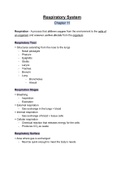
Respiration - A process that delivers oxygen from the environment to the cells of
an organism and removes carbon dioxide from the organism
Respiratory Tract
= Structures extending from the nose to the lungs
- Nasal passages
- Pharynx
- Epiglottis
- Glottis
- Larynx
- Trachea
- Bronchi
- Lung
- Bronchioles
- Alveoli
Respiration Stages
= Breathing
- Inspiration
- Expiration
= External respiration
- Gas exchange in the lungs + blood
= Internal respiration
- Gas exchange of blood + tissue cells
= Cellular respiration
- Chemical reaction that releases energy for the cells
- Produces CO2 as waste
Respiratory Surface
= Area where gas is exchanged
- Must be quick enough to meet the body’s needs
, = Respiration gotta happen in moist environment so O2 + CO2 are dissolved in water
= All organisms use ventilation to improve efficiency of respiration
- Process of moving an oxygen-containing medium (water/air) over the
respiratory surface (gills, trachea, lungs etc.)
Outer Skin
= They have capillaries just below the skin (gas exchange)
= High ratio of respiratory surface to body volume
= Gotta live in damp place so their respiratory surface is moist
Gills
= Aquatic invertebrates
= Folds in the body surface (increases SA)
= Always moist (since they live in water duh)
Tracheal System
= Insects
= Internal system of branching respiratory tubes called tracheae
- Connects body cells to outside environment via spiracles
- O2 enters via spiracles and diffuses into the tracheae vice versa for CO2
- Gas exchanged directly with body cells
- So circulatory system ain’t used for transporting O2
Lungs
= These organisms need more O2 so gills/tracheal system just aint it
= Trachea branches into lungs
- Lungs are sacs with moist epithelium
- Folds in the lungs increase SA
Upper Respiratory Tract
= Air enters via the nostrils or the mouth (if breathing is rapid, esp during exercise)
Nasal passages
= Air is warmed, moistened, and cleansed of dust/small particles inside the nasal
passages (at the back of the nose)
Chapter 11
Respiration - A process that delivers oxygen from the environment to the cells of
an organism and removes carbon dioxide from the organism
Respiratory Tract
= Structures extending from the nose to the lungs
- Nasal passages
- Pharynx
- Epiglottis
- Glottis
- Larynx
- Trachea
- Bronchi
- Lung
- Bronchioles
- Alveoli
Respiration Stages
= Breathing
- Inspiration
- Expiration
= External respiration
- Gas exchange in the lungs + blood
= Internal respiration
- Gas exchange of blood + tissue cells
= Cellular respiration
- Chemical reaction that releases energy for the cells
- Produces CO2 as waste
Respiratory Surface
= Area where gas is exchanged
- Must be quick enough to meet the body’s needs
, = Respiration gotta happen in moist environment so O2 + CO2 are dissolved in water
= All organisms use ventilation to improve efficiency of respiration
- Process of moving an oxygen-containing medium (water/air) over the
respiratory surface (gills, trachea, lungs etc.)
Outer Skin
= They have capillaries just below the skin (gas exchange)
= High ratio of respiratory surface to body volume
= Gotta live in damp place so their respiratory surface is moist
Gills
= Aquatic invertebrates
= Folds in the body surface (increases SA)
= Always moist (since they live in water duh)
Tracheal System
= Insects
= Internal system of branching respiratory tubes called tracheae
- Connects body cells to outside environment via spiracles
- O2 enters via spiracles and diffuses into the tracheae vice versa for CO2
- Gas exchanged directly with body cells
- So circulatory system ain’t used for transporting O2
Lungs
= These organisms need more O2 so gills/tracheal system just aint it
= Trachea branches into lungs
- Lungs are sacs with moist epithelium
- Folds in the lungs increase SA
Upper Respiratory Tract
= Air enters via the nostrils or the mouth (if breathing is rapid, esp during exercise)
Nasal passages
= Air is warmed, moistened, and cleansed of dust/small particles inside the nasal
passages (at the back of the nose)