Learning module 1
The unspoken laws of business
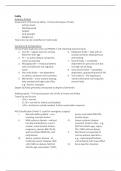
DEFINING ECONOMICS
Economics is the social science
That studies and explains
How scarce sources are combined and applied
To satisfy unlimited needs
Economics is therefore concerned with the problem of scarcity
Needs are necessities
Wants are desires
There is only a demand if people want to buy it and can afford it
MICROECONOMICS
Focuses on individual parts of the economy – micro = small
The decision makers of micro economics include individual consumers, households, companies and other
organisations separately from the rest of the economy
MACROECONOMICS
Focuses on the economy as a whole – macro = large
We focus on the BIG PICTURE
The emphasis is on total production, economic growth, inflation and total unemployment
THE 5 MAIN PARTICIPANTS IN THE ECONOMY
1. Household
2. Businesses
3. Government
4. Foreign sectors
5. Financial institution
There are 2 markets (markets are transactions between buyer and seller) within the economy flow:-
(i) Market for products (goods or services)
(ii) Market for production factors (land, labour and factories)
There are 3 flows between the participants and markets:-
(i) Flow of products
(ii) Flow of production factors
(iii) Flow of payment
(i) Household – consumer (buyer)
- People under one roof and earn joint income
- Members of household are called consumers
- Households represent the demand for goods and services in the economy
Households/consumers have the following characteristics
- They are the basic consumers in the economy – buy goods and services from producers
- They are the basic decision makers in the economy – what to eat, wear and use
- They determine the demand for goods and services
- Are the most important possessors of production factors, including labour and land
,(ii) Businesses – producer (seller)
These are the enterprises that employ production factors in order to produce a product
Businesses/producers have the following characteristics
- Because they produce, they are referred to as producers
- They are the decision makers with regards to the production and supply of the product market
- They want to make as much profit as possible
- They are the buyers in the production factors market
Where households represent the demand, businesses represent the supply
Demand = the quantity of goods and services buyers wish to purchase at a particular price
Supply = the quantity of goods and services sellers which to sell at a particular price
(iii) Government
The interaction between the government and other economic decision makers involve the
following:-
- The government collects taxes (income tax and VAT)
- Provides collective services (roads and health services)
- Provide payments to producers (UIF, pensions and subsidies)
Subsidy = a sum of money granted by the government to help an industry/ business keep the
price of a commodity or service low
- Provides products to consumers (through product markets)
- It uses man power (production factor) provided by households (human)
- In SA, the government accounts for ⅓ of all demand for goods/services produced by
commence
(iv) Foreign sector
- No county operates in isolation
- A country with NO foreign trade is a closed economy
- When it starts trading with the foreign sector it is an open economy
- The foreign sector consists of importers and exporters
Benefits of foreign trade
- It assists with the reduction of scarcity, poverty and isolation e.g. when SA has drought, we can
import basic foodstuffs and vice versa
- We can sell products 24/7 – international trade enables you to sell more of your product
(v) Financial institutions (“FI”)
FI’s are middle-men between borrowers and lenders
Lenders are people/businesses with extra money because they spend less than they earn
Borrowers are people/businesses who have a shortage because their requirements exceed their
earnings
FI’s are mainly linked with household and businesses
Household and businesses put their excess funds with an FI where they earn interest – there funds
go into the economic cycle
The cycle becomes apparent as some of the borrowers interest goes back to the lenders
, DEMAND AND SUPPLY
CETERIS PARABIS = ALL OTHER THINGS REMAIN CONSTANT / EQUAL – IF NOTHING ELSE CHANGES
1. Law of Demand
Law of demand = consumer
If nothing else changes, the consumer will buy more if price is less and less if price is more
There is a negative relationship between price and quantity demanded, therefore always a negative
slope
If price goes up – demand goes down
If price goes down – demand goes up
Demand only develops if consumer is willing and able to buy product
2. Law of Supply
Law of supply = supplier / producer
If nothing else changes, the supplier will supply more if price is more and less if price is less
There is a positive relationship between price and quantity supplied, therefore always a positive
slope
If price goes up – supply goes up
If price goes down – supply goes down
3. Finding equilibrium
Equilibrium is a situation where:-
(i) Quantity demanded = quantity supplied
(ii) There is no inherent tendency to change
(iii) The market just clears
Graphically equilibrium is where demand and supply curves intersect
The unspoken laws of business
DEFINING ECONOMICS
Economics is the social science
That studies and explains
How scarce sources are combined and applied
To satisfy unlimited needs
Economics is therefore concerned with the problem of scarcity
Needs are necessities
Wants are desires
There is only a demand if people want to buy it and can afford it
MICROECONOMICS
Focuses on individual parts of the economy – micro = small
The decision makers of micro economics include individual consumers, households, companies and other
organisations separately from the rest of the economy
MACROECONOMICS
Focuses on the economy as a whole – macro = large
We focus on the BIG PICTURE
The emphasis is on total production, economic growth, inflation and total unemployment
THE 5 MAIN PARTICIPANTS IN THE ECONOMY
1. Household
2. Businesses
3. Government
4. Foreign sectors
5. Financial institution
There are 2 markets (markets are transactions between buyer and seller) within the economy flow:-
(i) Market for products (goods or services)
(ii) Market for production factors (land, labour and factories)
There are 3 flows between the participants and markets:-
(i) Flow of products
(ii) Flow of production factors
(iii) Flow of payment
(i) Household – consumer (buyer)
- People under one roof and earn joint income
- Members of household are called consumers
- Households represent the demand for goods and services in the economy
Households/consumers have the following characteristics
- They are the basic consumers in the economy – buy goods and services from producers
- They are the basic decision makers in the economy – what to eat, wear and use
- They determine the demand for goods and services
- Are the most important possessors of production factors, including labour and land
,(ii) Businesses – producer (seller)
These are the enterprises that employ production factors in order to produce a product
Businesses/producers have the following characteristics
- Because they produce, they are referred to as producers
- They are the decision makers with regards to the production and supply of the product market
- They want to make as much profit as possible
- They are the buyers in the production factors market
Where households represent the demand, businesses represent the supply
Demand = the quantity of goods and services buyers wish to purchase at a particular price
Supply = the quantity of goods and services sellers which to sell at a particular price
(iii) Government
The interaction between the government and other economic decision makers involve the
following:-
- The government collects taxes (income tax and VAT)
- Provides collective services (roads and health services)
- Provide payments to producers (UIF, pensions and subsidies)
Subsidy = a sum of money granted by the government to help an industry/ business keep the
price of a commodity or service low
- Provides products to consumers (through product markets)
- It uses man power (production factor) provided by households (human)
- In SA, the government accounts for ⅓ of all demand for goods/services produced by
commence
(iv) Foreign sector
- No county operates in isolation
- A country with NO foreign trade is a closed economy
- When it starts trading with the foreign sector it is an open economy
- The foreign sector consists of importers and exporters
Benefits of foreign trade
- It assists with the reduction of scarcity, poverty and isolation e.g. when SA has drought, we can
import basic foodstuffs and vice versa
- We can sell products 24/7 – international trade enables you to sell more of your product
(v) Financial institutions (“FI”)
FI’s are middle-men between borrowers and lenders
Lenders are people/businesses with extra money because they spend less than they earn
Borrowers are people/businesses who have a shortage because their requirements exceed their
earnings
FI’s are mainly linked with household and businesses
Household and businesses put their excess funds with an FI where they earn interest – there funds
go into the economic cycle
The cycle becomes apparent as some of the borrowers interest goes back to the lenders
, DEMAND AND SUPPLY
CETERIS PARABIS = ALL OTHER THINGS REMAIN CONSTANT / EQUAL – IF NOTHING ELSE CHANGES
1. Law of Demand
Law of demand = consumer
If nothing else changes, the consumer will buy more if price is less and less if price is more
There is a negative relationship between price and quantity demanded, therefore always a negative
slope
If price goes up – demand goes down
If price goes down – demand goes up
Demand only develops if consumer is willing and able to buy product
2. Law of Supply
Law of supply = supplier / producer
If nothing else changes, the supplier will supply more if price is more and less if price is less
There is a positive relationship between price and quantity supplied, therefore always a positive
slope
If price goes up – supply goes up
If price goes down – supply goes down
3. Finding equilibrium
Equilibrium is a situation where:-
(i) Quantity demanded = quantity supplied
(ii) There is no inherent tendency to change
(iii) The market just clears
Graphically equilibrium is where demand and supply curves intersect