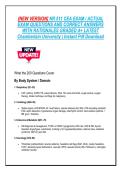
{NEW VERSION] NR 511 CEA EXAM / ACTUAL
EXAM QUESTIONS AND CORRECT ANSWERS
WITH RATIONALES GRADED A+ LATEST
Chamberlain University | Instant Pdf Download
What the 200 Questions Cover
By Body System / Domain
1. Respiratory (Q1–25)
CAP, asthma, COPD, PE, pneumothorax, OSA, TB, acute bronchitis, cough workup, oxygen
therapy, inhaler technique, red flags for malignancy.
2. Cardiology (Q26–50)
Stable angina, ACS/STEMI, AF, heart failure, valvular disease (AS, MS), HTN (including resistant),
PAD, aortic dissection, hypertensive organ damage, rate/rhythm control, med cautions (asthma +
BB, gout + thiazide).
3. Endocrine & Metabolic (Q51–75)
DM diagnosis & management, T1DM vs T2DM, hypoglycemia, DKA risk, CKD & DM, thyroid
disorders (hypo/hyper, subclinical), Cushing’s, DI, hyperparathyroidism, adrenal crisis, metabolic
syndrome, NAFLD, gout diet.
4. Neurology (Q76–90)
TIA/stroke (cardioembolic, lacunar patterns), headache red flags (SAH, GCA), cluster headache,
CVST, dementia types (Alzheimer’s, vascular, NPH), seizures (focal), MS, Parkinson’s, meningitis,
vestibular neuritis.
,5. Psychiatry & Substance Use (Q91–105)
MDD, GAD, panic disorder, PTSD, bipolar, ADHD, alcohol use disorder, opioid overdose, seasonal
depression, chronic pain + depression, SSRI side effects, med selection by side-effect profile,
co-occurring disorders.
6. Musculoskeletal & Rheumatology (Q106–120)
Nonspecific low back pain, radiculopathy, OA vs RA, gout, PMR, fibromyalgia, psoriatic arthritis,
ankylosing spondylitis, sports injuries (ACL), lateral epicondylitis, cervical radiculopathy,
osteoporotic compression fractures, septic arthritis red flag.
7. Dermatology (Q121–125, 176–185)
Psoriasis, scabies, tinea corporis, HSV labialis, melanoma red flags, atopic dermatitis, impetigo,
cellulitis, herpes zoster, SJS/TEN red flag, erythema multiforme, urticaria, BCC, SCC, actinic
keratosis.
8. Genitourinary & Men’s Health (Q126–140)
Uncomplicated cystitis vs vaginitis, pyelonephritis, BPH, acute prostatitis, nephrolithiasis,
hematuria red flags, STI urethritis/cervicitis, epididymitis vs torsion, ED workup, PSA abnormality,
urinary retention, recurrent UTI prevention.
9. Women’s Health & Reproductive (Q141–155)
BV, Candida, Trichomonas, PID, endometriosis, fibroids, primary amenorrhea (outflow), PCOS,
ectopic pregnancy, placenta previa vs abruption, postpartum endometritis, mastitis,
perimenopause, postmenopausal bleeding red flag.
10. ENT & Eyes (Q156–175)
Strep pharyngitis, mono, peritonsillar abscess, acute bacterial rhinosinusitis, allergic rhinitis, retinal
detachment, cataracts, glaucoma (chronic & acute angle-closure), viral/bacterial/allergic
conjunctivitis, AMD, microbial keratitis, corneal abrasion/FB, diabetic retinopathy, Meniere’s,
presbycusis, otitis externa/media.
11. Urgent Care / Red Flags / Referral Patterns (Q186–200)
ACS, stroke, suicide risk, anaphylaxis, sepsis, status epilepticus, DKA, GI bleed, testicular torsion,
ruptured ectopic, cauda equina, meningitis, acute angle-closure glaucoma, orbital cellulitis,
complex multimorbidity & polypharmacy.
How This Maps to NR 511 CEA Content Areas
,These items reflect the typical CEA focus for a primary care NP course like NR 511:
Differential diagnosis across common primary care presentations
Red-flag recognition and appropriate referral/urgent care
Initial workup: labs, imaging, point-of-care tests
Guideline-based first-line management (pharm + nonpharm)
Chronic disease management (DM, HTN, HF, COPD, asthma, OA/RA, depression/anxiety)
Preventive care & screening (cancer, eye/foot exams in DM, vaccines implied in context)
Medication safety (renal dosing, side effects, interactions, special populations)
SECTION 1 – Respiratory (Q1–25)
Q1. A 45-year-old nonsmoker presents with three weeks of productive cough, low-grade
fever, and crackles on the right lower lobe without severity markers. Which is the most
appropriate initial management?
A. Immediate hospital admission for IV antibiotics
B. Outpatient amoxicillin or doxycycline with close follow-up
C. No antibiotics and reassurance only
D. Start oral steroids immediately
E. Order CT chest before any treatment
B. Outpatient amoxicillin or doxycycline with close follow-up
Likely community-acquired pneumonia in low-risk outpatient.
Q2. A 28-year-old with known asthma reports increased shortness of breath, nighttime
symptoms, and rescue inhaler use four times weekly. Which step is most appropriate now?
A. Continue current regimen unchanged
B. Step up to low-dose ICS-LABA or medium-dose ICS
C. Stop all inhaled medications
, D. Start oral antibiotics immediately
E. Order chest CT
B. Step up to low-dose ICS-LABA or medium-dose ICS
Uncontrolled asthma requires step-up therapy.
Q3. A 60-year-old with COPD reports worsening dyspnea, increased sputum volume, and
purulence over two days without severe distress. What is the best initial plan?
A. Admit for noninvasive ventilation immediately
B. Outpatient short course of oral steroids and consider antibiotics
C. Start long-term oxygen therapy now
D. No treatment and observe only
E. Start inhaled steroids only
B. Outpatient short course of oral steroids and consider antibiotics
Moderate COPD exacerbation in stable patient.
Q4. A 35-year-old has sudden onset pleuritic chest pain, tachycardia, and mild hypoxia after
long car travel. Which diagnosis must be ruled out first?
A. Simple musculoskeletal pain
B. Pulmonary embolism
C. GERD
D. Panic attack
E. Viral URI
B. Pulmonary embolism
High-risk presentation requires PE evaluation.
EXAM QUESTIONS AND CORRECT ANSWERS
WITH RATIONALES GRADED A+ LATEST
Chamberlain University | Instant Pdf Download
What the 200 Questions Cover
By Body System / Domain
1. Respiratory (Q1–25)
CAP, asthma, COPD, PE, pneumothorax, OSA, TB, acute bronchitis, cough workup, oxygen
therapy, inhaler technique, red flags for malignancy.
2. Cardiology (Q26–50)
Stable angina, ACS/STEMI, AF, heart failure, valvular disease (AS, MS), HTN (including resistant),
PAD, aortic dissection, hypertensive organ damage, rate/rhythm control, med cautions (asthma +
BB, gout + thiazide).
3. Endocrine & Metabolic (Q51–75)
DM diagnosis & management, T1DM vs T2DM, hypoglycemia, DKA risk, CKD & DM, thyroid
disorders (hypo/hyper, subclinical), Cushing’s, DI, hyperparathyroidism, adrenal crisis, metabolic
syndrome, NAFLD, gout diet.
4. Neurology (Q76–90)
TIA/stroke (cardioembolic, lacunar patterns), headache red flags (SAH, GCA), cluster headache,
CVST, dementia types (Alzheimer’s, vascular, NPH), seizures (focal), MS, Parkinson’s, meningitis,
vestibular neuritis.
,5. Psychiatry & Substance Use (Q91–105)
MDD, GAD, panic disorder, PTSD, bipolar, ADHD, alcohol use disorder, opioid overdose, seasonal
depression, chronic pain + depression, SSRI side effects, med selection by side-effect profile,
co-occurring disorders.
6. Musculoskeletal & Rheumatology (Q106–120)
Nonspecific low back pain, radiculopathy, OA vs RA, gout, PMR, fibromyalgia, psoriatic arthritis,
ankylosing spondylitis, sports injuries (ACL), lateral epicondylitis, cervical radiculopathy,
osteoporotic compression fractures, septic arthritis red flag.
7. Dermatology (Q121–125, 176–185)
Psoriasis, scabies, tinea corporis, HSV labialis, melanoma red flags, atopic dermatitis, impetigo,
cellulitis, herpes zoster, SJS/TEN red flag, erythema multiforme, urticaria, BCC, SCC, actinic
keratosis.
8. Genitourinary & Men’s Health (Q126–140)
Uncomplicated cystitis vs vaginitis, pyelonephritis, BPH, acute prostatitis, nephrolithiasis,
hematuria red flags, STI urethritis/cervicitis, epididymitis vs torsion, ED workup, PSA abnormality,
urinary retention, recurrent UTI prevention.
9. Women’s Health & Reproductive (Q141–155)
BV, Candida, Trichomonas, PID, endometriosis, fibroids, primary amenorrhea (outflow), PCOS,
ectopic pregnancy, placenta previa vs abruption, postpartum endometritis, mastitis,
perimenopause, postmenopausal bleeding red flag.
10. ENT & Eyes (Q156–175)
Strep pharyngitis, mono, peritonsillar abscess, acute bacterial rhinosinusitis, allergic rhinitis, retinal
detachment, cataracts, glaucoma (chronic & acute angle-closure), viral/bacterial/allergic
conjunctivitis, AMD, microbial keratitis, corneal abrasion/FB, diabetic retinopathy, Meniere’s,
presbycusis, otitis externa/media.
11. Urgent Care / Red Flags / Referral Patterns (Q186–200)
ACS, stroke, suicide risk, anaphylaxis, sepsis, status epilepticus, DKA, GI bleed, testicular torsion,
ruptured ectopic, cauda equina, meningitis, acute angle-closure glaucoma, orbital cellulitis,
complex multimorbidity & polypharmacy.
How This Maps to NR 511 CEA Content Areas
,These items reflect the typical CEA focus for a primary care NP course like NR 511:
Differential diagnosis across common primary care presentations
Red-flag recognition and appropriate referral/urgent care
Initial workup: labs, imaging, point-of-care tests
Guideline-based first-line management (pharm + nonpharm)
Chronic disease management (DM, HTN, HF, COPD, asthma, OA/RA, depression/anxiety)
Preventive care & screening (cancer, eye/foot exams in DM, vaccines implied in context)
Medication safety (renal dosing, side effects, interactions, special populations)
SECTION 1 – Respiratory (Q1–25)
Q1. A 45-year-old nonsmoker presents with three weeks of productive cough, low-grade
fever, and crackles on the right lower lobe without severity markers. Which is the most
appropriate initial management?
A. Immediate hospital admission for IV antibiotics
B. Outpatient amoxicillin or doxycycline with close follow-up
C. No antibiotics and reassurance only
D. Start oral steroids immediately
E. Order CT chest before any treatment
B. Outpatient amoxicillin or doxycycline with close follow-up
Likely community-acquired pneumonia in low-risk outpatient.
Q2. A 28-year-old with known asthma reports increased shortness of breath, nighttime
symptoms, and rescue inhaler use four times weekly. Which step is most appropriate now?
A. Continue current regimen unchanged
B. Step up to low-dose ICS-LABA or medium-dose ICS
C. Stop all inhaled medications
, D. Start oral antibiotics immediately
E. Order chest CT
B. Step up to low-dose ICS-LABA or medium-dose ICS
Uncontrolled asthma requires step-up therapy.
Q3. A 60-year-old with COPD reports worsening dyspnea, increased sputum volume, and
purulence over two days without severe distress. What is the best initial plan?
A. Admit for noninvasive ventilation immediately
B. Outpatient short course of oral steroids and consider antibiotics
C. Start long-term oxygen therapy now
D. No treatment and observe only
E. Start inhaled steroids only
B. Outpatient short course of oral steroids and consider antibiotics
Moderate COPD exacerbation in stable patient.
Q4. A 35-year-old has sudden onset pleuritic chest pain, tachycardia, and mild hypoxia after
long car travel. Which diagnosis must be ruled out first?
A. Simple musculoskeletal pain
B. Pulmonary embolism
C. GERD
D. Panic attack
E. Viral URI
B. Pulmonary embolism
High-risk presentation requires PE evaluation.