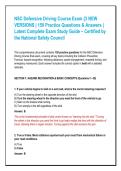
NSC Defensive Driving Course Exam {3 NEW
VERSIONS | 150 Practice Questions & Answers |
Latest Complete Exam Study Guide – Certified by
the National Safety Council
This comprehensive document contains 150 practice questions for the NSC Defensive
Driving Course final exam, covering all key topics including the Collision Prevention
Formula, hazard recognition, following distances, speed management, impaired driving, and
emergency maneuvers. Each answer includes the correct option in bold with a detailed
rationale.
SECTION 1: HAZARD RECOGNITION & BASIC CONCEPTS (Questions 1–30)
1. If your vehicle begins to skid on a wet road, what is the correct steering response?
A) Turn the steering wheel in the opposite direction of the skid
B) Turn the steering wheel in the direction you want the front of the vehicle to go
C) Slam on the brakes while turning
D) Turn sharply to the left regardless of the skid
Answer: B
This is the fundamental principle of skid control known as "steering into the skid." Turning
the wheel in the direction you want the front to go helps realign the tires with the direction of
travel, allowing them to regain traction. Turning against the skid worsens the spin .
2. True or False: Most collisions reported each year result from mechanical failure or
poor road conditions.
A) True
B) False
Answer: B
,Research shows that 94% of collisions are caused by driver error, not mechanical failure or
road conditions. Most collisions result from unsafe driver choices such as speeding,
distraction, or impaired driving .
3. Weather-related hazards reduce driver visibility, vehicle traction and/or steering
control. They include:
A) Rain, sleet, or snow
B) Strong wind
C) Fog, dust, or smoke
D) Certain light conditions (sun glare)
E) All of the above
Answer: E
All listed weather conditions reduce a driver's ability to see, maintain traction, or control the
vehicle. Each requires specific defensive adjustments: reducing speed, increasing following
distance, and using proper lighting .
4. A ______ road surface is designed to be higher in the middle and lower at the
edges to allow water drainage.
A) Curved
B) Crowned
C) Banked
D) Cambered
Answer: B
A crowned road is slightly higher at the center and lower at the outer edges, allowing water
to drain off the road and reducing the risk of hydroplaning .
5. What happens when you take a risk while driving?
A) You gain more control over the situation
B) You let someone or something else take control of the situation
C) Your reaction time improves
D) You reduce your chances of a collision
,Answer: B
Taking a risk means ceding control to chance, other drivers, or external conditions.
Defensive driving emphasizes maintaining control by making safe, predictable choices
rather than relying on luck .
6. In which situation would your sense of hearing be MOST critical for recognizing a
hazard?
A) A vehicle braking suddenly ahead
B) An emergency vehicle siren approaching from behind
C) An upcoming curve in the road
D) A traffic light changing color
Answer: B
Hearing is the primary sense for detecting emergency vehicles, especially before you see
them. Your ears can detect sirens from around corners or over hills, giving you advance
warning to yield right-of-way .
7. In which situation would your sense of smell MOST likely alert you to a hazard?
A) An approaching emergency vehicle
B) A diesel exhaust leak or gasoline spill
C) An upcoming curve in the road
D) A police siren approaching
Answer: B
The distinct odor of gasoline or diesel alerts drivers to potential fire hazards or mechanical
issues. Other hazard clues include burning oil, overheated brakes, or exhaust fumes inside
the vehicle .
8. In which situation would your sense of touch (feeling through the steering wheel or
seat) be MOST important?
A) An emergency vehicle approaching
B) Loss of traction due to ice or gravel
, C) A gasoline leak
D) A traffic light changing color
Answer: B
Your sense of touch detects changes in vehicle handling—reduced steering response, loss
of traction, or vibration. Feeling the wheel become "light" indicates potential ice, allowing
adjustment before loss of control .
9. What Do You Think? – City: Which hazards should you anticipate in an urban
environment? (Select all that apply.)
A) Pedestrians
B) Bicycles
C) Road construction
D) Parked vehicles pulling out
E) Delivery trucks
Answer: All of the above
Urban environments present multiple hazards: pedestrians and bicyclists are vulnerable;
construction zones narrow lanes; parked vehicles may pull out suddenly; delivery trucks
create blind spots and frequent stops .
10. What Do You Think? – Highway: Which hazards are most common on high-speed
highways? (Select all that apply.)
A) Aggressive drivers
B) Large trucks
C) Debris on roadway
D) Vehicles merging
E) Sudden traffic slowdowns
Answer: All of the above
Highways present unique hazards: aggressive drivers weaving through traffic, large trucks
with blind spots, debris from vehicles, merging traffic, and sudden slowdowns from
congestion or crashes .
VERSIONS | 150 Practice Questions & Answers |
Latest Complete Exam Study Guide – Certified by
the National Safety Council
This comprehensive document contains 150 practice questions for the NSC Defensive
Driving Course final exam, covering all key topics including the Collision Prevention
Formula, hazard recognition, following distances, speed management, impaired driving, and
emergency maneuvers. Each answer includes the correct option in bold with a detailed
rationale.
SECTION 1: HAZARD RECOGNITION & BASIC CONCEPTS (Questions 1–30)
1. If your vehicle begins to skid on a wet road, what is the correct steering response?
A) Turn the steering wheel in the opposite direction of the skid
B) Turn the steering wheel in the direction you want the front of the vehicle to go
C) Slam on the brakes while turning
D) Turn sharply to the left regardless of the skid
Answer: B
This is the fundamental principle of skid control known as "steering into the skid." Turning
the wheel in the direction you want the front to go helps realign the tires with the direction of
travel, allowing them to regain traction. Turning against the skid worsens the spin .
2. True or False: Most collisions reported each year result from mechanical failure or
poor road conditions.
A) True
B) False
Answer: B
,Research shows that 94% of collisions are caused by driver error, not mechanical failure or
road conditions. Most collisions result from unsafe driver choices such as speeding,
distraction, or impaired driving .
3. Weather-related hazards reduce driver visibility, vehicle traction and/or steering
control. They include:
A) Rain, sleet, or snow
B) Strong wind
C) Fog, dust, or smoke
D) Certain light conditions (sun glare)
E) All of the above
Answer: E
All listed weather conditions reduce a driver's ability to see, maintain traction, or control the
vehicle. Each requires specific defensive adjustments: reducing speed, increasing following
distance, and using proper lighting .
4. A ______ road surface is designed to be higher in the middle and lower at the
edges to allow water drainage.
A) Curved
B) Crowned
C) Banked
D) Cambered
Answer: B
A crowned road is slightly higher at the center and lower at the outer edges, allowing water
to drain off the road and reducing the risk of hydroplaning .
5. What happens when you take a risk while driving?
A) You gain more control over the situation
B) You let someone or something else take control of the situation
C) Your reaction time improves
D) You reduce your chances of a collision
,Answer: B
Taking a risk means ceding control to chance, other drivers, or external conditions.
Defensive driving emphasizes maintaining control by making safe, predictable choices
rather than relying on luck .
6. In which situation would your sense of hearing be MOST critical for recognizing a
hazard?
A) A vehicle braking suddenly ahead
B) An emergency vehicle siren approaching from behind
C) An upcoming curve in the road
D) A traffic light changing color
Answer: B
Hearing is the primary sense for detecting emergency vehicles, especially before you see
them. Your ears can detect sirens from around corners or over hills, giving you advance
warning to yield right-of-way .
7. In which situation would your sense of smell MOST likely alert you to a hazard?
A) An approaching emergency vehicle
B) A diesel exhaust leak or gasoline spill
C) An upcoming curve in the road
D) A police siren approaching
Answer: B
The distinct odor of gasoline or diesel alerts drivers to potential fire hazards or mechanical
issues. Other hazard clues include burning oil, overheated brakes, or exhaust fumes inside
the vehicle .
8. In which situation would your sense of touch (feeling through the steering wheel or
seat) be MOST important?
A) An emergency vehicle approaching
B) Loss of traction due to ice or gravel
, C) A gasoline leak
D) A traffic light changing color
Answer: B
Your sense of touch detects changes in vehicle handling—reduced steering response, loss
of traction, or vibration. Feeling the wheel become "light" indicates potential ice, allowing
adjustment before loss of control .
9. What Do You Think? – City: Which hazards should you anticipate in an urban
environment? (Select all that apply.)
A) Pedestrians
B) Bicycles
C) Road construction
D) Parked vehicles pulling out
E) Delivery trucks
Answer: All of the above
Urban environments present multiple hazards: pedestrians and bicyclists are vulnerable;
construction zones narrow lanes; parked vehicles may pull out suddenly; delivery trucks
create blind spots and frequent stops .
10. What Do You Think? – Highway: Which hazards are most common on high-speed
highways? (Select all that apply.)
A) Aggressive drivers
B) Large trucks
C) Debris on roadway
D) Vehicles merging
E) Sudden traffic slowdowns
Answer: All of the above
Highways present unique hazards: aggressive drivers weaving through traffic, large trucks
with blind spots, debris from vehicles, merging traffic, and sudden slowdowns from
congestion or crashes .