NR 442 Exam 2 – Questions With A+ Answers
Save Groups
Practice questions for this set
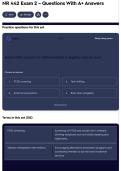
Learn 1 /7 Study using Learn
Require N95 respirator for staff and patient in negative-pressure room.
Choose an answer
1 PTSD screening 2 Task-shifting
3 Airborne precautions 4 Brain drain mitigation
Don't know?
Terms in this set (102)
PTSD screening Screening for PTSD and suicide risk in veterans
showing symptoms such as trouble sleeping and
nightmares.
Veteran reintegration interventions Encouraging attendance at transition programs and
connecting veterans to job fairs and vocational
services.
, Early referral for prosthetic services Veterans with recent amputations and social
withdrawal are most likely to need early referral for
prosthetic and mental-health services.
Body-image adaptation stages The emotional process after amputation may
resemble grieving, including stages of shock, anger,
depression, and adaptation.
Brain drain mitigation Training and scaling community health workers and
task shifting to build local capacity sustainably.
Autism sensory strategy Moving a child with autism to a quiet room and using
simple instructions while involving the caregiver.
Companion care services Companion care can include assisting with light ADLs
and escorting to appointments and socialization.
Suicide risk assessment Performing a suicide risk assessment and safety
planning for a homeless older adult expressing
anxiety and hopelessness.
Veteran with uncomplicated trauma A veteran with uncomplicated trauma 10 years ago is
less likely to need early referral for services
compared to others.
Long-term benzodiazepines Prescribing long-term benzodiazepines for sleep is
not a first-line intervention for veterans transitioning
to civilian life.
Social withdrawal signals Social withdrawal in veterans indicates the need for
physical rehabilitation and psychosocial support.
Grief stages Body image changes often follow stages of grief,
which helps normalize feelings and guide
interventions.
Save Groups
Practice questions for this set
Learn 1 /7 Study using Learn
Require N95 respirator for staff and patient in negative-pressure room.
Choose an answer
1 PTSD screening 2 Task-shifting
3 Airborne precautions 4 Brain drain mitigation
Don't know?
Terms in this set (102)
PTSD screening Screening for PTSD and suicide risk in veterans
showing symptoms such as trouble sleeping and
nightmares.
Veteran reintegration interventions Encouraging attendance at transition programs and
connecting veterans to job fairs and vocational
services.
, Early referral for prosthetic services Veterans with recent amputations and social
withdrawal are most likely to need early referral for
prosthetic and mental-health services.
Body-image adaptation stages The emotional process after amputation may
resemble grieving, including stages of shock, anger,
depression, and adaptation.
Brain drain mitigation Training and scaling community health workers and
task shifting to build local capacity sustainably.
Autism sensory strategy Moving a child with autism to a quiet room and using
simple instructions while involving the caregiver.
Companion care services Companion care can include assisting with light ADLs
and escorting to appointments and socialization.
Suicide risk assessment Performing a suicide risk assessment and safety
planning for a homeless older adult expressing
anxiety and hopelessness.
Veteran with uncomplicated trauma A veteran with uncomplicated trauma 10 years ago is
less likely to need early referral for services
compared to others.
Long-term benzodiazepines Prescribing long-term benzodiazepines for sleep is
not a first-line intervention for veterans transitioning
to civilian life.
Social withdrawal signals Social withdrawal in veterans indicates the need for
physical rehabilitation and psychosocial support.
Grief stages Body image changes often follow stages of grief,
which helps normalize feelings and guide
interventions.