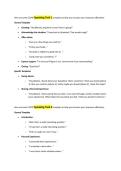
Here are some CELPIP Speaking Task 1 templates to help you structure your responses effectively:
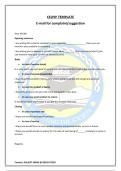
General Template
• Greeting: "Hey [Name], long time no see! How's it going?"
• Acknowledge the situation: "I heard you're [situation]. That sounds tough."
• Offer advice:
o "Here are a few things you could try:"
o "Firstly, you should..."
o "Secondly, it might be a good idea to..."
o "Lastly, have you considered...?"
• Express support: "I'm sure you'll figure it out. Let me know if you need anything."
• Closing: "Good luck!"
Specific Templates
• Giving Advice:
o "Hey [Name], I heard about your [situation]. That's a bummer. I think you should [advice
1]. Also, you could try [advice 2]. Lastly, maybe you should [advice 3]. I hope this helps!"
• Sharing a Personal Experience:
o "Hey [Name], I know exactly how you feel. I once went through a similar situation where
[your experience]. What helped me was [what you did]. I think you should try that too."
Here are some CELPIP Speaking Task 2 templates to help you structure your responses effectively:
General Template
• Introduction:
o "Well, that's a really interesting question."
o "I'd say that's a really interesting question."
o "That's a tough one, but I'd say..."
• Personal Experience:
o "I personally have experienced..."
o "I remember a time when..."
o "I once had a similar situation where..."
, • Reasoning/Opinion:
o "I think that's because..."
o "One reason for this is..."
o "In my opinion,..."
o "I believe that..."
• Example:
o "For example,..."
o "For instance,..."
o "Such as..."
• Conclusion:
o "So, in conclusion..."
o "Therefore,..."
o "Overall,..."
Specific Templates:
• Describing a Personal Experience:
o "I remember a time when I had to [situation]. I felt [emotion] because [reason]. I
decided to [action] and the result was [outcome]."
• Expressing an Opinion:
o "In my opinion, [opinion]. This is because [reason 1] and [reason 2]. For example,
[example]."
• Comparing and Contrasting:
o "While [option 1] has its advantages, such as [advantage 1], [option 2] offers [advantage
2]. However, [option 1] can also be [disadvantage 1], whereas [option 2] may have
[disadvantage 2]."
• Providing a Solution:
o "One way to address this issue is to [solution 1]. Another option would be to [solution
2]. Ultimately, the best solution would be to [best solution]."
• Presenting an Argument:
o "I believe that [argument]. To support this claim, I would like to offer the following
evidence: [evidence 1], [evidence 2], and [evidence 3]."
• Analyzing a Situation:
o "There are several factors to consider when analyzing this situation. Firstly, [factor 1].
Secondly, [factor 2]. Finally, [factor 3]. Taking all of these factors into account, it is clear
that [conclusion]."
, CELPIP Speaking Task 3 Templates
General Template:
1. Introduction:
o "Well, I think the main advantage of [option 1] is..."
o "On the one hand, [option 1] has the advantage of..."
o "One of the benefits of [option 1] is..."
2. Disadvantage of Option 1:
o "However, one of the drawbacks of [option 1] is..."
o "On the other hand, [option 1] can also have some disadvantages, such as..."
3. Advantage of Option 2:
o "In contrast, [option 2] offers the advantage of..."
o "Alternatively, [option 2] can be beneficial because..."
4. Disadvantage of Option 2:
o "Nevertheless, [option 2] also has its limitations, such as..."
o "While [option 2] has its benefits, it can also lead to..."
5. Conclusion:
o "Overall, I believe that [your choice] is the better option because..."
o "Considering both sides, I think that [your choice] is the more practical choice."
o "In conclusion, while both options have their merits, I prefer [your choice] due to..."
Specific Templates:
• Comparing and Contrasting:
o "While [option 1] has its advantages, such as [advantage 1], [option 2] offers [advantage
2]. However, [option 1] can also be [disadvantage 1], whereas [option 2] may have
[disadvantage 2]."
• Providing a Solution:
o "One way to address this issue is to [solution 1]. Another option would be to [solution
2]. Ultimately, the best solution would be to [best solution]."
• Analyzing a Situation:
General Template
• Greeting: "Hey [Name], long time no see! How's it going?"
• Acknowledge the situation: "I heard you're [situation]. That sounds tough."
• Offer advice:
o "Here are a few things you could try:"
o "Firstly, you should..."
o "Secondly, it might be a good idea to..."
o "Lastly, have you considered...?"
• Express support: "I'm sure you'll figure it out. Let me know if you need anything."
• Closing: "Good luck!"
Specific Templates
• Giving Advice:
o "Hey [Name], I heard about your [situation]. That's a bummer. I think you should [advice
1]. Also, you could try [advice 2]. Lastly, maybe you should [advice 3]. I hope this helps!"
• Sharing a Personal Experience:
o "Hey [Name], I know exactly how you feel. I once went through a similar situation where
[your experience]. What helped me was [what you did]. I think you should try that too."
Here are some CELPIP Speaking Task 2 templates to help you structure your responses effectively:
General Template
• Introduction:
o "Well, that's a really interesting question."
o "I'd say that's a really interesting question."
o "That's a tough one, but I'd say..."
• Personal Experience:
o "I personally have experienced..."
o "I remember a time when..."
o "I once had a similar situation where..."
, • Reasoning/Opinion:
o "I think that's because..."
o "One reason for this is..."
o "In my opinion,..."
o "I believe that..."
• Example:
o "For example,..."
o "For instance,..."
o "Such as..."
• Conclusion:
o "So, in conclusion..."
o "Therefore,..."
o "Overall,..."
Specific Templates:
• Describing a Personal Experience:
o "I remember a time when I had to [situation]. I felt [emotion] because [reason]. I
decided to [action] and the result was [outcome]."
• Expressing an Opinion:
o "In my opinion, [opinion]. This is because [reason 1] and [reason 2]. For example,
[example]."
• Comparing and Contrasting:
o "While [option 1] has its advantages, such as [advantage 1], [option 2] offers [advantage
2]. However, [option 1] can also be [disadvantage 1], whereas [option 2] may have
[disadvantage 2]."
• Providing a Solution:
o "One way to address this issue is to [solution 1]. Another option would be to [solution
2]. Ultimately, the best solution would be to [best solution]."
• Presenting an Argument:
o "I believe that [argument]. To support this claim, I would like to offer the following
evidence: [evidence 1], [evidence 2], and [evidence 3]."
• Analyzing a Situation:
o "There are several factors to consider when analyzing this situation. Firstly, [factor 1].
Secondly, [factor 2]. Finally, [factor 3]. Taking all of these factors into account, it is clear
that [conclusion]."
, CELPIP Speaking Task 3 Templates
General Template:
1. Introduction:
o "Well, I think the main advantage of [option 1] is..."
o "On the one hand, [option 1] has the advantage of..."
o "One of the benefits of [option 1] is..."
2. Disadvantage of Option 1:
o "However, one of the drawbacks of [option 1] is..."
o "On the other hand, [option 1] can also have some disadvantages, such as..."
3. Advantage of Option 2:
o "In contrast, [option 2] offers the advantage of..."
o "Alternatively, [option 2] can be beneficial because..."
4. Disadvantage of Option 2:
o "Nevertheless, [option 2] also has its limitations, such as..."
o "While [option 2] has its benefits, it can also lead to..."
5. Conclusion:
o "Overall, I believe that [your choice] is the better option because..."
o "Considering both sides, I think that [your choice] is the more practical choice."
o "In conclusion, while both options have their merits, I prefer [your choice] due to..."
Specific Templates:
• Comparing and Contrasting:
o "While [option 1] has its advantages, such as [advantage 1], [option 2] offers [advantage
2]. However, [option 1] can also be [disadvantage 1], whereas [option 2] may have
[disadvantage 2]."
• Providing a Solution:
o "One way to address this issue is to [solution 1]. Another option would be to [solution
2]. Ultimately, the best solution would be to [best solution]."
• Analyzing a Situation: