

Introduction to Psychology
Memory
Memory
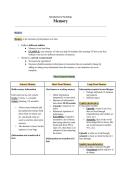
Memory is the retention of information over time.
○ Reflects different abilities
● Memory is not one thing
● EXAMPLE: your memory of what you had for breakfast this morning VS how your first
birthday went are two different structures of memory.
○ Memory is actively reconstructed
● Not passively reproduced
● Neurons rebuild/reconstruct information of memories that can constantly change by
adding or taking away information from the memory, so our memories are never
complete.
Three General Systems
Sensory Memory Short-Term Memory Long-Term Memory
Holds sensory information Also known as working memory Information acquired across lifespan
○ Perhaps unlimited (?) duration
Each sense has its own system: ○ Holds information and capacity
Iconic: (vision, ½ a second) temporarily in your mind ○ Different types:
Echoic: (hearing, 2-4 seconds) ○ Duration of information
lasts about 20-30 seconds. Explicit (declarative)
○ Capacity: limited to 5-9 Consciously recalled
○ Allows more elaborate and items. ○ Episodic: events in our lives
perceptual processing: think ○ Rehearsal: repetition of that we lived through
about what we heard, saw, information (remembering what clothes we
etc. and decide what we ○ EXAMPLE: if asked to wore, etc.)
want to send into short-term remember a set of letters, ○ Semantic: facts of the world
memory. then being asked to count (knowledge that we know, like
backwards from 309 in our social insurance number,
○ The duration is short, but the
steps of 3, then there is no 9/11, etc.)
capacity is very large. rehearsal of just repeating
the letters. Episodic is what we lived through,
(Information not transferred is semantic is facts we learn but haven’t
lost) (Information not transferred is been through.
lost)
Implicit (non-declarative)
Does not require conscious thought
○ Procedural: habits and how to
do things.
, ○ Priming: exposure to a
stimulus influences future
response.
Each system differs in span (or capacity) and duration
Stimulus from the environment (car accident), is encoded into sensory memory, our immediate memory
of what we just saw or heard. Sensory memory is transferred into short term memory. For example,
witnessing a car accident allows our short term memory to remember details like pieces of the car being
destroyed. Whatever occupies our memory at a given time is considered short term memory. Long term
memory can be pulled into short term memory. Short term memory is encoding into long term memory,
and long term memory is the retrieval into short term memory.
Primacy & Recency
Primacy: remembering things at the start of a list well (long term effects?)
Recency: remembering things at the end of a list well (short term effects?)
Memory Processes
Stages of Memory
1) Encoding: process of getting information into our memory.
2) Storage: maintaining information over time.
3) Retrieval: accessing information when you need it; pulling long term memory into short term
memory.
Encoding
Getting things in memory
Attention
Unless you pay attention, it won’t be encoded
EXAMPLE: what direction does the beaver face on a Canadian nickel?
Mnemonics
Learning aids or strategies that enhance later recall
EXAMPLE: PEMDAS/BEDMAS
Storage
Keeping things in memory
Engrams
○ Physical basis of memory; the memory itself
○ Structural +functional changes in our CNS as a result of experience
○ Memories are stored in the connections between neurons
Memory
Memory
Memory is the retention of information over time.
○ Reflects different abilities
● Memory is not one thing
● EXAMPLE: your memory of what you had for breakfast this morning VS how your first
birthday went are two different structures of memory.
○ Memory is actively reconstructed
● Not passively reproduced
● Neurons rebuild/reconstruct information of memories that can constantly change by
adding or taking away information from the memory, so our memories are never
complete.
Three General Systems
Sensory Memory Short-Term Memory Long-Term Memory
Holds sensory information Also known as working memory Information acquired across lifespan
○ Perhaps unlimited (?) duration
Each sense has its own system: ○ Holds information and capacity
Iconic: (vision, ½ a second) temporarily in your mind ○ Different types:
Echoic: (hearing, 2-4 seconds) ○ Duration of information
lasts about 20-30 seconds. Explicit (declarative)
○ Capacity: limited to 5-9 Consciously recalled
○ Allows more elaborate and items. ○ Episodic: events in our lives
perceptual processing: think ○ Rehearsal: repetition of that we lived through
about what we heard, saw, information (remembering what clothes we
etc. and decide what we ○ EXAMPLE: if asked to wore, etc.)
want to send into short-term remember a set of letters, ○ Semantic: facts of the world
memory. then being asked to count (knowledge that we know, like
backwards from 309 in our social insurance number,
○ The duration is short, but the
steps of 3, then there is no 9/11, etc.)
capacity is very large. rehearsal of just repeating
the letters. Episodic is what we lived through,
(Information not transferred is semantic is facts we learn but haven’t
lost) (Information not transferred is been through.
lost)
Implicit (non-declarative)
Does not require conscious thought
○ Procedural: habits and how to
do things.
, ○ Priming: exposure to a
stimulus influences future
response.
Each system differs in span (or capacity) and duration
Stimulus from the environment (car accident), is encoded into sensory memory, our immediate memory
of what we just saw or heard. Sensory memory is transferred into short term memory. For example,
witnessing a car accident allows our short term memory to remember details like pieces of the car being
destroyed. Whatever occupies our memory at a given time is considered short term memory. Long term
memory can be pulled into short term memory. Short term memory is encoding into long term memory,
and long term memory is the retrieval into short term memory.
Primacy & Recency
Primacy: remembering things at the start of a list well (long term effects?)
Recency: remembering things at the end of a list well (short term effects?)
Memory Processes
Stages of Memory
1) Encoding: process of getting information into our memory.
2) Storage: maintaining information over time.
3) Retrieval: accessing information when you need it; pulling long term memory into short term
memory.
Encoding
Getting things in memory
Attention
Unless you pay attention, it won’t be encoded
EXAMPLE: what direction does the beaver face on a Canadian nickel?
Mnemonics
Learning aids or strategies that enhance later recall
EXAMPLE: PEMDAS/BEDMAS
Storage
Keeping things in memory
Engrams
○ Physical basis of memory; the memory itself
○ Structural +functional changes in our CNS as a result of experience
○ Memories are stored in the connections between neurons


