Module: Becoming a Sociologist
Seminar 6 – Focus Groups
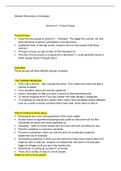
Focus Groups
Keep the focus group to around 6 – 10 people. The bigger the number, the less
likely everyone is going to participate in the discussion.
Qualitative data through words, we get to find out why people hold those
opinions.
Through surveys, we get an idea of their background.
The idea of focus groups is to generate a discussion. It could generate issues in
which people haven’t thought about.
Examples
Focus groups will have different groups of people
The Facilitator/Moderator
Their role is crucial – they manage the group. They make sure everyone gets a
chance to speak.
They introduce topics and ask the questions.
Have a note-taker so that you have a record of what was being said.
To remain impartial even if you don’t agree with other people’s viewpoints.
To challenge an individual’s opinion when others feel intimidated and/or offended
such as a racist or sexist comment that’s been said. Know when to step in.
Who to invite to a focus group
Participants who have had experience of the issue matter.
Similar match on age/ethnicity/background profile so that some will not feel
intimidated by others and avoid speaking up.
Sampling – seek out those people who you think will have something to say.
Random sampling vs purposive sampling
Purposive sampling is when you actively pick out a particular academic
department as an example.
Snowballing sampling when you ask someone if they know anyone else who
might be able to help you. Imagine a snowball that rolls down a hill and gets
bigger and bigger until you get a big sample size.
Advertising putting up a poster in university.
There are a variety of ways to recruit people.
Where to hold a focus group?
Seminar 6 – Focus Groups
Focus Groups
Keep the focus group to around 6 – 10 people. The bigger the number, the less
likely everyone is going to participate in the discussion.
Qualitative data through words, we get to find out why people hold those
opinions.
Through surveys, we get an idea of their background.
The idea of focus groups is to generate a discussion. It could generate issues in
which people haven’t thought about.
Examples
Focus groups will have different groups of people
The Facilitator/Moderator
Their role is crucial – they manage the group. They make sure everyone gets a
chance to speak.
They introduce topics and ask the questions.
Have a note-taker so that you have a record of what was being said.
To remain impartial even if you don’t agree with other people’s viewpoints.
To challenge an individual’s opinion when others feel intimidated and/or offended
such as a racist or sexist comment that’s been said. Know when to step in.
Who to invite to a focus group
Participants who have had experience of the issue matter.
Similar match on age/ethnicity/background profile so that some will not feel
intimidated by others and avoid speaking up.
Sampling – seek out those people who you think will have something to say.
Random sampling vs purposive sampling
Purposive sampling is when you actively pick out a particular academic
department as an example.
Snowballing sampling when you ask someone if they know anyone else who
might be able to help you. Imagine a snowball that rolls down a hill and gets
bigger and bigger until you get a big sample size.
Advertising putting up a poster in university.
There are a variety of ways to recruit people.
Where to hold a focus group?