

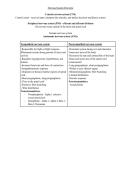
Nervous System Overview
Central nervous system (CNS)
Control center - receives input, interprets the stimulus, and makes decisions and directs actions
Peripheral nervous system (PNS) - efferent and afferent divisions
All nervous tissue outside of the brain and spinal cord
Somatic nervous system
Autonomic nervous system (ANS):
Sympathetic nervous system Parasympathetic nervous system
-Responsible for fight-or-flight response -Dominant system during rest and relaxation
0Dominant system during periods of stress and -Innervates most of the body
activity -Decreases the rate and contractility of the heart
-Regulates hypoglycemia, hypothermia, and -Brain and sacral area of the spinal cord
trauma (craniosacral)
-Increases heart rate and force of contraction -Long preganglionic, short postganglionic
-Sympathomimetic response -Within or near effector organs
-Originates in thoracic/lumbar regions of spinal -Minimal preganglionic fiber branching
cord -Limited distribution
-Short preganglionic, long postganglionic -Discrete response
-Close to the spinal cord Neurotransmitters:
-Extensive fiber branching - Acetylcholine
- Wide distribution
Neurotransmitters:
- Norepinephrine - Alpha 1 selective
(vasoconstriction)
- Epinephrine - Alpha 1, Alpha 2, Beta 1,
Beta 2, Histamine
, Sympathetic vs Parasympathetic Stimulation
Sympathetic (adrenergic) Parasympathetic (cholinergic)
- Pupil dilation - Pupils constrict
- Trachea & bronchioles dilation - Constriction of trachea and bronchioles,
- Epi. & norepi release increase secretions
- Renin beta 1 increase, alpha 1 decrease - Bladder sphincter relaxation
- Bladder retention, relaxation of ureters - Stimulation of erection
(relaxed detrusor, constricted trigone, and - Stimulation of tears
sphincters) - Copious watery secretions
- Stimulation of ejaculation - Decrease HR, decrease contractility
- Thick/viscous mucus - Increase GI muscle tone & motility
- Increase HR, increase contractility
- Decrease GI muscle motility and tone,
contraction of sphincters
- Skeletal muscle vessel dilation
- Skin, mucous membrane vessel constriction SLUDGE
Muscarinic vs Nicotinic Receptors
Nicotinic Receptors Muscarinic Receptors
o Present in many tissues in the body o Found throughout the body as subcomponents of
o Function at the neuromuscular junctions of the CNS and ANS
somatic muscles o Primary neurotransmitters are ACH and
o Stimulation causes muscular contraction. muscarine
o Triggered by ACh and Nicotine o Effects parasympathetic overactivity
o Sympathetic overactivity and Neuromuscular ▪ Bradycardia, miosis, sweating, blurred
Dysfunction vision, excessive lacrimation, excessive
▪ Tachycardia, HTN, Dilated pupils, muscle bronchial secretions, wheezing, shortness of
fasciculations, and muscle weakness breath, coughing, vomiting, abdominal
▪ Bind Ach, recognize nicotine, weak affinity for cramping, diarrhea, and urinary and fecal
muscarine incontinence.
▪ 5 subunits ▪ Belong to the G-protein coupled receptors
▪ Ligang-Gated Ion Channel ▪ Bind ACh, however also recognize muscarine
▪ Binding of two Ach molecules allows Sodium ▪ Show only a weak affinity for nicotine
ion entry resulting in depolarization of the ▪ Five subclasses, however only M1, M2, M3
effector cell have been functionally characterized
▪ Nicotine at low concentrations stimulates ▪ Location:
receptors ▪ Ganglia of the PNS, and on the effector organs
▪ Nicotine at high concentrations inhibits of ANS
receptors ▪ Major Uses:
▪ Location ▪ Xerostomia, Glaucoma
▪ CNS, adrenal medulla, autonomic ganglia, ▪ Alzheimers
neuromuscular junction in skeletal
muscles.
, Muscarinic Nicotinic
Site
Heart rate decreased increased
Blood vessels dilation constriction
Blood pressure decreased increased
GI tone increased increased
GI motility increased increased
GI sphincters relaxed none
Gland secretion Increased lacrimal, intestinal, sweat Inhibition of salivary and
and salivary bronchiole
Skeletal muscle none stimulation
Autonomic ganglia none stimulation
Eye constriction none
Blocking agent Atropine Tubocurarine
Sympathetic Nervous Norepinephrine
System - Nicotinic End organs affected: Adrenal Medulla, Heart, Exocrine glands and smooth muscle
Peripheral Effects: Tachycardia, Dysrhythmias, HTN, Pupil dilation (Mydriasis)
Sympathetic Nervous Acetylcholine
System - Muscarinic End organs affected: Sweat glands
Peripheral effects: diaphoresis
Parasympathetic Acetylcholine (cholinergic agonist)
Nervous System - End organs affected: Heart, exocrine glands and smooth muscle
Muscarinic Peripheral effects: bradycardia, hypotension, prolonged PR, QRS, QT; ventricular
dysrhythmias, AV block/cardiac arrest, pupil constriction (miosis), blurred vision,
lacrimation, rhinorrhea, cough, bronchorrhea, salivation, abdo. Cramps, vomiting,
diarrhea, darkness of vision, eye pain
Acetylcholine Choline is taken up by the neuron. This transport is inhibited by hemicholinium.
Synthesis Acetylcholine is rapidly hydrolyzed by acetylcholinesterase in the synaptic cleft.
Effects on pupils/ Cholinergic Toxidrome: Pinpoint pupils (miosis), diaphoresis, crying (lacrimation),
salivation rhinorrhea, vomiting, diarrhea, urination, bradycardia, frothing at the mouth
(salivation & bronchorrhea).
Central nervous system (CNS)
Control center - receives input, interprets the stimulus, and makes decisions and directs actions
Peripheral nervous system (PNS) - efferent and afferent divisions
All nervous tissue outside of the brain and spinal cord
Somatic nervous system
Autonomic nervous system (ANS):
Sympathetic nervous system Parasympathetic nervous system
-Responsible for fight-or-flight response -Dominant system during rest and relaxation
0Dominant system during periods of stress and -Innervates most of the body
activity -Decreases the rate and contractility of the heart
-Regulates hypoglycemia, hypothermia, and -Brain and sacral area of the spinal cord
trauma (craniosacral)
-Increases heart rate and force of contraction -Long preganglionic, short postganglionic
-Sympathomimetic response -Within or near effector organs
-Originates in thoracic/lumbar regions of spinal -Minimal preganglionic fiber branching
cord -Limited distribution
-Short preganglionic, long postganglionic -Discrete response
-Close to the spinal cord Neurotransmitters:
-Extensive fiber branching - Acetylcholine
- Wide distribution
Neurotransmitters:
- Norepinephrine - Alpha 1 selective
(vasoconstriction)
- Epinephrine - Alpha 1, Alpha 2, Beta 1,
Beta 2, Histamine
, Sympathetic vs Parasympathetic Stimulation
Sympathetic (adrenergic) Parasympathetic (cholinergic)
- Pupil dilation - Pupils constrict
- Trachea & bronchioles dilation - Constriction of trachea and bronchioles,
- Epi. & norepi release increase secretions
- Renin beta 1 increase, alpha 1 decrease - Bladder sphincter relaxation
- Bladder retention, relaxation of ureters - Stimulation of erection
(relaxed detrusor, constricted trigone, and - Stimulation of tears
sphincters) - Copious watery secretions
- Stimulation of ejaculation - Decrease HR, decrease contractility
- Thick/viscous mucus - Increase GI muscle tone & motility
- Increase HR, increase contractility
- Decrease GI muscle motility and tone,
contraction of sphincters
- Skeletal muscle vessel dilation
- Skin, mucous membrane vessel constriction SLUDGE
Muscarinic vs Nicotinic Receptors
Nicotinic Receptors Muscarinic Receptors
o Present in many tissues in the body o Found throughout the body as subcomponents of
o Function at the neuromuscular junctions of the CNS and ANS
somatic muscles o Primary neurotransmitters are ACH and
o Stimulation causes muscular contraction. muscarine
o Triggered by ACh and Nicotine o Effects parasympathetic overactivity
o Sympathetic overactivity and Neuromuscular ▪ Bradycardia, miosis, sweating, blurred
Dysfunction vision, excessive lacrimation, excessive
▪ Tachycardia, HTN, Dilated pupils, muscle bronchial secretions, wheezing, shortness of
fasciculations, and muscle weakness breath, coughing, vomiting, abdominal
▪ Bind Ach, recognize nicotine, weak affinity for cramping, diarrhea, and urinary and fecal
muscarine incontinence.
▪ 5 subunits ▪ Belong to the G-protein coupled receptors
▪ Ligang-Gated Ion Channel ▪ Bind ACh, however also recognize muscarine
▪ Binding of two Ach molecules allows Sodium ▪ Show only a weak affinity for nicotine
ion entry resulting in depolarization of the ▪ Five subclasses, however only M1, M2, M3
effector cell have been functionally characterized
▪ Nicotine at low concentrations stimulates ▪ Location:
receptors ▪ Ganglia of the PNS, and on the effector organs
▪ Nicotine at high concentrations inhibits of ANS
receptors ▪ Major Uses:
▪ Location ▪ Xerostomia, Glaucoma
▪ CNS, adrenal medulla, autonomic ganglia, ▪ Alzheimers
neuromuscular junction in skeletal
muscles.
, Muscarinic Nicotinic
Site
Heart rate decreased increased
Blood vessels dilation constriction
Blood pressure decreased increased
GI tone increased increased
GI motility increased increased
GI sphincters relaxed none
Gland secretion Increased lacrimal, intestinal, sweat Inhibition of salivary and
and salivary bronchiole
Skeletal muscle none stimulation
Autonomic ganglia none stimulation
Eye constriction none
Blocking agent Atropine Tubocurarine
Sympathetic Nervous Norepinephrine
System - Nicotinic End organs affected: Adrenal Medulla, Heart, Exocrine glands and smooth muscle
Peripheral Effects: Tachycardia, Dysrhythmias, HTN, Pupil dilation (Mydriasis)
Sympathetic Nervous Acetylcholine
System - Muscarinic End organs affected: Sweat glands
Peripheral effects: diaphoresis
Parasympathetic Acetylcholine (cholinergic agonist)
Nervous System - End organs affected: Heart, exocrine glands and smooth muscle
Muscarinic Peripheral effects: bradycardia, hypotension, prolonged PR, QRS, QT; ventricular
dysrhythmias, AV block/cardiac arrest, pupil constriction (miosis), blurred vision,
lacrimation, rhinorrhea, cough, bronchorrhea, salivation, abdo. Cramps, vomiting,
diarrhea, darkness of vision, eye pain
Acetylcholine Choline is taken up by the neuron. This transport is inhibited by hemicholinium.
Synthesis Acetylcholine is rapidly hydrolyzed by acetylcholinesterase in the synaptic cleft.
Effects on pupils/ Cholinergic Toxidrome: Pinpoint pupils (miosis), diaphoresis, crying (lacrimation),
salivation rhinorrhea, vomiting, diarrhea, urination, bradycardia, frothing at the mouth
(salivation & bronchorrhea).


