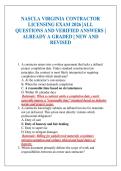
NASCLA VIRGINIA CONTRACTOR
LICENSING EXAM 2026 |ALL
QUESTIONS AND VERIFIED ANSWERS |
ALREADY A GRADED | NEW AND
REVISED
1. A contractor enters into a written agreement that lacks a defined
project completion date. Under standard construction law
principles, the contract is most likely interpreted as requiring
completion within which timeframe?
A. At the contractor’s convenience
B. When the owner demands completion
C. A reasonable time based on circumstances
D. Within 30 calendar days
Rationale: When a contract omits a completion date, courts
generally impose a “reasonable time” standard based on industry
norms and project scope.
2. A contractor knowingly submits an inflated invoice for materials
not yet delivered. This action most directly violates which
professional obligation?
A. Duty of care
B. Duty of honesty and fair dealing
C. Duty to supervise
D. Duty to mitigate damages
Rationale: Billing for undelivered materials constitutes
misrepresentation and violates ethical and legal duties of
honesty.
3. Which document primarily defines the scope of work and
responsibilities between an owner and contractor?
, A. Bid bond
B. Change order
C. Construction contract
D. Lien waiver
Rationale: The construction contract establishes scope,
responsibilities, price, and performance obligations.
4. A fixed-price contract places the greatest cost overrun risk on
which party?
A. Owner
B. Architect
C. Engineer
D. Contractor
Rationale: Under fixed-price contracts, contractors bear the risk
of increased costs unless changes are approved.
5. Which safety standard most directly governs fall protection
requirements on construction sites?
A. EPA regulations
B. State building codes
C. OSHA standards
D. Contract specifications
Rationale: OSHA establishes mandatory federal safety
standards, including fall protection rules.
6. A contractor fails to carry workers’ compensation insurance. This
failure most directly exposes the contractor to:
A. Only civil liability
B. Reduced tax obligations
C. Regulatory penalties and personal liability
D. Contract termination without penalty
Rationale: Workers’ compensation insurance is legally required;
failure exposes contractors to fines and personal liability.
7. In Virginia, contractor licensing is primarily intended to:
A. Increase competition
B. Protect contractors from owners
C. Protect the public through minimum competency standards
D. Eliminate small businesses
, Rationale: Licensing laws exist to protect public health, safety,
and welfare by ensuring contractor competence.
8. A bid bond primarily protects the owner against which risk?
A. Poor workmanship
B. Late completion
C. Bid withdrawal after award
D. Safety violations
Rationale: Bid bonds ensure the bidder will honor the bid and
execute the contract if awarded.
9. Which contract provision allows adjustments to price or time after
execution?
A. Indemnification clause
B. Liquidated damages clause
C. Change order clause
D. Arbitration clause
Rationale: Change orders formally modify scope, cost, or
schedule after contract execution.
10. Liquidated damages are best described as:
A. Punitive penalties
B. Pre-estimated damages agreed upon in advance
C. Insurance reimbursements
D. Attorney fees
Rationale: Liquidated damages represent a reasonable forecast
of losses from delay or breach.
11. A contractor
Course Name: NasCLA Virginia Contractor Licensing Examination
Practice
Subject: Construction Business & Law (Virginia / NASCLA-Aligned)
Description:
This comprehensive, exam-ready assessment is designed to prepare
candidates for the NASCLA-accredited Virginia Contractor Licensing
Examination. The exam mirrors real testing patterns and rigor by
, integrating foundational knowledge, applied problem-solving, ethical
reasoning, regulatory compliance, and real-world contractor scenarios.
Questions emphasize construction business and law, contracts, project
management, estimating, safety, labor regulations, environmental
compliance, and professional responsibility. The assessment balances
recall and higher-order decision-making to evaluate whether candidates
can apply legal and managerial principles accurately in practical
contracting situations, consistent with current NASCLA standards and
Virginia regulatory expectations.
1. A contractor enters into a written agreement that lacks a defined
project completion date. Under standard construction law
principles, the contract is most likely interpreted as requiring
completion within which timeframe?
A. At the contractor’s convenience
B. When the owner demands completion
C. A reasonable time based on circumstances
D. Within 30 calendar days
Rationale: When a contract omits a completion date, courts
generally impose a “reasonable time” standard based on industry
norms and project scope.
2. A contractor knowingly submits an inflated invoice for materials
not yet delivered. This action most directly violates which
professional obligation?
A. Duty of care
B. Duty of honesty and fair dealing
C. Duty to supervise
D. Duty to mitigate damages
Rationale: Billing for undelivered materials constitutes
misrepresentation and violates ethical and legal duties of
honesty.
3. Which document primarily defines the scope of work and
responsibilities between an owner and contractor?
A. Bid bond
B. Change order
LICENSING EXAM 2026 |ALL
QUESTIONS AND VERIFIED ANSWERS |
ALREADY A GRADED | NEW AND
REVISED
1. A contractor enters into a written agreement that lacks a defined
project completion date. Under standard construction law
principles, the contract is most likely interpreted as requiring
completion within which timeframe?
A. At the contractor’s convenience
B. When the owner demands completion
C. A reasonable time based on circumstances
D. Within 30 calendar days
Rationale: When a contract omits a completion date, courts
generally impose a “reasonable time” standard based on industry
norms and project scope.
2. A contractor knowingly submits an inflated invoice for materials
not yet delivered. This action most directly violates which
professional obligation?
A. Duty of care
B. Duty of honesty and fair dealing
C. Duty to supervise
D. Duty to mitigate damages
Rationale: Billing for undelivered materials constitutes
misrepresentation and violates ethical and legal duties of
honesty.
3. Which document primarily defines the scope of work and
responsibilities between an owner and contractor?
, A. Bid bond
B. Change order
C. Construction contract
D. Lien waiver
Rationale: The construction contract establishes scope,
responsibilities, price, and performance obligations.
4. A fixed-price contract places the greatest cost overrun risk on
which party?
A. Owner
B. Architect
C. Engineer
D. Contractor
Rationale: Under fixed-price contracts, contractors bear the risk
of increased costs unless changes are approved.
5. Which safety standard most directly governs fall protection
requirements on construction sites?
A. EPA regulations
B. State building codes
C. OSHA standards
D. Contract specifications
Rationale: OSHA establishes mandatory federal safety
standards, including fall protection rules.
6. A contractor fails to carry workers’ compensation insurance. This
failure most directly exposes the contractor to:
A. Only civil liability
B. Reduced tax obligations
C. Regulatory penalties and personal liability
D. Contract termination without penalty
Rationale: Workers’ compensation insurance is legally required;
failure exposes contractors to fines and personal liability.
7. In Virginia, contractor licensing is primarily intended to:
A. Increase competition
B. Protect contractors from owners
C. Protect the public through minimum competency standards
D. Eliminate small businesses
, Rationale: Licensing laws exist to protect public health, safety,
and welfare by ensuring contractor competence.
8. A bid bond primarily protects the owner against which risk?
A. Poor workmanship
B. Late completion
C. Bid withdrawal after award
D. Safety violations
Rationale: Bid bonds ensure the bidder will honor the bid and
execute the contract if awarded.
9. Which contract provision allows adjustments to price or time after
execution?
A. Indemnification clause
B. Liquidated damages clause
C. Change order clause
D. Arbitration clause
Rationale: Change orders formally modify scope, cost, or
schedule after contract execution.
10. Liquidated damages are best described as:
A. Punitive penalties
B. Pre-estimated damages agreed upon in advance
C. Insurance reimbursements
D. Attorney fees
Rationale: Liquidated damages represent a reasonable forecast
of losses from delay or breach.
11. A contractor
Course Name: NasCLA Virginia Contractor Licensing Examination
Practice
Subject: Construction Business & Law (Virginia / NASCLA-Aligned)
Description:
This comprehensive, exam-ready assessment is designed to prepare
candidates for the NASCLA-accredited Virginia Contractor Licensing
Examination. The exam mirrors real testing patterns and rigor by
, integrating foundational knowledge, applied problem-solving, ethical
reasoning, regulatory compliance, and real-world contractor scenarios.
Questions emphasize construction business and law, contracts, project
management, estimating, safety, labor regulations, environmental
compliance, and professional responsibility. The assessment balances
recall and higher-order decision-making to evaluate whether candidates
can apply legal and managerial principles accurately in practical
contracting situations, consistent with current NASCLA standards and
Virginia regulatory expectations.
1. A contractor enters into a written agreement that lacks a defined
project completion date. Under standard construction law
principles, the contract is most likely interpreted as requiring
completion within which timeframe?
A. At the contractor’s convenience
B. When the owner demands completion
C. A reasonable time based on circumstances
D. Within 30 calendar days
Rationale: When a contract omits a completion date, courts
generally impose a “reasonable time” standard based on industry
norms and project scope.
2. A contractor knowingly submits an inflated invoice for materials
not yet delivered. This action most directly violates which
professional obligation?
A. Duty of care
B. Duty of honesty and fair dealing
C. Duty to supervise
D. Duty to mitigate damages
Rationale: Billing for undelivered materials constitutes
misrepresentation and violates ethical and legal duties of
honesty.
3. Which document primarily defines the scope of work and
responsibilities between an owner and contractor?
A. Bid bond
B. Change order