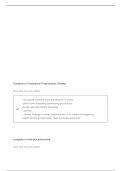
Symptoms of Gestational Trophoblastic Disease
Give this one a try later!
- excessive vomiting from elevated hCG levels
-dark brown bleeding resembling prune juice
-bright red intermittent bleeding
- anemia
- clinical findings of preeclampsia prior to 24 weeks of pregnancy
-rapid uterine growth faster than would be expected
complete or total placenta previa
Give this one a try later!
, when the cervical os is completely covered by the placental attachment
risk factors for abruptio placentae
Give this one a try later!
-HTN
- blunt abdominal trauma
-cocaine use
-previous abruptio placentae
- smoking
- PROM
- multifetal pregnancy
lab tests that indicate PPROM
Give this one a try later!
positive nitrazine paper test (blue, pH 6.5-7.5) or a positive ferning test
Laparoscopic salpingectomy
Give this one a try later!
Removal of the tube if ruptured
,expected findings for preeclampsia
Give this one a try later!
-severe continuous headache
-nausea
-blurred vision
-flashes of lights or dots before eyes
-edema
-proteinuria
-right upper quadrant pain
-oliguria
hyperemesis gravidarum
Give this one a try later!
excessive nausea and vomiting possibly related to elevated hCG levels that
lasts past 16 weeks gestation and causes weight loss >5%, dehydration,
nutritional deficiencies, electrolyte imbalances, and ketonuria.
Most patients with PROM will require
Give this one a try later!
hospitalization
patient education for preeclampsia
, Give this one a try later!
-remain on bed rest and in a side-lying position
-avoid foods high in sodium
-avoid alcohol and tobacco and limit caffeine intake
-drink six to eight 8-oz glasses of water a day
-maintain a dark quiet environment
-maintain a patent airway in the event of a seizure
What is the expected protein/creatinine ratio in preeclampsia?
Give this one a try later!
greater than or equal to 0.3mg/dL
Patient education for hyperemesis gravidarum
Give this one a try later!
-advance to a diet of clear liquids and bland foods once vomiting has
stopped
-eat small, frequent meals. start with dry toast, crackers, or cereal; then
move on to a soft diet; then a normal diet as tolerated
-enteral or parenteral nutrition may be needed in severe cases
If a woman experiences PROM at ________ weeks gestation or greater, delivery is
recommended
Give this one a try later!
Give this one a try later!
- excessive vomiting from elevated hCG levels
-dark brown bleeding resembling prune juice
-bright red intermittent bleeding
- anemia
- clinical findings of preeclampsia prior to 24 weeks of pregnancy
-rapid uterine growth faster than would be expected
complete or total placenta previa
Give this one a try later!
, when the cervical os is completely covered by the placental attachment
risk factors for abruptio placentae
Give this one a try later!
-HTN
- blunt abdominal trauma
-cocaine use
-previous abruptio placentae
- smoking
- PROM
- multifetal pregnancy
lab tests that indicate PPROM
Give this one a try later!
positive nitrazine paper test (blue, pH 6.5-7.5) or a positive ferning test
Laparoscopic salpingectomy
Give this one a try later!
Removal of the tube if ruptured
,expected findings for preeclampsia
Give this one a try later!
-severe continuous headache
-nausea
-blurred vision
-flashes of lights or dots before eyes
-edema
-proteinuria
-right upper quadrant pain
-oliguria
hyperemesis gravidarum
Give this one a try later!
excessive nausea and vomiting possibly related to elevated hCG levels that
lasts past 16 weeks gestation and causes weight loss >5%, dehydration,
nutritional deficiencies, electrolyte imbalances, and ketonuria.
Most patients with PROM will require
Give this one a try later!
hospitalization
patient education for preeclampsia
, Give this one a try later!
-remain on bed rest and in a side-lying position
-avoid foods high in sodium
-avoid alcohol and tobacco and limit caffeine intake
-drink six to eight 8-oz glasses of water a day
-maintain a dark quiet environment
-maintain a patent airway in the event of a seizure
What is the expected protein/creatinine ratio in preeclampsia?
Give this one a try later!
greater than or equal to 0.3mg/dL
Patient education for hyperemesis gravidarum
Give this one a try later!
-advance to a diet of clear liquids and bland foods once vomiting has
stopped
-eat small, frequent meals. start with dry toast, crackers, or cereal; then
move on to a soft diet; then a normal diet as tolerated
-enteral or parenteral nutrition may be needed in severe cases
If a woman experiences PROM at ________ weeks gestation or greater, delivery is
recommended
Give this one a try later!