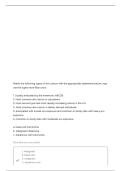
Match the following types of skin cancer with the appropriate statements below; may
use the types more than once:
1. Usually evaluated by the mnemonic ABCDE
2. Most common skin cancer in caucasions
3. Most serious type and most rapidly increasing cancer in the U.S.
4. Most common skin cancer in darker skinned individuals
5. Associated with overall sun exposure and common on body sites with heavy sun
exposure
6. Common on body sites with moderate sun exposure
a. basal cell Carcinoma
b. Malignant Melanoma
c. Squamous cell Carcinoma
Give this one a try later!
1. Malignant
2. basal cell
3. malignant
4. squamous cell
, 5. squamous cell
6. basal cell
Match the following to the condition below. Normal/ Abnormal
1. Crackles in the bases bilaterally
2. E to A changes noted with egophony
3. Respiratory expansion of 5-10 cm in an adult patient
4. AP:LAT chest diameter = 1:1
5. Equal fremitus bilaterally with palpation
6. Bluish-tinged lips and fingernail beds
7. Nasal flaring in an infant patient
Give this one a try later!
1. abnormal
2. abnormal
3. normal
4. abnormal
5. normal
6. abnormal
7. abnormal
What is the correct procedure for performing the Weber test?
A. Place a tuning fork first on the mastoid process and then, when the client no longer
hears it, near the external canal
B. Whisper two syllable numbers while occluding one of the client's ears
C. Place a tuning fork on the center of the client's head and ask where the sound is
heard more prominently
D. Using an audiometer, select a decibel level and check different frequencies from
low to high
Give this one a try later!
, C
Which of the following are behaviors of active listening? Select all that may apply.
a. Maintaining an open posture
b. Writing down what the patient says so that details are not forgotten
c. Establishing and maintaining eye contact
d. Nodding in agreement with whatever the patient says throughout the conversation
e. Responding positively when giving feedback
Give this one a try later!
A, C, E
For which one of the following assessments would the nurse need to use a
stethoscope?
a. Assessing for excess fluid in the abdomen
b. Assessing for bruits in the carotid artery
c. Assessing the border of the liver
d. Assessing for cyanosis in the finger tips
Give this one a try later!
B
Match the section of the exam when putting-it-all-together with the assessment that
would be best integrated there:
use the types more than once:
1. Usually evaluated by the mnemonic ABCDE
2. Most common skin cancer in caucasions
3. Most serious type and most rapidly increasing cancer in the U.S.
4. Most common skin cancer in darker skinned individuals
5. Associated with overall sun exposure and common on body sites with heavy sun
exposure
6. Common on body sites with moderate sun exposure
a. basal cell Carcinoma
b. Malignant Melanoma
c. Squamous cell Carcinoma
Give this one a try later!
1. Malignant
2. basal cell
3. malignant
4. squamous cell
, 5. squamous cell
6. basal cell
Match the following to the condition below. Normal/ Abnormal
1. Crackles in the bases bilaterally
2. E to A changes noted with egophony
3. Respiratory expansion of 5-10 cm in an adult patient
4. AP:LAT chest diameter = 1:1
5. Equal fremitus bilaterally with palpation
6. Bluish-tinged lips and fingernail beds
7. Nasal flaring in an infant patient
Give this one a try later!
1. abnormal
2. abnormal
3. normal
4. abnormal
5. normal
6. abnormal
7. abnormal
What is the correct procedure for performing the Weber test?
A. Place a tuning fork first on the mastoid process and then, when the client no longer
hears it, near the external canal
B. Whisper two syllable numbers while occluding one of the client's ears
C. Place a tuning fork on the center of the client's head and ask where the sound is
heard more prominently
D. Using an audiometer, select a decibel level and check different frequencies from
low to high
Give this one a try later!
, C
Which of the following are behaviors of active listening? Select all that may apply.
a. Maintaining an open posture
b. Writing down what the patient says so that details are not forgotten
c. Establishing and maintaining eye contact
d. Nodding in agreement with whatever the patient says throughout the conversation
e. Responding positively when giving feedback
Give this one a try later!
A, C, E
For which one of the following assessments would the nurse need to use a
stethoscope?
a. Assessing for excess fluid in the abdomen
b. Assessing for bruits in the carotid artery
c. Assessing the border of the liver
d. Assessing for cyanosis in the finger tips
Give this one a try later!
B
Match the section of the exam when putting-it-all-together with the assessment that
would be best integrated there: