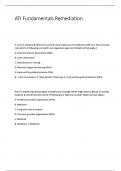
SCENARIO 1 What are the errors in the following prescriptions (1 per prescription)? Rewrite
each prescription correctly. What is each medication classification?
What is the mechanism of action (MOA)? 5mg amlodipine/160mg valsartan/25mg HCTZ
(Avalide HCT) PO daily #30 1 RF clonidine patch (Catapres-TTS-5) 0.5 mg/day apply one patch to
skin and replace every 7 days #4 patches 1 RF furosemide 40 mg daily #30 0 RF sotalol 80 mg po
daily #30 0 RF digoxin .25 mg po daily #30 2 RF
SCENARIO 2 MP is a 46-year-old African American male with blood pressure readings today of
143/96 and 139/93. He states he is taking Advil Cold & Sinus for a cold x 1 week. Additional
medications include adalimumab 40 mg subcutaneous injection every other week, Wellbutrin
XL 300 mg daily and pantoprazole 40 mg daily 30 minutes before breakfast. What is his goal
blood pressure? What medication would you prescribe and how would you improve his
treatment (include complete medication order)? What patient monitoring and education would
you provide?
SCENARIO 3 Does nitroglycerin have a high or low first pass effect? Please discuss why this is
important to know and how it relates to bioavailability. Define these two terms. What route has
100% bioavailability? In addition to parenterally, how can nitroglycerin be given to counter the
first pass effect? Write a sample prescription for this medication.
SCENARIO 4 Where are the majority of cytochrome P450 (CYP) enzymes located? Using the
Medscape pill
Answer & Explanation
, The integrated pharmacotherapy analysis highlights the essential role of precise prescribing,
evidence informed hypertension management, and foundational pharmacokinetic knowledge in
clinical practice. Effective prescribing requires a rigorous understanding of drug mechanisms,
interactions, and safety principles, as even minor errors can lead to significant patient harm. The
scenarios discussed illustrate how prescribers must combine pharmacologic expertise with
clinical judgment to ensure safe and therapeutic medication use.
The first scenario focuses on prescription accuracy and demonstrates how incomplete or
incorrect prescriptions can compromise patient safety. Errors such as using an incorrect brand
name, omitting delivery rates for transdermal medications, failing to specify routes or dosing
frequencies, and using unsafe decimal notation can lead to inappropriate administration or
dangerous substitutions. Correcting these prescriptions reflects the need for clarity and
precision. For example, the combination of amlodipine, valsartan, and hydrochlorothiazide must
be labeled appropriately to avoid confusion with other ARB combinations. Clonidine patches
require explicit specification of delivery rate because transdermal systems release medication
continuously over a set period. Furosemide and sotalol both require clear instructions due to
their potency and arrhythmia risk, and digoxin demands careful notation and monitoring
because of its narrow therapeutic index. These examples reinforce how a well written
prescription communicates not only the medication and dose but the clinician's understanding
of the drug's pharmacologic behavior.
The second scenario examines hypertension management in a 46 year old African American
man. His elevated blood pressure was exacerbated by pseudoephedrine, a sympathomimetic
agent that increases vasoconstriction. Evidence based guidelines recommend a blood pressure
target of less than 130/80 mmHg in patients with elevated cardiovascular risk. African American
patients often respond especially well to dihydropyridine calcium channel blockers or thiazide
diuretics because of physiologic differences such as lower renin activity. Amlodipine is therefore
an appropriate choice for initial therapy. Effective management also includes close monitoring
for edema or hypotension, assessing adherence, and providing clear education about avoiding
NSAIDs and decongestants, reducing sodium intake, and maintaining consistent medication use.
The third scenario explains the importance of understanding first pass metabolism and
bioavailability when selecting medication routes. Nitroglycerin undergoes extensive hepatic
metabolism when taken orally, which drastically reduces the amount of active drug reaching
systemic circulation. This makes oral forms unsuitable for treating acute angina. Bioavailability
each prescription correctly. What is each medication classification?
What is the mechanism of action (MOA)? 5mg amlodipine/160mg valsartan/25mg HCTZ
(Avalide HCT) PO daily #30 1 RF clonidine patch (Catapres-TTS-5) 0.5 mg/day apply one patch to
skin and replace every 7 days #4 patches 1 RF furosemide 40 mg daily #30 0 RF sotalol 80 mg po
daily #30 0 RF digoxin .25 mg po daily #30 2 RF
SCENARIO 2 MP is a 46-year-old African American male with blood pressure readings today of
143/96 and 139/93. He states he is taking Advil Cold & Sinus for a cold x 1 week. Additional
medications include adalimumab 40 mg subcutaneous injection every other week, Wellbutrin
XL 300 mg daily and pantoprazole 40 mg daily 30 minutes before breakfast. What is his goal
blood pressure? What medication would you prescribe and how would you improve his
treatment (include complete medication order)? What patient monitoring and education would
you provide?
SCENARIO 3 Does nitroglycerin have a high or low first pass effect? Please discuss why this is
important to know and how it relates to bioavailability. Define these two terms. What route has
100% bioavailability? In addition to parenterally, how can nitroglycerin be given to counter the
first pass effect? Write a sample prescription for this medication.
SCENARIO 4 Where are the majority of cytochrome P450 (CYP) enzymes located? Using the
Medscape pill
Answer & Explanation
, The integrated pharmacotherapy analysis highlights the essential role of precise prescribing,
evidence informed hypertension management, and foundational pharmacokinetic knowledge in
clinical practice. Effective prescribing requires a rigorous understanding of drug mechanisms,
interactions, and safety principles, as even minor errors can lead to significant patient harm. The
scenarios discussed illustrate how prescribers must combine pharmacologic expertise with
clinical judgment to ensure safe and therapeutic medication use.
The first scenario focuses on prescription accuracy and demonstrates how incomplete or
incorrect prescriptions can compromise patient safety. Errors such as using an incorrect brand
name, omitting delivery rates for transdermal medications, failing to specify routes or dosing
frequencies, and using unsafe decimal notation can lead to inappropriate administration or
dangerous substitutions. Correcting these prescriptions reflects the need for clarity and
precision. For example, the combination of amlodipine, valsartan, and hydrochlorothiazide must
be labeled appropriately to avoid confusion with other ARB combinations. Clonidine patches
require explicit specification of delivery rate because transdermal systems release medication
continuously over a set period. Furosemide and sotalol both require clear instructions due to
their potency and arrhythmia risk, and digoxin demands careful notation and monitoring
because of its narrow therapeutic index. These examples reinforce how a well written
prescription communicates not only the medication and dose but the clinician's understanding
of the drug's pharmacologic behavior.
The second scenario examines hypertension management in a 46 year old African American
man. His elevated blood pressure was exacerbated by pseudoephedrine, a sympathomimetic
agent that increases vasoconstriction. Evidence based guidelines recommend a blood pressure
target of less than 130/80 mmHg in patients with elevated cardiovascular risk. African American
patients often respond especially well to dihydropyridine calcium channel blockers or thiazide
diuretics because of physiologic differences such as lower renin activity. Amlodipine is therefore
an appropriate choice for initial therapy. Effective management also includes close monitoring
for edema or hypotension, assessing adherence, and providing clear education about avoiding
NSAIDs and decongestants, reducing sodium intake, and maintaining consistent medication use.
The third scenario explains the importance of understanding first pass metabolism and
bioavailability when selecting medication routes. Nitroglycerin undergoes extensive hepatic
metabolism when taken orally, which drastically reduces the amount of active drug reaching
systemic circulation. This makes oral forms unsuitable for treating acute angina. Bioavailability