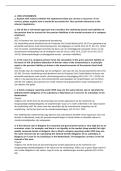
A. IFRS STATEMENTS
1. Explain with reasons whether the statements below are correct or incorrect. If not
correct, please explain how it should be accounted for. Also provide references to the
relevant regulations.
a. IAS 19 has a risk-based approach and considers the underlying assets and liabilities of
the pension fund to account for the pension liabilities in the annual accounts of a company
employer).
Juist:
IAS 19 hanteert een risico gebaseerde benadering,
De verplichting wordt berekend met de Projected Unit Credit Method (IAS 19.67) en gebaseerd op
actuariële aannames zoals disconteringsvoet, loonstijgingen en sterfte (IAS 19.76, 83, 87). Onder
IAS 19 worden verplichtingen berekend op basis van de onderliggende actuariële risico’s en de
economische blootstelling van de werkgever aan die risico’s (IAS 19.8, 19.26–31 en IAS 19.57,
19.63). Nettoverplichtingen (onderliggende assets - pensioen liabilities)
b. In the case of a company pension fund, the calculation of the gross pension liability on
the basis of IAS 19 (before deduction of the fair value of the investments) is in principle
equal to the pension liability as shown in the annual accounts of the pension fund itself.
Onjuist:
IAS 19 kijkt naar de verplichting van de werkgever, niet naar die van het pensioenfonds (IAS 19.8,
55–56). De bruto verplichting wordt berekend met de Projected Unit Credit Method op basis van
actuariële aannames zoals sterfte, disconteringsvoet en loonstijging (IAS 19.67–76 + 19.83). De
cijfers in de jaarrekening van het pensioenfonds weerspiegelen de verplichtingen van het fonds
zelf die niet volgens de projected unit credit method wordt gewaardeerd maar marktwaarde en
zijn daarom niet gelijk..
c. A Dutch company reporting under IFRS may use the same interest rate to calculate the
defined benefit obligation of its subsidiary in Mauritania as it uses for its subsidiary in the
Netherlands.
Onjuist:
Volgens IAS 19.83 moet de disconteringsvoet worden gebaseerd op de marktrente op
hoogwaardige bedrijfsobligaties (of staatsleningen waar zo’n markt ontbreekt) in de valuta waarin
de verplichting luidt. De rente moet dus aansluiten bij de economische omgeving van de
verplichting, niet bij het land van de moedermaatschappij. IAS 19.123, 123A
Een Nederlandse onderneming mag daarom niet automatisch dezelfde rente toepassen voor een
dochter in Mauritanië, tenzij de pensioenverplichtingen in beide landen in dezelfde valuta en
marktomstandigheden zijn aangegaan.
d. If the interest rate in Bulgaria for corporate and government bonds is very high due to an
economic crisis, for example, and there is no liquidity in the market (deep market) for high-
quality corporate bonds in Bulgaria, then a Dutch company reporting under IFRS may use
the same interest rate for calculating the defined benefit obligation of its subsidiary in
Bulgaria as it uses for its subsidiary in the Netherlands. The Bulgarian currency is the lev
instead of the euro.
Onjuist:
Volgens IAS 19.83 moet de disconteringsvoet worden gebaseerd op de marktrente van
hoogwaardige bedrijfsobligaties in de valuta van de verplichting. Alleen als er geen diepe markt is
voor zulke obligaties in die valuta, mag de rente op staatsleningen worden gebruikt (IAS 19.83–
84).
, Omdat de Bulgaarse lev niet dezelfde valuta is als de euro, mag een Nederlandse onderneming
niet automatisch de Nederlandse (Euromarkt-)rente gebruiken. De rente moet de marktcondities
in de valuta van de Bulgaarse verplichting weerspiegelen, ook al is die markt beperkt.
e. If interest rates in Greece for corporate and government bonds are very high due to an
economic crisis, for example, and there is no liquidity in the market (deep market) for high-
quality corporate bonds in Greece, a Dutch company reporting under IFRS may use the
same interest rate for calculating the defined benefit obligation of its subsidiary in Greece
as it uses for its subsidiary in the Netherlands. Greece is part of the euro zone.
Juist:
Volgens IAS 19.83–84 moet de disconteringsvoet worden gebaseerd op de rente op
hoogwaardige bedrijfsobligaties (of, bij het ontbreken daarvan, staatsleningen) in de valuta van de
verplichting, niet per se in het land waar de dochter gevestigd is.
Omdat Griekenland deel uitmaakt van de eurozone en de verplichtingen in euro’s luiden, mag de
onderneming dezelfde Euromarkt-rente gebruiken als voor de Nederlandse dochter. De
economische omgeving is in dit geval dezelfde, namelijk de eurozone.
f. If a company pension fund invests in a mix of corporate bonds and shares for a defined
benefit pension plan of a company and in doing so achieves a higher actual return than
expected, then this will lead to a change in the profit and loss account for the relevant
company reporting under IFRS.
Onjuist:
Volgens IAS 19.57(d) maakt het verschil tussen de werkelijke en verwachte opbrengsten op
planactiva deel uit van de herwaarderingen van de netto pensioenverplichting. Deze worden
volgens IAS 19.57(d) 19.120(c) en 122 niet in de winst-en-verliesrekening verwerkt, maar
rechtstreeks in het overige totaalresultaat (OCI).
g. If the actual interest costs on a defined benefit obligation are higher or lower than the
expected interest costs, then the company reporting under IFRS must recognise the
difference between the actual and expected interest costs in its profit and loss account for
the financial year as part of the pension costs.
Onjuist:
Volgens IAS 19.57(c)(iii) moet in de winst-en-verliesrekening alleen de net interest op de net
defined benefit liability (asset) worden opgenomen. Deze wordt berekend door de
disconteringsvoet toe te passen op de verplichting aan het begin van het jaar (IAS 19.123–124).
Er is dus geen onderscheid tussen verwachte en werkelijke interestkosten; afwijkingen daarvan
(door actuariële herzieningen of veranderde marktrente) worden als herwaarderingen verwerkt in
het OCI, niet in de winst-en-verliesrekening (IAS 19.120(c), 127–129).
h. On the basis of IAS 19, actuarial results should be recognised directly into Other
Comprehensive Income (OCI), but net unrealised cumulative actuarial losses should be
recycled to the profit and loss account.
Onjuist:
Volgens IAS 19.120(c) en IAS 19.57(d) worden actuariële winsten en verliezen volledig en direct
verwerkt in het overige totaalresultaat (OCI).
Deze bedragen blijven permanent in het eigen vermogen opgenomen en mogen niet worden
gerecycled naar de winst-en-verliesrekening in latere perioden (IAS 19.122, 127–128). Actuariële
resultaten hebben dus geen invloed meer op de P&L, ook niet via herclassificatie.
1. Explain with reasons whether the statements below are correct or incorrect. If not
correct, please explain how it should be accounted for. Also provide references to the
relevant regulations.
a. IAS 19 has a risk-based approach and considers the underlying assets and liabilities of
the pension fund to account for the pension liabilities in the annual accounts of a company
employer).
Juist:
IAS 19 hanteert een risico gebaseerde benadering,
De verplichting wordt berekend met de Projected Unit Credit Method (IAS 19.67) en gebaseerd op
actuariële aannames zoals disconteringsvoet, loonstijgingen en sterfte (IAS 19.76, 83, 87). Onder
IAS 19 worden verplichtingen berekend op basis van de onderliggende actuariële risico’s en de
economische blootstelling van de werkgever aan die risico’s (IAS 19.8, 19.26–31 en IAS 19.57,
19.63). Nettoverplichtingen (onderliggende assets - pensioen liabilities)
b. In the case of a company pension fund, the calculation of the gross pension liability on
the basis of IAS 19 (before deduction of the fair value of the investments) is in principle
equal to the pension liability as shown in the annual accounts of the pension fund itself.
Onjuist:
IAS 19 kijkt naar de verplichting van de werkgever, niet naar die van het pensioenfonds (IAS 19.8,
55–56). De bruto verplichting wordt berekend met de Projected Unit Credit Method op basis van
actuariële aannames zoals sterfte, disconteringsvoet en loonstijging (IAS 19.67–76 + 19.83). De
cijfers in de jaarrekening van het pensioenfonds weerspiegelen de verplichtingen van het fonds
zelf die niet volgens de projected unit credit method wordt gewaardeerd maar marktwaarde en
zijn daarom niet gelijk..
c. A Dutch company reporting under IFRS may use the same interest rate to calculate the
defined benefit obligation of its subsidiary in Mauritania as it uses for its subsidiary in the
Netherlands.
Onjuist:
Volgens IAS 19.83 moet de disconteringsvoet worden gebaseerd op de marktrente op
hoogwaardige bedrijfsobligaties (of staatsleningen waar zo’n markt ontbreekt) in de valuta waarin
de verplichting luidt. De rente moet dus aansluiten bij de economische omgeving van de
verplichting, niet bij het land van de moedermaatschappij. IAS 19.123, 123A
Een Nederlandse onderneming mag daarom niet automatisch dezelfde rente toepassen voor een
dochter in Mauritanië, tenzij de pensioenverplichtingen in beide landen in dezelfde valuta en
marktomstandigheden zijn aangegaan.
d. If the interest rate in Bulgaria for corporate and government bonds is very high due to an
economic crisis, for example, and there is no liquidity in the market (deep market) for high-
quality corporate bonds in Bulgaria, then a Dutch company reporting under IFRS may use
the same interest rate for calculating the defined benefit obligation of its subsidiary in
Bulgaria as it uses for its subsidiary in the Netherlands. The Bulgarian currency is the lev
instead of the euro.
Onjuist:
Volgens IAS 19.83 moet de disconteringsvoet worden gebaseerd op de marktrente van
hoogwaardige bedrijfsobligaties in de valuta van de verplichting. Alleen als er geen diepe markt is
voor zulke obligaties in die valuta, mag de rente op staatsleningen worden gebruikt (IAS 19.83–
84).
, Omdat de Bulgaarse lev niet dezelfde valuta is als de euro, mag een Nederlandse onderneming
niet automatisch de Nederlandse (Euromarkt-)rente gebruiken. De rente moet de marktcondities
in de valuta van de Bulgaarse verplichting weerspiegelen, ook al is die markt beperkt.
e. If interest rates in Greece for corporate and government bonds are very high due to an
economic crisis, for example, and there is no liquidity in the market (deep market) for high-
quality corporate bonds in Greece, a Dutch company reporting under IFRS may use the
same interest rate for calculating the defined benefit obligation of its subsidiary in Greece
as it uses for its subsidiary in the Netherlands. Greece is part of the euro zone.
Juist:
Volgens IAS 19.83–84 moet de disconteringsvoet worden gebaseerd op de rente op
hoogwaardige bedrijfsobligaties (of, bij het ontbreken daarvan, staatsleningen) in de valuta van de
verplichting, niet per se in het land waar de dochter gevestigd is.
Omdat Griekenland deel uitmaakt van de eurozone en de verplichtingen in euro’s luiden, mag de
onderneming dezelfde Euromarkt-rente gebruiken als voor de Nederlandse dochter. De
economische omgeving is in dit geval dezelfde, namelijk de eurozone.
f. If a company pension fund invests in a mix of corporate bonds and shares for a defined
benefit pension plan of a company and in doing so achieves a higher actual return than
expected, then this will lead to a change in the profit and loss account for the relevant
company reporting under IFRS.
Onjuist:
Volgens IAS 19.57(d) maakt het verschil tussen de werkelijke en verwachte opbrengsten op
planactiva deel uit van de herwaarderingen van de netto pensioenverplichting. Deze worden
volgens IAS 19.57(d) 19.120(c) en 122 niet in de winst-en-verliesrekening verwerkt, maar
rechtstreeks in het overige totaalresultaat (OCI).
g. If the actual interest costs on a defined benefit obligation are higher or lower than the
expected interest costs, then the company reporting under IFRS must recognise the
difference between the actual and expected interest costs in its profit and loss account for
the financial year as part of the pension costs.
Onjuist:
Volgens IAS 19.57(c)(iii) moet in de winst-en-verliesrekening alleen de net interest op de net
defined benefit liability (asset) worden opgenomen. Deze wordt berekend door de
disconteringsvoet toe te passen op de verplichting aan het begin van het jaar (IAS 19.123–124).
Er is dus geen onderscheid tussen verwachte en werkelijke interestkosten; afwijkingen daarvan
(door actuariële herzieningen of veranderde marktrente) worden als herwaarderingen verwerkt in
het OCI, niet in de winst-en-verliesrekening (IAS 19.120(c), 127–129).
h. On the basis of IAS 19, actuarial results should be recognised directly into Other
Comprehensive Income (OCI), but net unrealised cumulative actuarial losses should be
recycled to the profit and loss account.
Onjuist:
Volgens IAS 19.120(c) en IAS 19.57(d) worden actuariële winsten en verliezen volledig en direct
verwerkt in het overige totaalresultaat (OCI).
Deze bedragen blijven permanent in het eigen vermogen opgenomen en mogen niet worden
gerecycled naar de winst-en-verliesrekening in latere perioden (IAS 19.122, 127–128). Actuariële
resultaten hebben dus geen invloed meer op de P&L, ook niet via herclassificatie.