Online Residential Athletics Alumni Parents Request Info Apply Now Visit Us Create Guest Account
R
UNIVERSITY. Account Dashboard Courses Calendar Inbox History Resources
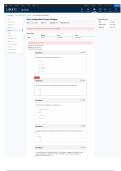
COURSE MENU PSYC515_B07_202520 > Quizzes > Quiz: Independent Groups Designs
Home Quiz: Independent Groups Designs Submission details:
Announcements o A S i N o ___ . Time: 33 minutes
Due 26 Jan at 23:59 Points 50 Questions 25 Time limit None
Assignments - R B B Current score: 46 out of 50
Discussions Kept score: 46 out of 50
This quiz is no longer available as the course has been concluded.
Quizzes
Grades Attempt history
Modules Attempt Time Score
LATEST Attempt 1 33 minutes 46 out of 50
Writing Style Guides
Canvas Help
(@ Correct answers are hidden.
Kaltura Media Gallery
Score for this quiz: 46 out of 50
Bookstore
Submitted 22 Jan at 16:21
This attempt took 33 minutes.
Career Resources
Prayer Requests
Question 1 2/2pts
The formula for the independent-samples t test is
Mp/SDp
Mp/ SDy _x
My — My/SDx - x
My - Mo/ SDp
Incorrect
Question 2 0/2pts
We can increase the power of our study by using a very diverse group of participants.
True
False
Question 3 2/2pts
The effect size for an ANOVA is computed using
point-biserial squared
eta?
Levene's test
Cohen's d
Question 4 2/2pts
A multiple independent-groups design examines the effect of one IV with at least three levels on a
DV.
True
False
Question 5 2/2pts
In a simple experiment examining the impact of violent games on aggressive thoughts, we might
have participants play a violent game for 45 min rather than 5 min. This decision reflects our
attempt to maximize power by
, using similar participants in our study
controlling conditions in our experiment
ensuring that our IV is valid and reliable
using a strong manipulation of our IV
Question 6 2/2pts
Conducting a pilot study can help the experimenter to identify and eliminate possible confounds in a
study.
True
False
Question 7 2/2pts
The inferential statistic used to analyze two-group designs is called the
independent-samples ANOVA
independent-samples t test
independent correlation coefficient
one-sample t test
Question 8 2/2pts
Multiple Comparisons
Dependent Variable: Happiness
LSD _ _
() ) Mean Std. Sig. 95% Confidence
Group Grou | Difference Error Interval
p (=) Lower Upper
Bound Bound
1 2 4.65000%| .72785| .000 3.0480 6.2520
3 .75000| .72785| .325 —.8520 2.3520
2 1 —4.65000%| .72785| .000 -6.2520 -3.0480
3 —3.90000%| .68623| .000 -5.4104 —2.3896
3 1 —75000| .72785| .325 -2.3520 8520
2 | 390000%| 68623 .000 2.3896 5.4104
*The mean difference is significant at the 0.05 level.
The post hoc test above shows that
Group 2 significantly differs from Groups 1 and 3 which do not differ
we do not know if the groups differ without applying the Bonferroni correction
Group 3 significantly differs from Group 1 but not from Group 2
there are no differences between the group means for happiness
Question 9 2/2pts
Assumption for a one-way independent samples ANOVA include
at least one IV with three or more levels
DV is ordinal scale
variability in each sample significantly differs
groups are independent
Question 10 2/2pts
The value of F will always be positive.
True
Faleca
R
UNIVERSITY. Account Dashboard Courses Calendar Inbox History Resources
COURSE MENU PSYC515_B07_202520 > Quizzes > Quiz: Independent Groups Designs
Home Quiz: Independent Groups Designs Submission details:
Announcements o A S i N o ___ . Time: 33 minutes
Due 26 Jan at 23:59 Points 50 Questions 25 Time limit None
Assignments - R B B Current score: 46 out of 50
Discussions Kept score: 46 out of 50
This quiz is no longer available as the course has been concluded.
Quizzes
Grades Attempt history
Modules Attempt Time Score
LATEST Attempt 1 33 minutes 46 out of 50
Writing Style Guides
Canvas Help
(@ Correct answers are hidden.
Kaltura Media Gallery
Score for this quiz: 46 out of 50
Bookstore
Submitted 22 Jan at 16:21
This attempt took 33 minutes.
Career Resources
Prayer Requests
Question 1 2/2pts
The formula for the independent-samples t test is
Mp/SDp
Mp/ SDy _x
My — My/SDx - x
My - Mo/ SDp
Incorrect
Question 2 0/2pts
We can increase the power of our study by using a very diverse group of participants.
True
False
Question 3 2/2pts
The effect size for an ANOVA is computed using
point-biserial squared
eta?
Levene's test
Cohen's d
Question 4 2/2pts
A multiple independent-groups design examines the effect of one IV with at least three levels on a
DV.
True
False
Question 5 2/2pts
In a simple experiment examining the impact of violent games on aggressive thoughts, we might
have participants play a violent game for 45 min rather than 5 min. This decision reflects our
attempt to maximize power by
, using similar participants in our study
controlling conditions in our experiment
ensuring that our IV is valid and reliable
using a strong manipulation of our IV
Question 6 2/2pts
Conducting a pilot study can help the experimenter to identify and eliminate possible confounds in a
study.
True
False
Question 7 2/2pts
The inferential statistic used to analyze two-group designs is called the
independent-samples ANOVA
independent-samples t test
independent correlation coefficient
one-sample t test
Question 8 2/2pts
Multiple Comparisons
Dependent Variable: Happiness
LSD _ _
() ) Mean Std. Sig. 95% Confidence
Group Grou | Difference Error Interval
p (=) Lower Upper
Bound Bound
1 2 4.65000%| .72785| .000 3.0480 6.2520
3 .75000| .72785| .325 —.8520 2.3520
2 1 —4.65000%| .72785| .000 -6.2520 -3.0480
3 —3.90000%| .68623| .000 -5.4104 —2.3896
3 1 —75000| .72785| .325 -2.3520 8520
2 | 390000%| 68623 .000 2.3896 5.4104
*The mean difference is significant at the 0.05 level.
The post hoc test above shows that
Group 2 significantly differs from Groups 1 and 3 which do not differ
we do not know if the groups differ without applying the Bonferroni correction
Group 3 significantly differs from Group 1 but not from Group 2
there are no differences between the group means for happiness
Question 9 2/2pts
Assumption for a one-way independent samples ANOVA include
at least one IV with three or more levels
DV is ordinal scale
variability in each sample significantly differs
groups are independent
Question 10 2/2pts
The value of F will always be positive.
True
Faleca